
Fresno State sophomore Hannah Niell quickly adjusted her academic focus when her family decided to buy the Cedar View Winery near Sanger in March 2025.
Before she started at Fresno State that fall, she was already thinking about a career in business. She added a minor in enology, with encouragement from campus lecturer William Whalen, once her family started its winery venture.
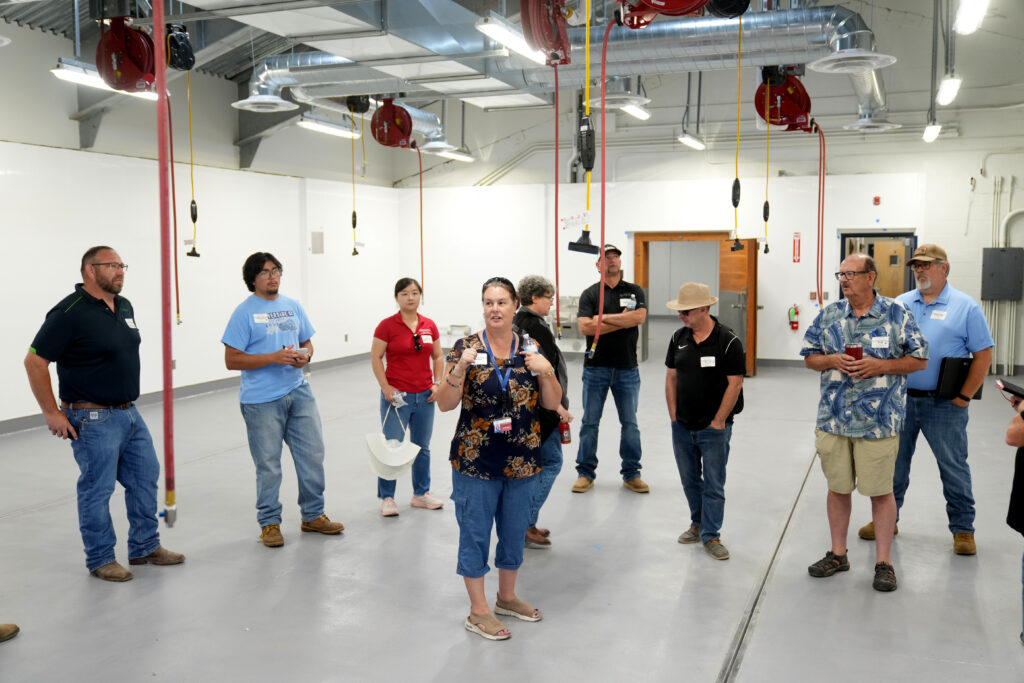
This fall, Niell is enrolled in Whalen’s Enology 163 fermentation class, which is taking advantage of the $3.86 million renovation of the Donald E. Gumz Enology Building, funded by a gift from the estate of Donald Emil Gumz. The improvements will support future growth in teaching, research and production for the nationally respected Department of Viticulture and Enology at Fresno State.
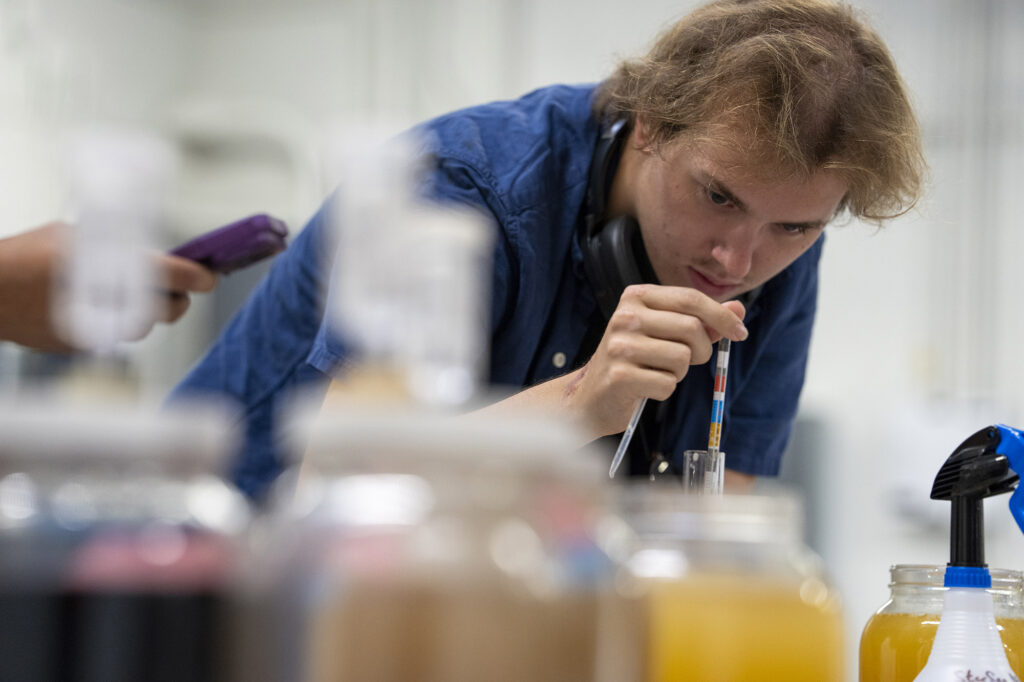
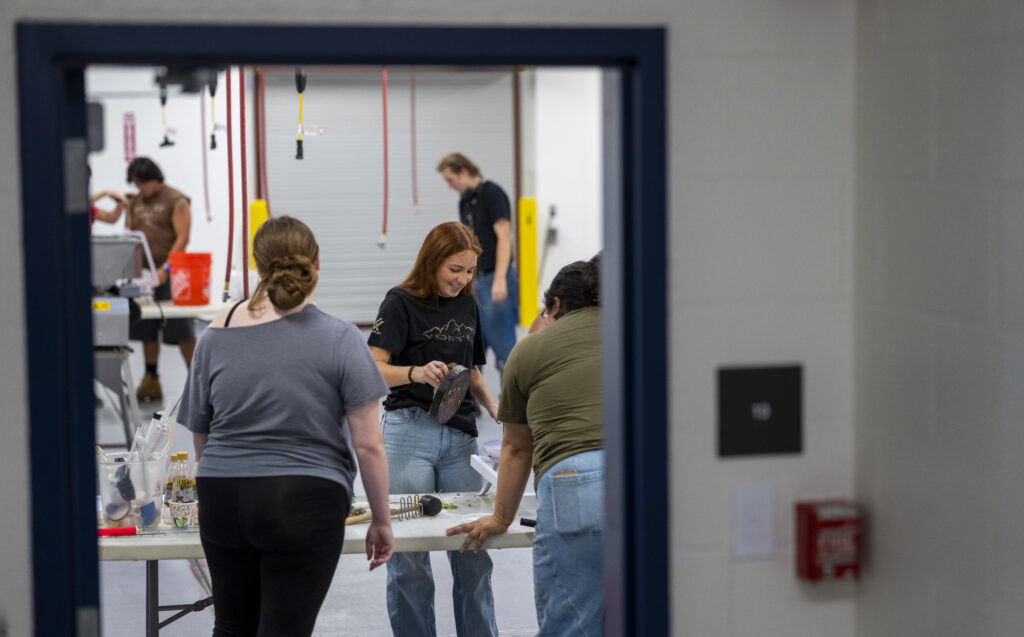
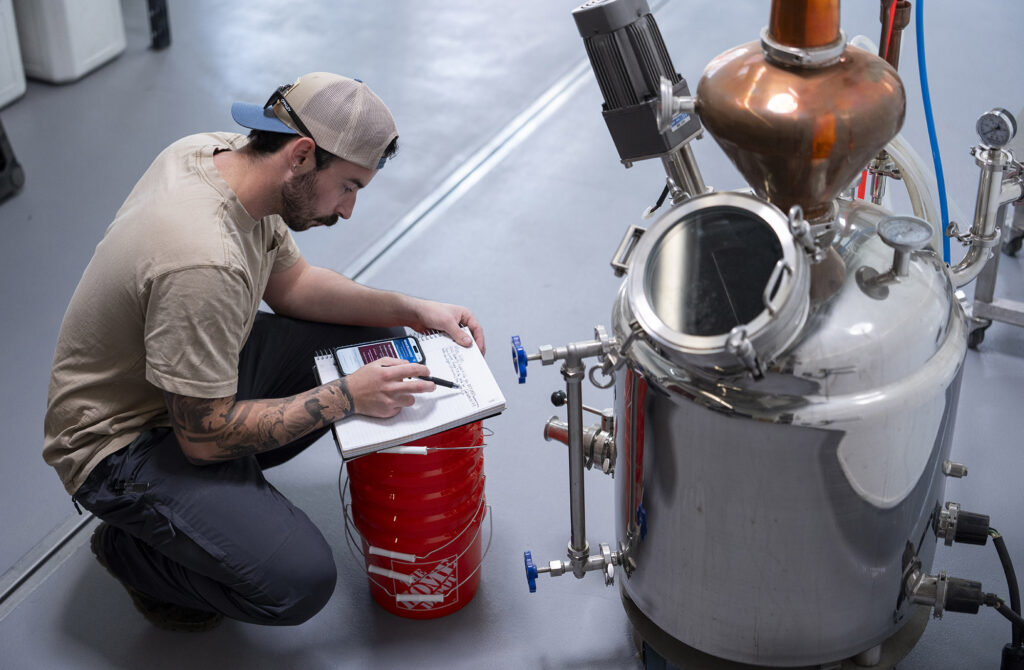
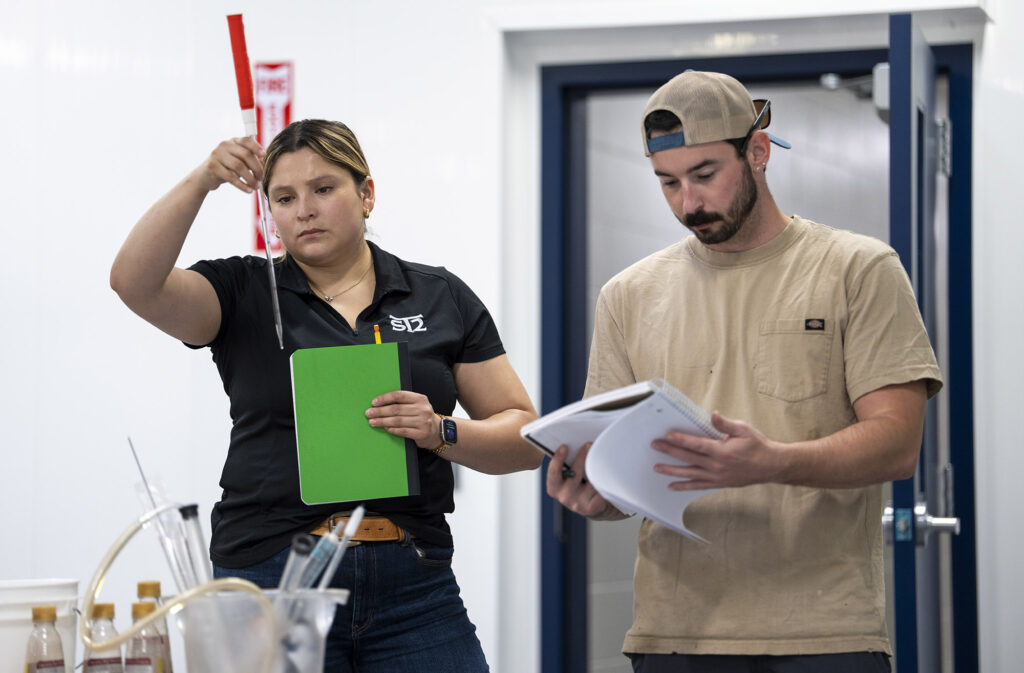
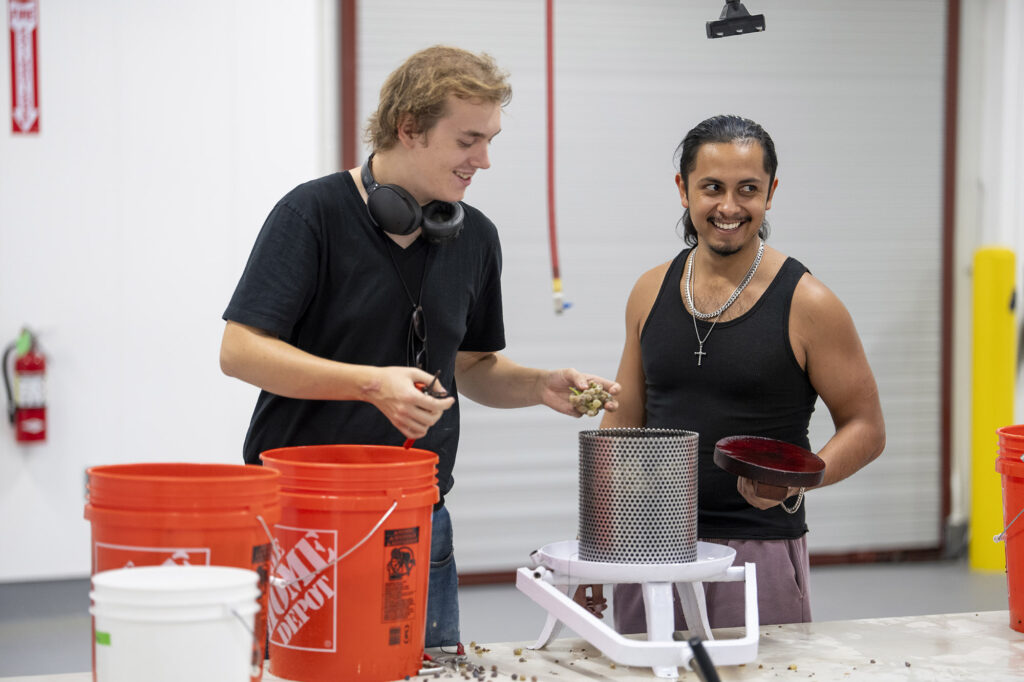
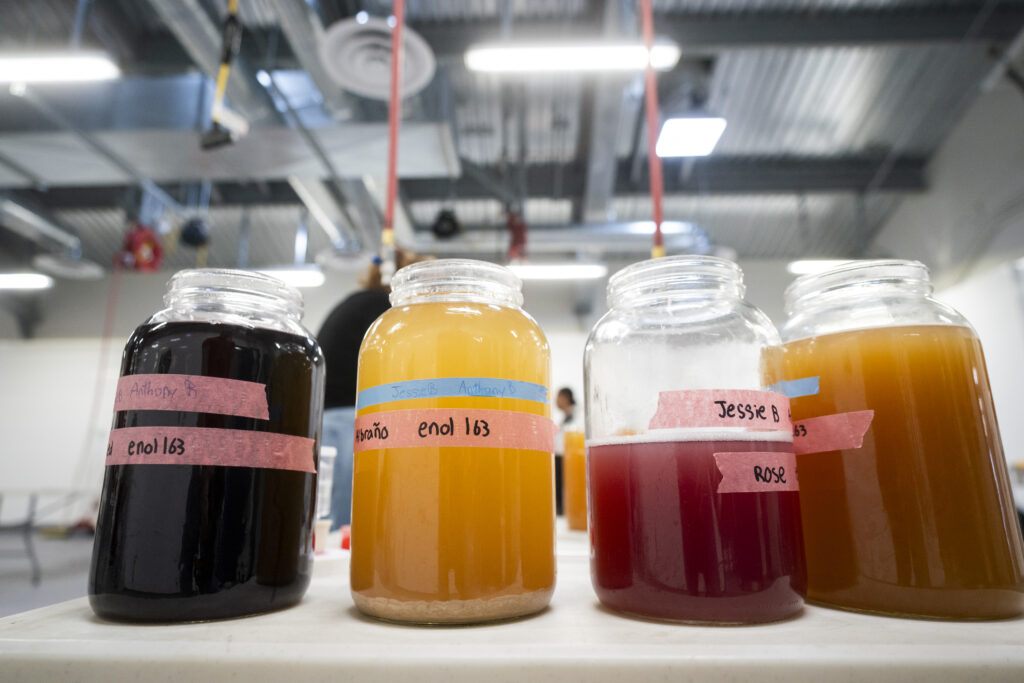
Under Whalen’s guidance since 2016, the class has become one of the department’s most popular, even with non-enology majors. Each fall, students make wines, beers, cider and mead to understand the complicated fermentation process from start to finish. Every week they add yeast and other ingredients, and track the pH and Brix levels, aroma, appearance and taste.
Also a student assistant at the Fresno State Winery, Niell has gained hands-on experience that allows her to contribute to nearly every aspect of her family’s small winery, which has five family members among its eight employees.
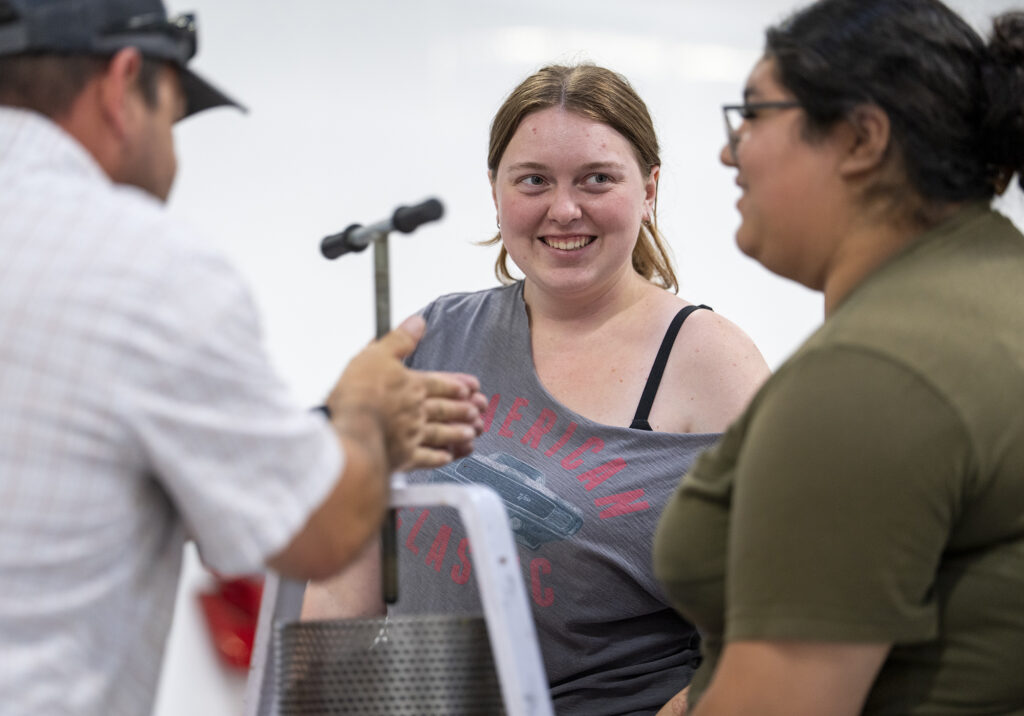
“I had never been that excited about chemistry or science before, but that has changed dramatically the past year,” said Hannah Niell, student in the ENOL 163 fermentation class. “This has all come together really quickly, and these labs have created a great environment where we work together and constantly offer suggestions on how to make each of our products better.”
Expanding hands-on learning
The new space offers students abundant room to work in teams, new storage areas and easy access to power to run equipment and water lines for cleaning.
The Ag One Foundation and department are raising funds to add brewing tanks and a still to the adjacent space. The equipment could be used for new classes, research and even applying for a bonding license to bottle beer for campus sales, similar to the thousands of award-winning bottles of Fresno State wines that students produce each year.
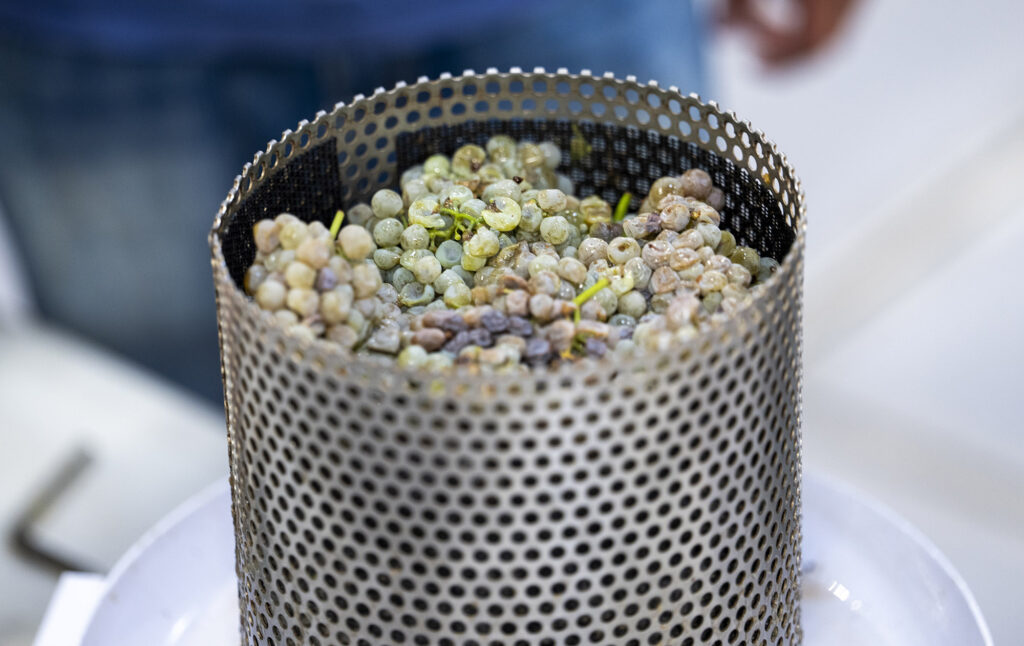
Faculty and students can use the same fermentation lab space to process grapes for research projects, which often include wine industry partners.
New cold storage rooms can store class and research projects. An adjacent refrigerated wine library will feature vintages going back to the start of the Fresno State Winery in 1997, when it became the nation’s first bonded winery on a college campus, and it remains the largest.
The two years of renovations were completed in August, providing a complete facelift of the building. Renovations include new flooring, a new ceiling and roof, walls and a reinforced foundation. Students now have added access to new bathrooms, drinking fountains, locker rooms and a shower.
The hands-on teaching aspect of the winery not only serves as a springboard for student careers, but also as a space to interact with alumni and supporters.
More than 10 years ago, Gumz became familiar with the program through campus wine tastings organized by the Ag One Foundation. He met students, staff and faculty and saw the importance of hands-on learning opportunities as they prepared for careers in the viticulture and enology industry.
His family’s roots had similar ties since his grandfather, Henry Engelman, grew grapes west of Fresno after he arrived from Russia in the early 1900s. Subsequent generations grew table, raisin and wine grapes and started Engelmann Cellars and LoMac Winery. He also saw the impact of the grape and wine industry as an accounting employee at Vie-Del. With headquarters in Fresno, it is the oldest family-owned grape processor and supplier of bulk juice, concentrates, brandy, wine and spirits in California.
Gumz also had family ties to Fresno State through the Center for Irrigation Technology. His cousin is longtime CIT staff member and director Dr. David Zoldoske.
The interdisciplinary appeal of wine extends to Whalen. The biology lecturer was asked in 2016 to take over the class from retiring faculty member Dr. Roy Thornton.
Whalen, who already had an interest in home brewing, has since expanded the class and encouraged the students to source special ingredients on their own.
This class has become special for Whalen, who now shares much of the equipment he previously used for home brewing with his class.
He has added a showcase event at the end of the class for families, faculty and industry supporters to meet the students and sample their products. A graphic design class on campus has worked in tandem with the fermentation class to create professional-style labels for the event.
“It’s a special gathering,” Whalen said, “and I compare the event a little to the elementary school conferences when the parents get a chance to see the students’ classrooms and how hard they have worked. This year is going to be extra special to show them how amazing our new space is and the future of this program.”