
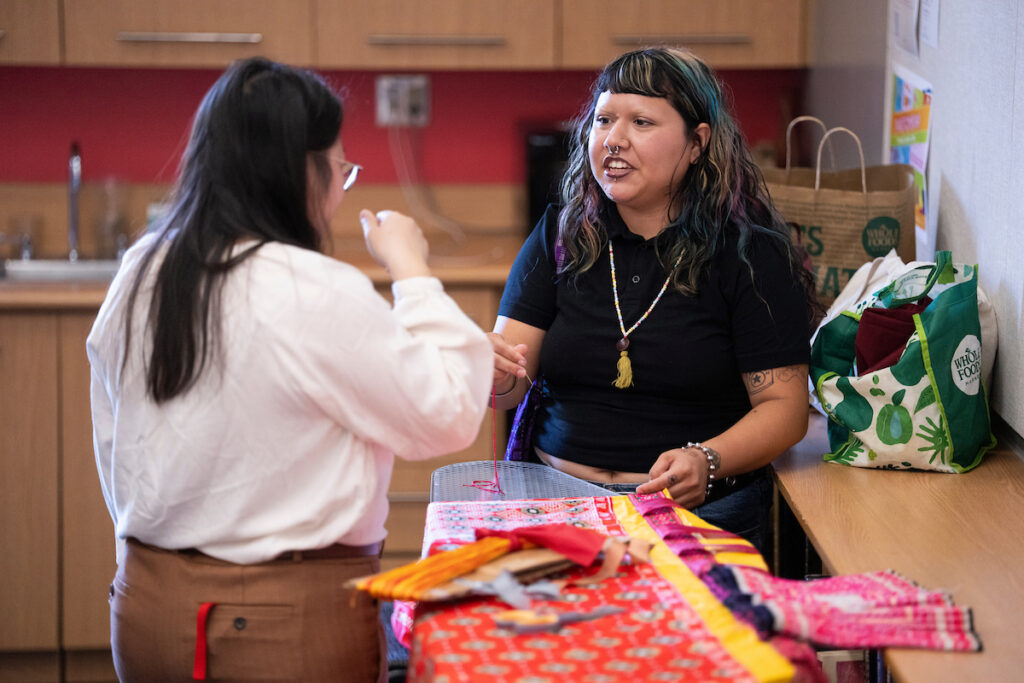
Fine green shawl fringe uncoiled from its spool as art student Janel Claybon wound it around a piece of foam board. In a classroom filled with the conversations of shawl makers drawing, cutting and sewing, she explained that she cuts the fringe along the edge to create uniform lengths for her shawl.
“The main colors are hunter green and maroon, just because they look pretty together. It’s just a vibe,” Claybon said. “I am incorporating a print relief woodcut on the center of my shawl, which are two hands encompassing up towards the sky. And I’m going to incorporate water drops to symbolize ice melting.”
She said her piece encapsulates a memory of the current deportation of immigrants in California.
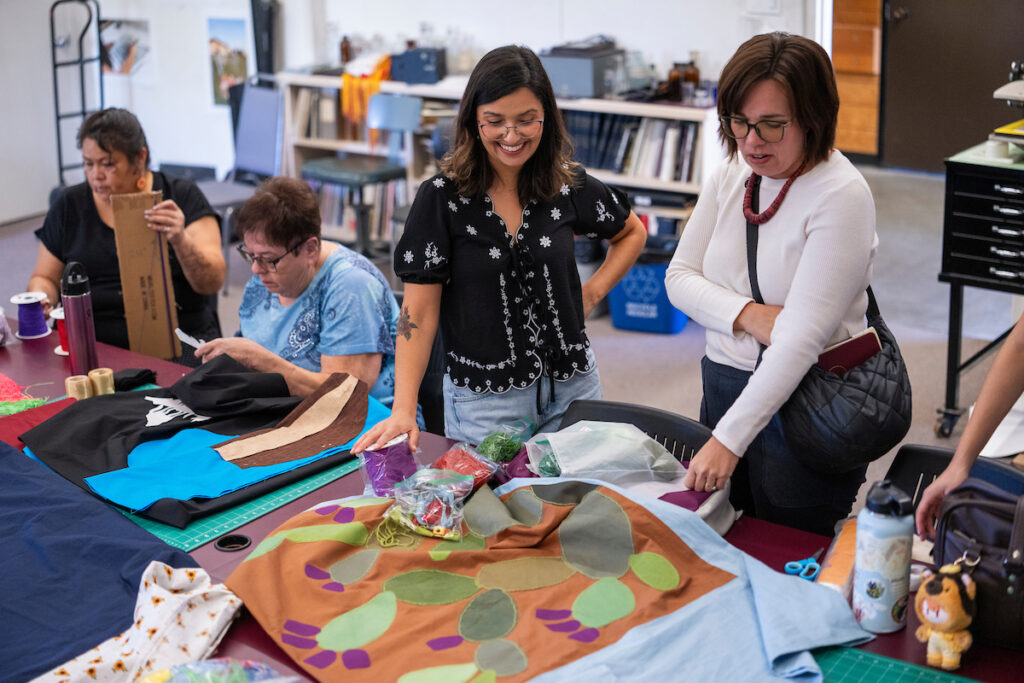
Claybon is one of dozens of Fresno State students, community members, interns and faculty who meet Fridays to make traditional Native American shawls. “The Native Shawl Project: A Message of Hope” is led by Lakota elder, community activist and generational shawl maker Corky Mills and is directed and curated by Jamie Boley, assistant professor of art.
An exhibition of the completed shawls, stories, reflections and documentation created during the residency will be Nov. 1 to 30 on the Ellipse Balcony, third floor of the Fresno State Library. A panel discussion and film screening will be held from 2 to 4 p.m. Thursday, Nov. 5, in the Table Mountain Rancheria Reading Room on the third floor of the Fresno State Library. A public reception follows from 4 to 6 p.m.
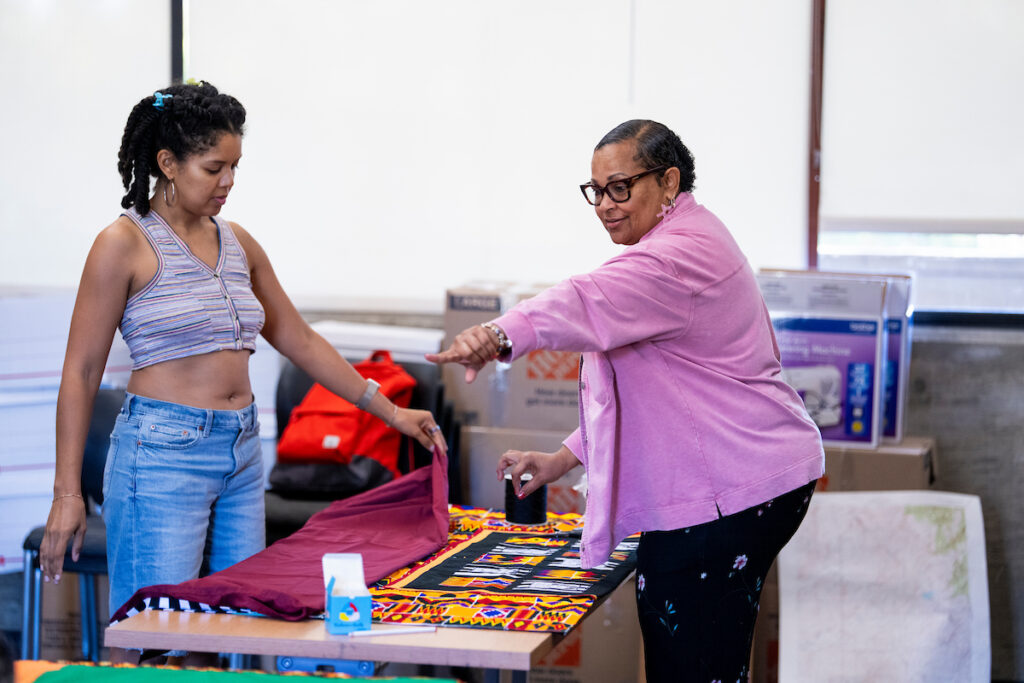
Mills, whose Lakota name is Winyan Ishnala, or “Lone Woman,” is a 90-winter elder from Eagle Butte, South Dakota, on the Cheyenne River Reservation, and comes from a lineage of respected leaders: Chiefs White Horse, White Swan, War Eagle and John Grass. Mills is also a founding member of Winyan Omnicha, “The Gathering of the Women,” rooted in the Lakota community that has grown in the Central Valley to include Native women from many tribal communities.
She learned shawl making, beadwork, storytelling and community service through a lifetime within family, culture and community.
“[As children] we were handed over to our grandparents for them to teach us. They were taught the same way so they could pass it on, and we’re passing it on,” Mills said. “The shawl is a personal thing. It’s a memory of the person making it that had an impact on them, so they want to preserve it with a shawl and pass it on.”
Mills said each shawl maker writes down those memories and shares them at community gatherings or powwows where the shawl is worn and admired. Each adds personal touches to tell their story, and the results have surprised and impressed her.
“One of them is going to paint, and another is going to appliqué. It’s just the little tiny stuff they do,” Mills said. “They have taken hold of the idea of memory, and they’re working with that.”
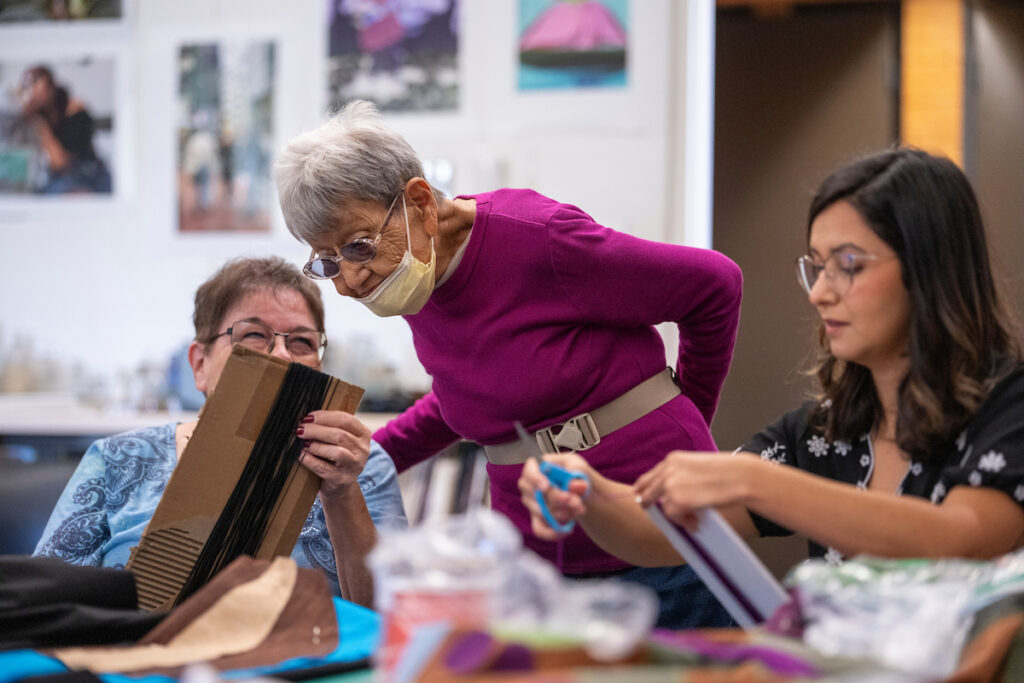
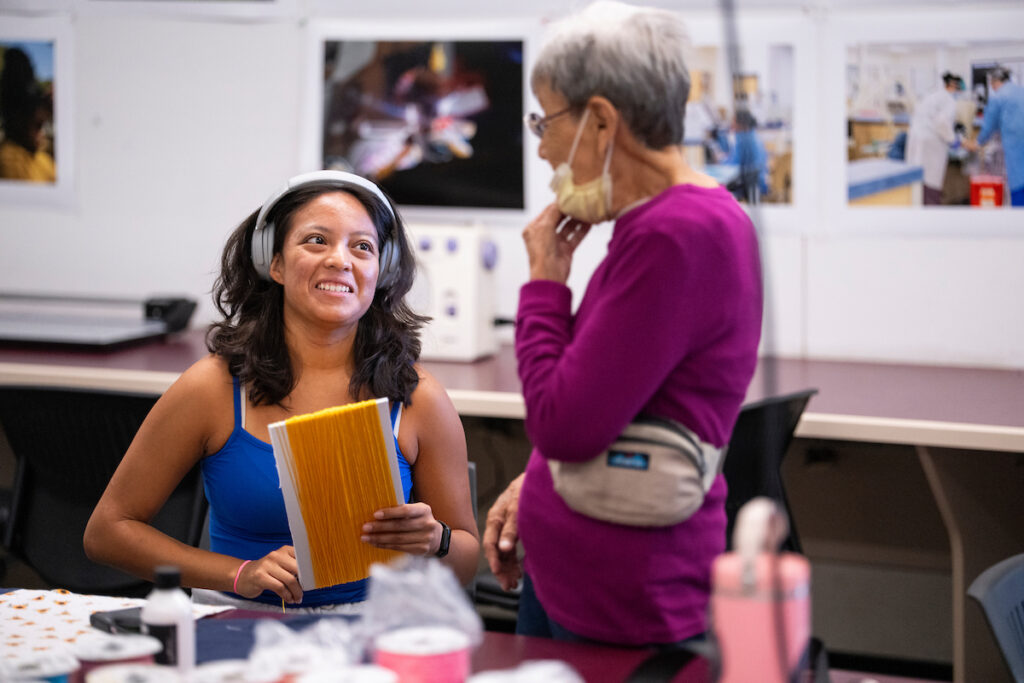
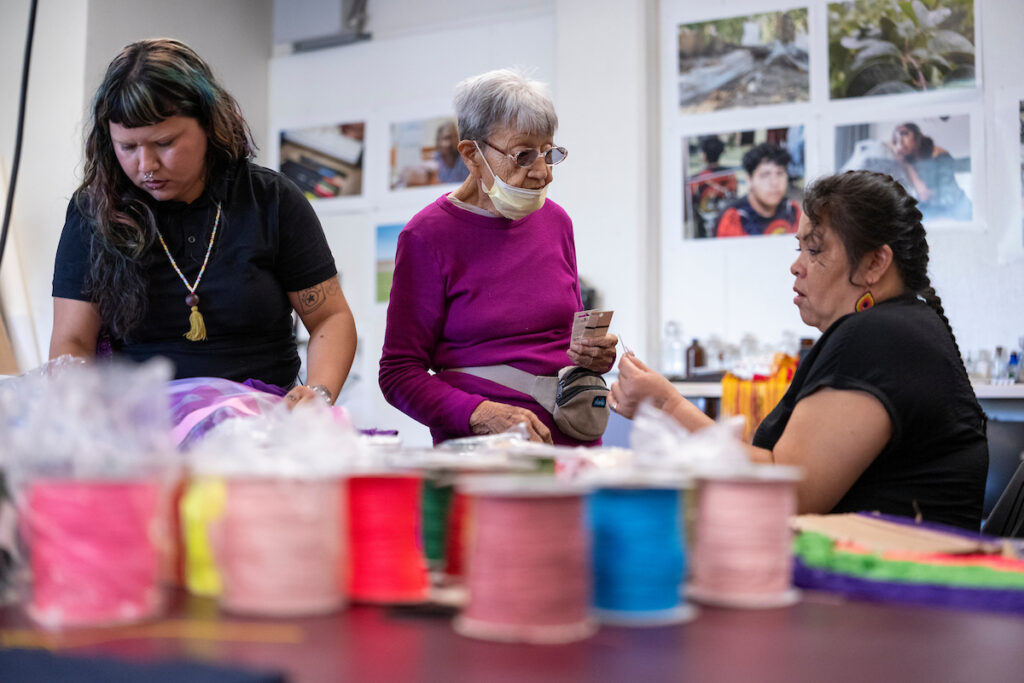
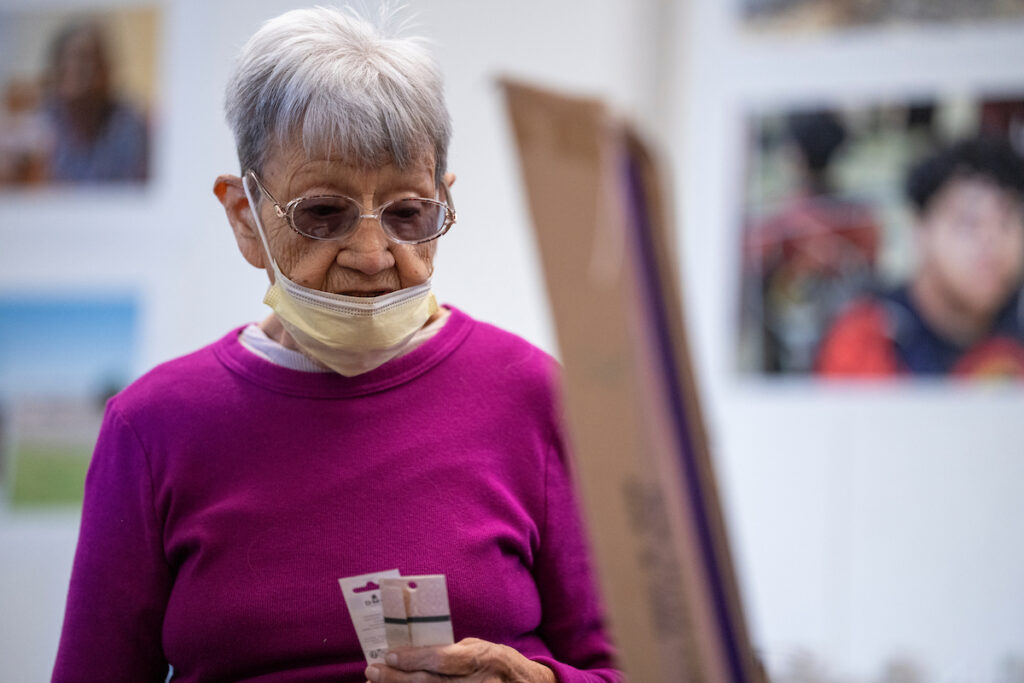
Boley, of Choctaw/Chickasaw heritage, was a student when she first met Mills at Fresno State while working on an earlier shawl project and was eager to bring her back to campus. Boley said that while the initial workshop was open to 25 students, some faculty, staff, interns and community members participated, often doing double duty by assisting students and documenting the process as they created.
“What I love about this project is that Corky is sharing knowledge and wisdom she has lived and experienced, not simply information recorded in a book,” Boley said. “There is something very special happening in those workshops. Students are learning how to make something with their own hands, but they are also spending time with a Native elder whose knowledge has been developed and carried through a lifetime. They are listening, asking questions, working alongside one another and learning through Corky’s presence and generosity.”
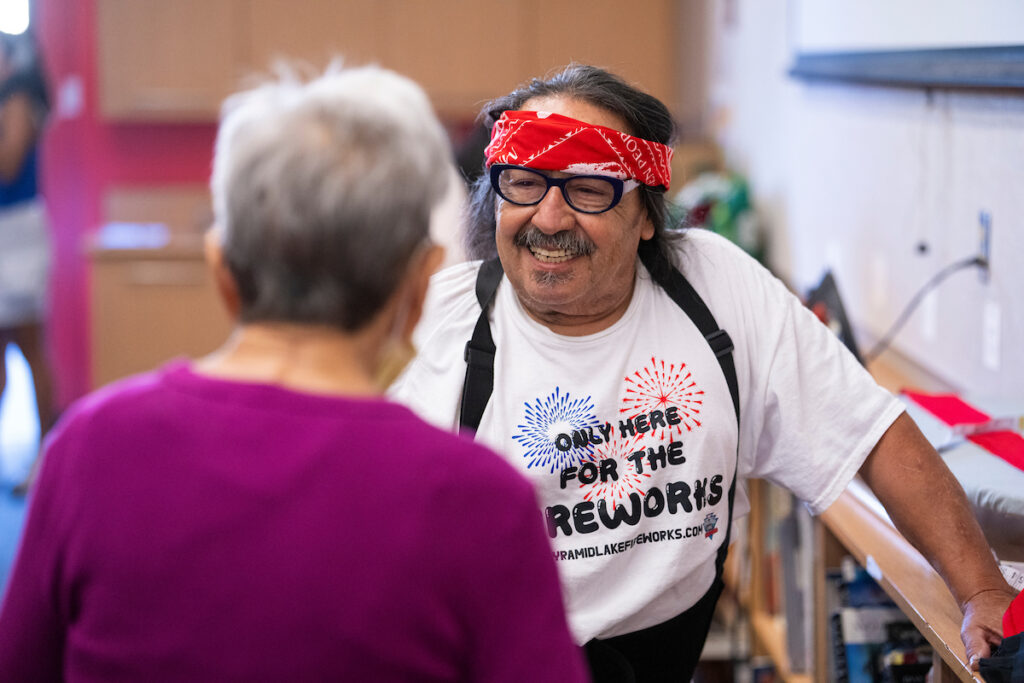
Armando Olvera, a Fresno man who traces his Wixárika ancestry to Jalisco, Mexico, set his shawl on the back of the counter for a short break. An experienced maker, he has made traditional ribbon skirts for women, jewelry, stonework, drums and drumsticks, and he frequently plays drums and sings at ceremonies. He also teaches and shares those sacred songs with young people hungry to reconnect with their Indigenous heritage.
“Back then in the ’90s, it was hard to access songs and people,” Olvera said. “I want to make it easy for the people who are just now learning, so they don’t have to go through that difficulty like I did.”
When Mills invited him to take the course, he quickly accepted.
“You never say no to Uŋčí, the grandmother,” Olvera said. “It’s such an honor to be around an elder so they can just share. Their presence is a gift because they’re harder and harder to find.”
Olvera’s shawl incorporates thick areas of black, yellow, red and white, which he said represent the cycles of the day and a reenactment of life and creation, starting in darkness, moving to light and energy and returning to a quiet time of healing. At the center is artwork of a blue deer, representing a traditional story of how his people survived a time of chaos, hardship and famine.
For Claybon, Olvera and Mills, shawl making tapped into the core of who they are, through their ancestry and the hands-on process itself.
“I truly do believe that this is what we’re built to do as humans, and it doesn’t matter what our race or country or background is,” Claybon said. “We’re meant to make, to create.”
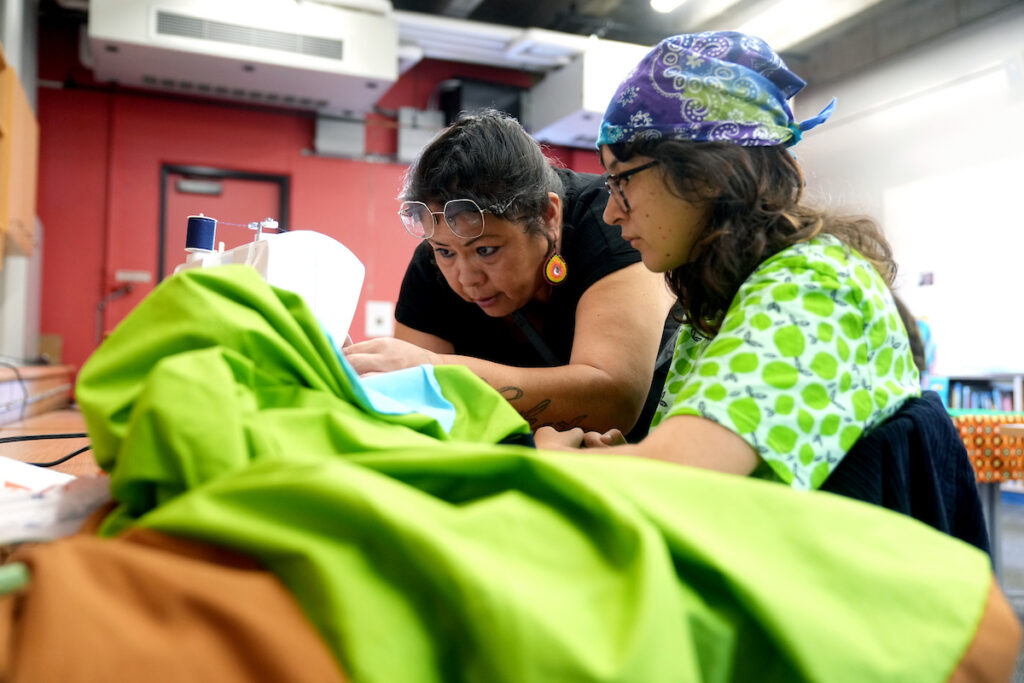
The Native Shawl Project is hosted by the School of Art, Design and Art History and is funded by an Instructionally Related Activities grant, Native Star Foundation, Office of Tribal Relations, Student Success and Belonging Center, Lorrie Beck and Dr. Kenneth Hanse. The Fresno State American Indian Faculty and Staff Association, President Saúl Jiménez-Sandoval, College of Arts and Humanities Dean Honora Chapman, Professor Martin Valencia and Professor Matthew Hopson-Walker, chair of the School of Art, Design and Art History, also provide additional support and encouragement.