Imagine soaring 10,000 feet above ground level with the Rocky Mountains of Colorado as your backdrop and nothing but the power of aerodynamics keeping you airborne.
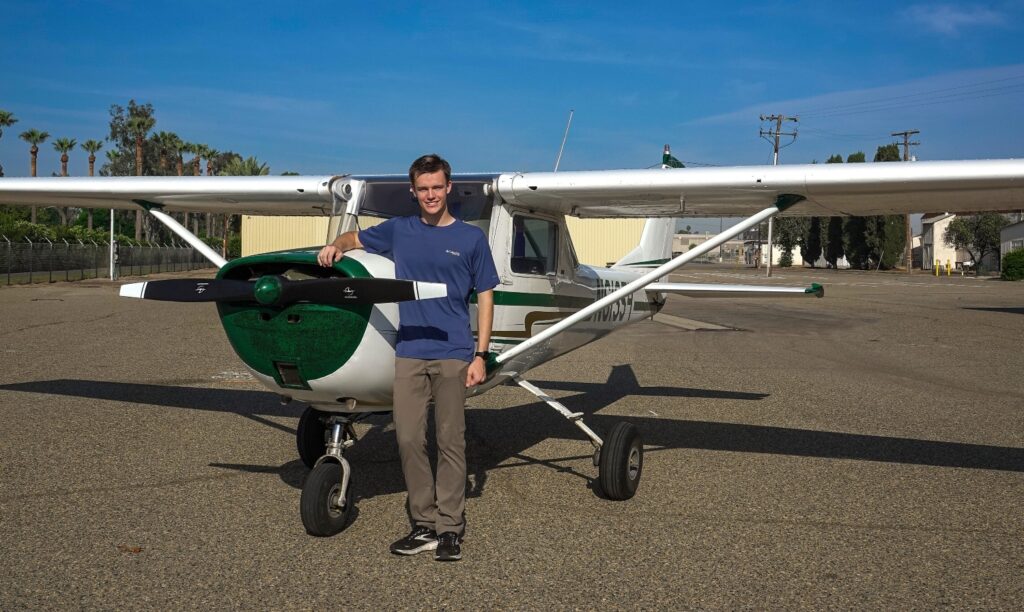
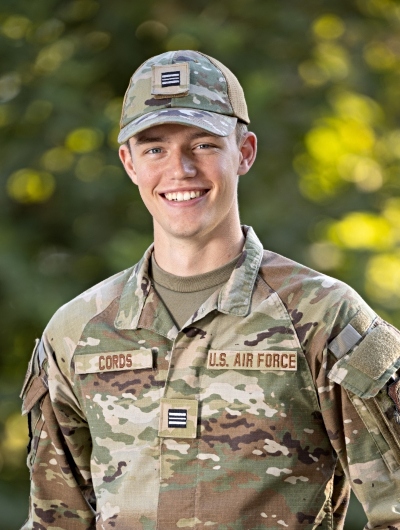
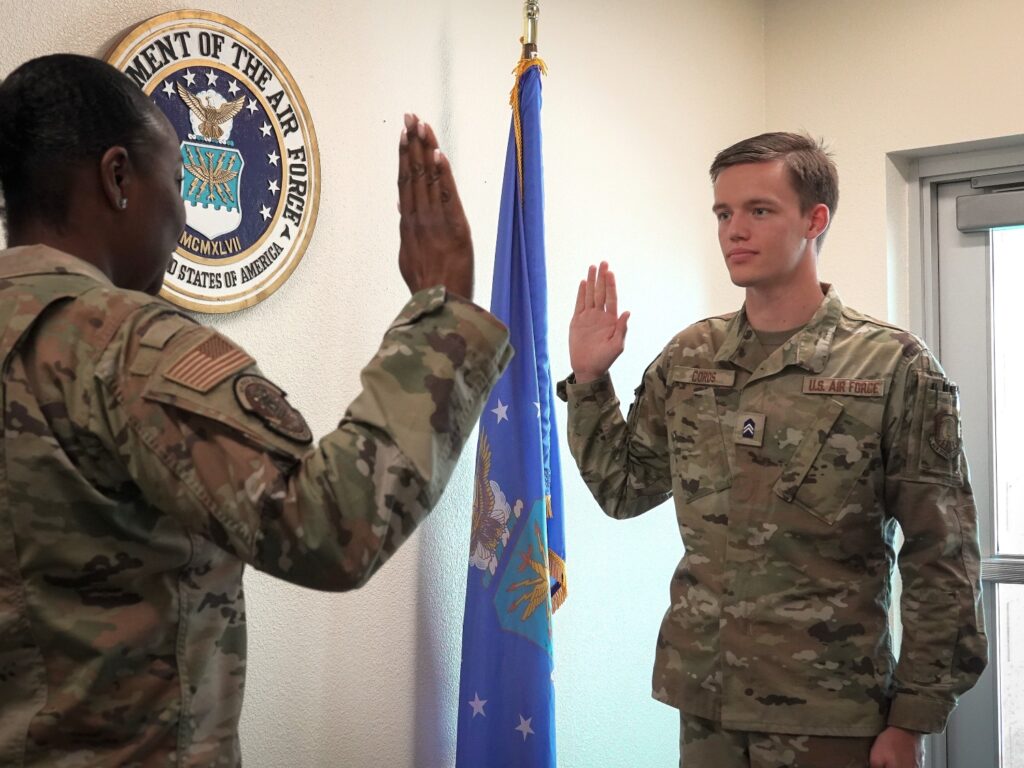
Benjamin Cords, a Fresno State Air Force ROTC cadet and computer science major, got to experience that thrill firsthand this past summer in the U.S. Air Force Academy’s Soaring Program, a 15-day immersive program that introduces cadets to the fundamentals of flight through ground school and hands-on glider training, culminating in a solo flight.
Held at the Air Force Academy in Colorado Springs, Colorado, Cords was among 75 cadets nationwide selected for the program. As someone who aspires to be a pilot, flying gliders – unpowered aircraft used in flight training – was a once-in-a-lifetime opportunity.
“It’s a high-intensity experience, and definitely nerve-racking, but it ended up being easier than I expected,” Cords said of his first glider flight.
During training, a tow plane pulls the glider into the air. Once the tow rope is released, cadets practice flying the unpowered aircraft with an instructor pilot, applying skills they first learned on simulators.
Without an engine, pilots must learn to recognize rising and sinking air and adjust their flight accordingly.
“You may end up with areas of sink where you’re falling at 800 or 1,000 feet a minute,” Cords said. “You don’t have an engine to recover from that. You may have to adjust course or find an area of lift to buy more time in the air. The instructor pilots were great and very knowledgeable.”
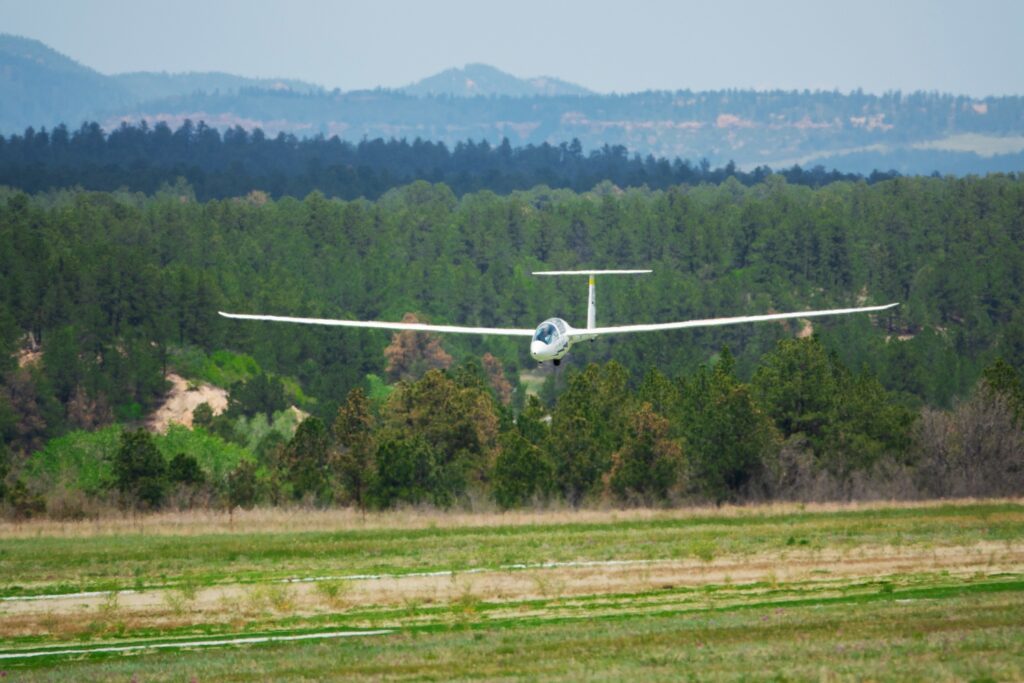
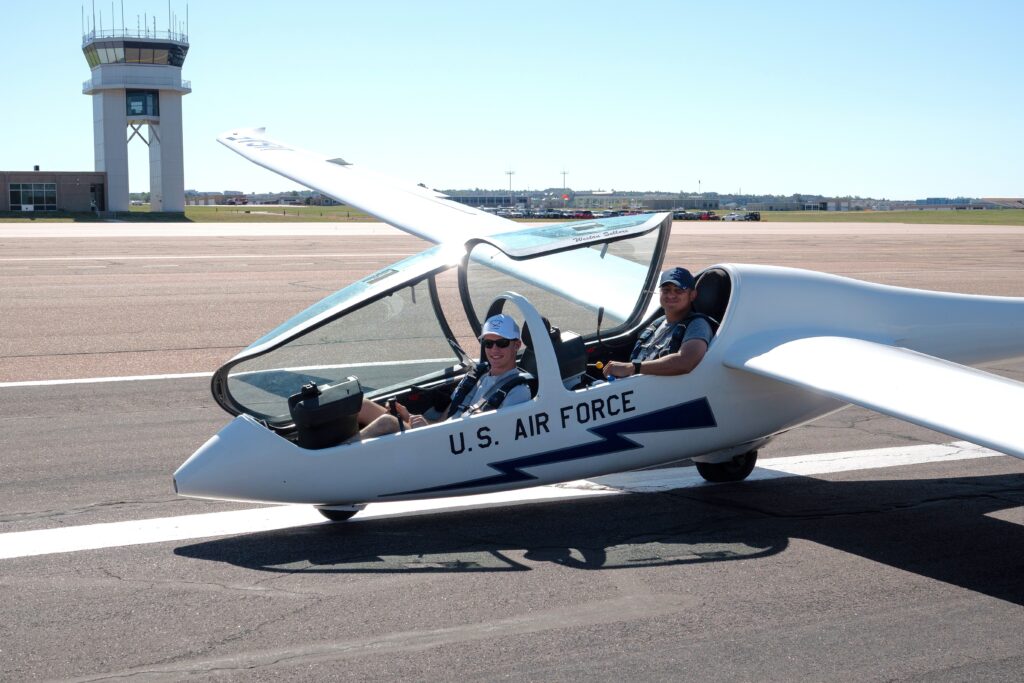
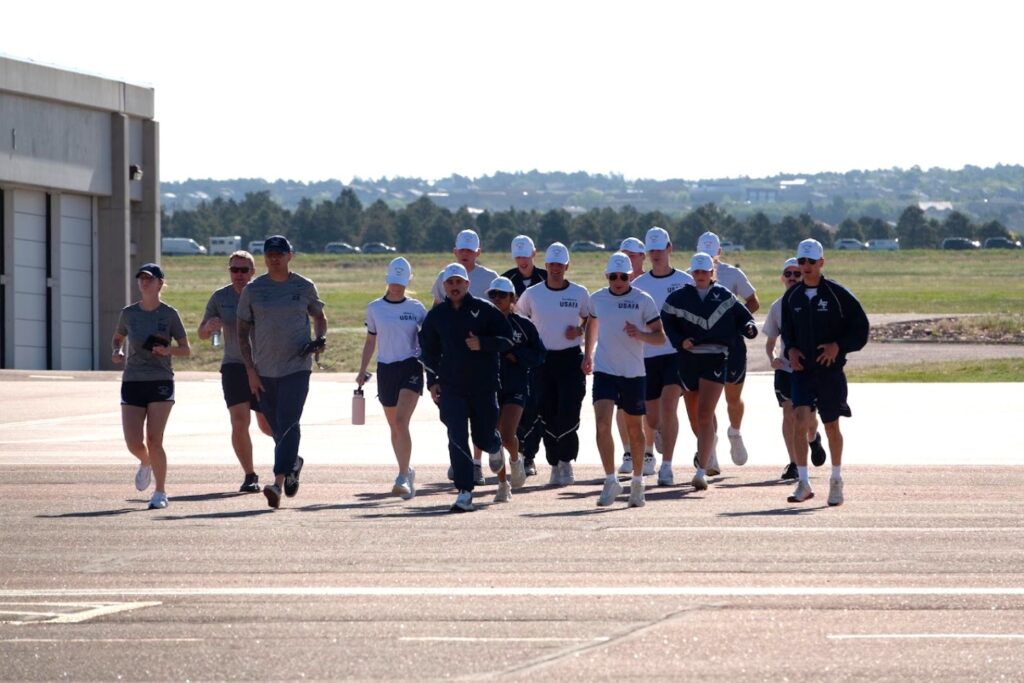
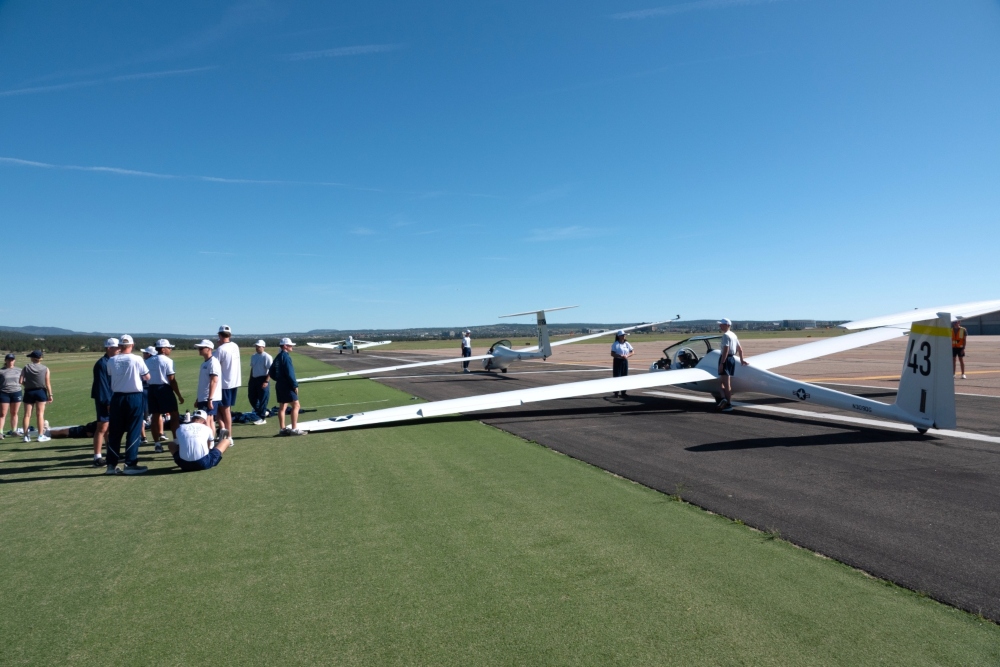
Gliders rely on their long wings to generate lift and move through the air, as well as the wind to shift their movement. Throughout the program, cadets learned basic controls and flight maneuvers on simulators before piloting the glider.
“This was my first taste of military aviation,” Cords said of the program. “Although we’ve learned some of this in the Air Force ROTC program, it’s on a very different scale and with a different focus. It was a great experience to get a new lens on the operational side of aviation and it further reinforced that this is something I really want to do in the future.”
Cord’s interest in aviation began during his senior year at University High School in Fresno. He attended Reedley College before transferring to Fresno State, where he joined the Air Force ROTC as a pathway toward an aviation career.
“I realized the things I enjoy most are learning, flying and helping others,” Cords said. “I could pursue each of those individually in the civilian sector, but the Air Force tied them all together and offered most of what I was looking for.”
Cords has accumulated nearly 31 flight hours. Flight experience, test scores, academic performance and physical fitness help the Air Force evaluate cadets for future career opportunities.
Shaping Air Force leaders
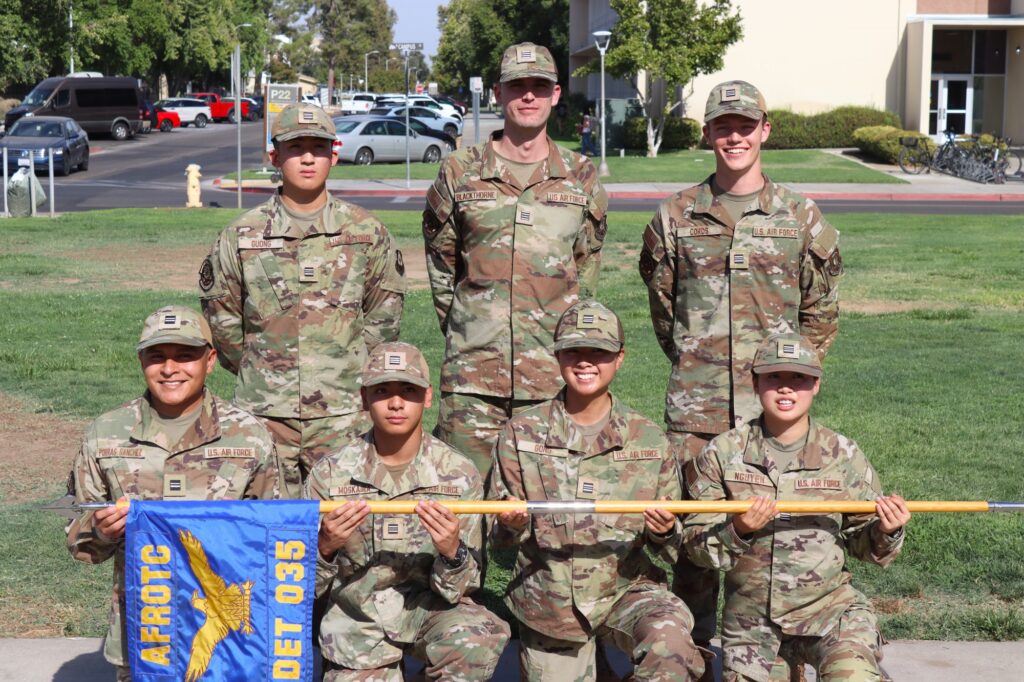
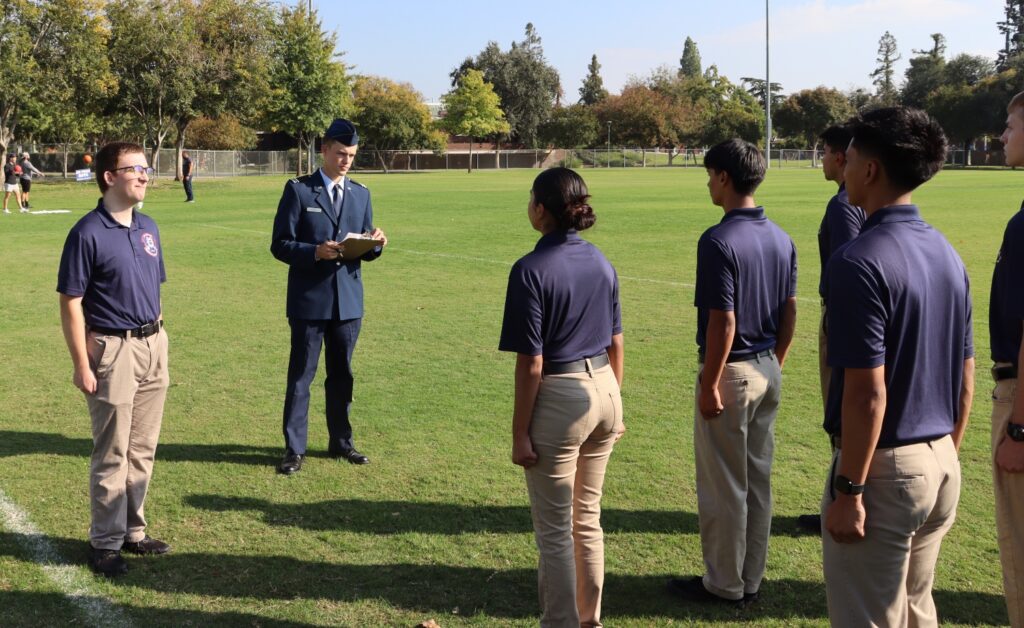
Now in his fourth year of the ROTC, Cords serves as cadet deputy wing commander of Detachment 035. As second-in-command, he helps oversee daily operations and supervises and teaches first- and second-year cadets.
Lt. Col. John Conway, chair of the Department of Aerospace Studies at Fresno State, said Cords has a promising future in the Air Force.
“Cadet Cords is a perfect representative of the Central Valley,” Conway said. “He is a talented leader, a hard-worker and, most importantly, a young man of great character. These are the qualities the Air Force is looking for and the qualities that are championed in the Central Valley.”
The Air Force ROTC program at Fresno State enrolls about 30 cadets each fall and about five to seven cadets are commissioned as second lieutenants into the U.S. Air Force each year, serving in a variety of careers within the Air Force.
Pathway to aviation
The Air Force ROTC program recently acquired a Test of Basic Aviation Skills (TBAS) console, which will be beneficial for aspiring pilots like Cords and those from around the Valley. It is the only console within a three-hour radius of Fresno.
The console resembles a compact flight simulator, with a computer monitor, joystick, rudder pedals, keyboard, mouse and headset. Computerized tasks assess candidates’ coordination, spatial awareness and ability to multitask. Results contribute to a score used to evaluate candidates for pilot training.
According to Conway, Fresno State is providing a resource for cadets and aspiring military pilots throughout the Central Valley.
“A higher score gives people a greater chance of being selected as a pilot in the Air Force,” Conway said. “We are the lone testing site in the Central Valley, so this is a great service to the community like the 144th Fighter Wing Air National Guard and prospective officer candidates as far as Bakersfield. It’s also an advantage for our cadets, like Cadet Cords, who no longer have to travel to Sacramento to use the TBAS console.”
Along with his ROTC responsibilities, Cords is in his fourth year as a full-time computer science major. He says balancing the two programs has been challenging, but worthwhile as it gives him the opportunity to combine two passions.
“I’ve always enjoyed computers, especially computer hardware,” Cords said. “Knowing I wanted a military career, I wanted to explore the field more broadly. As technology has advanced, I’ve seen the Air Force use it more extensively in its operations and planning, which connects with my interests.”
His summer in Colorado brought those career aspirations into sharper focus and left Cords eager for another opportunity to soar.
“I would do it again in a heartbeat if I could.”