

Fresno State faculty are finding innovative ways to incorporate artificial intelligence in courses throughout the university, including subjects as diverse as agriculture and physical therapy. Many classes are teaching students how to use AI as a practical professional tool.
Business: Big business requires big data
The Craig School of Business at Fresno State offers classes in machine learning applications, and faculty are integrating AI applications into accounting, finance and marketing classes. The Craig School also offers a certificate of special study in AI in business, and is offering a new class, AI-Enabled Enterprise Productivity, in spring 2027.
The Craig School created an AI task force to explore new ways to include AI in the business classroom, including a new badge program recognizing students who complete AI-empowered classes.
The prominence of AI in the classroom reflects the already widespread use of AI in business, faculty said.

“When you go to Amazon and see recommended products, that is AI,” said Dr. Zareef Mohammed, an assistant professor in the Department of Information Systems and Decision Sciences. “When you go to YouTube or Instagram, and it gives you certain videos, that is AI. You’re not talking to it like ChatGPT, but artificial intelligence is learning your patterns and comparing your patterns with other users to give you recommendations.”
Artificial intelligence is also transforming traditional business practices like bookkeeping, faculty said.
“Think of auditing Google or Apple with billions of transactions,” said Dr. Fernando Parra, an associate professor of accountancy. “You’ve got to rely on systems that handle big data. We need to make sure that our students are able to use the tools when they get to the workforce.”
Dr. Alicia Iriberri, an Information Systems and Decision Sciences professor who has developed the new AI-Enabled Enterprise Productivity course, believes AI will play an increasingly important role in business management decisions.
“Maybe we can use AI tools to find bottlenecks in workflows, where we can make changes so that processes can be done faster, with less duplication and expense,” Iriberri said. “Our intention is to have students practice using different AI tools to test whether they are beneficial to the business organization and to measure whether they are cost-effective and ethical. What are the implications for employees, customers and society?”
Parra said the new badge program for AI-empowered classes is in response to employers’ desire for workers with AI skills.
“The AI-empowered badge recognizes students who build practical AI skills within their own business discipline, from accounting and finance to marketing and management,” Parra said. “This reflects a broader shift in business hiring: employers increasingly expect graduates in everyday roles, not just technical specialists, to use AI tools well.”
Computer Science: A taste of vibe coding for beginners
AI tools are helping the Department of Computer Science expand its offerings to students outside the major. Bill Kerney, a lecturer who teaches the entry-level course, CSCI 1: Critical Thinking and Computer Science, added a unit on vibe coding — the art of programming in plain English with AI assistance.

“A lot of people have heard about AI, but they don’t really know it,” Kerney said. “There’s a lot of misinformation out there. Part of this is to teach students about this technology, and the other part is to get them excited and to realize there’s a democratization of coding now, where anybody can do it.”
Over the course of three weeks, Kerney has student teams plan, develop, stress test and refine a web app designed to meet a student-selected objective.
“It really opens their eyes to the upside of AI,” Kerney said. “It enables students to do things they wouldn’t be able to do before, and just realizing that is very empowering. But there’s a lot of ambivalence among students. A lot of the feedback on this assignment was ‘This is cool, but is it worth the environmental impact? Is it worth the human cost?’ I want students to figure out for themselves where they want that balance to be.”
Engineering: Putting AI to practical work
At the Lyles College of Engineering at Fresno State, machine learning has long been part of the curriculum because of its applications in robotics. Dr. Hovannes Kulhandjian, an electrical engineering professor, teaches a class on the fundamentals of machine learning. Kulhandjian and his students have used machine learning in a variety of advanced projects, including a crossing guard robot, a brain-computer interface, a drowsy driver detection system and an agricultural robot.

“Machine learning is fundamentally necessary to master, because the industry is moving so fast,” Kulhandjian said. “The pace of work, especially in high-tech electrical and computer engineering, is so fast that you don’t have time to spend a week on writing code, working on a prototype, fixing a bug or finding a fault inside a circuit.”
Even professional fields that don’t involve coding are being transformed by AI, and courses across Fresno State are teaching students how to apply AI tools to increase efficiency and speed.
Dr. Manideep Tummalapudi, an assistant professor of construction management, said AI has become essential in managing the masses of paperwork associated with construction projects.

“If you talk to any project engineer, they’ll tell you about 60% of their time goes into the paperwork,” Tummalapudi said. “Anytime a construction project starts, there is a document called a specification, which prescribes the quality standards of all the materials. This is probably a PDF 1,000 pages long. To search for a quality requirement will take at least 20 minutes. Now you can give the AI plans and specifications, and it can automatically identify what material is needed and what quantity.”
Tummalapudi, like many Fresno State faculty, stressed that correct use of AI tools requires human judgment. He said students entering the workforce need to be more highly trained, not less, on fundamental principles, knowledge and skills.
“The construction industry is dealing with this in a good way. They’re creating checklists and human interaction hold points where there is a human in the loop that verifies what the AI produces,” Tummalapudi said. “It’s very important for us to teach fundamentals more strongly to our students. And students should focus on learning core content, not tools.”
Beyond tech: AI as an everyday tool for practical problems
Even fields unrelated to coding and engineering are incorporating AI tools to improve everyday tasks, and departments throughout Fresno State are including these tools in instruction. Dr. Nupur Hajela, an associate professor of physical therapy, said rehabilitation increasingly uses machine learning to make sense of masses of data from monitoring patients’ gait and mobility.

“I can use an AI-based app that gives a walk score for a patient,” Hajela said. “I can download an app on the patient’s phone, and then the patient can do tests at home. On my dashboard, I can see what they have scored, and I can change their exercise plan accordingly, which means they are not waiting for weeks to see me to adjust their exercises.”
Hajela said AI provides tools for more personalized treatment, but it’s no substitute for clinical judgment.
“I feel that healthcare is one area where AI will have the best impact,” Hajela said. “I think AI can help us detect diseases faster and allow precision rehabilitation. Human insight is very critical. We’re the ones who try to make sense of everything in a very holistic way, which a machine may not be able to do yet.”
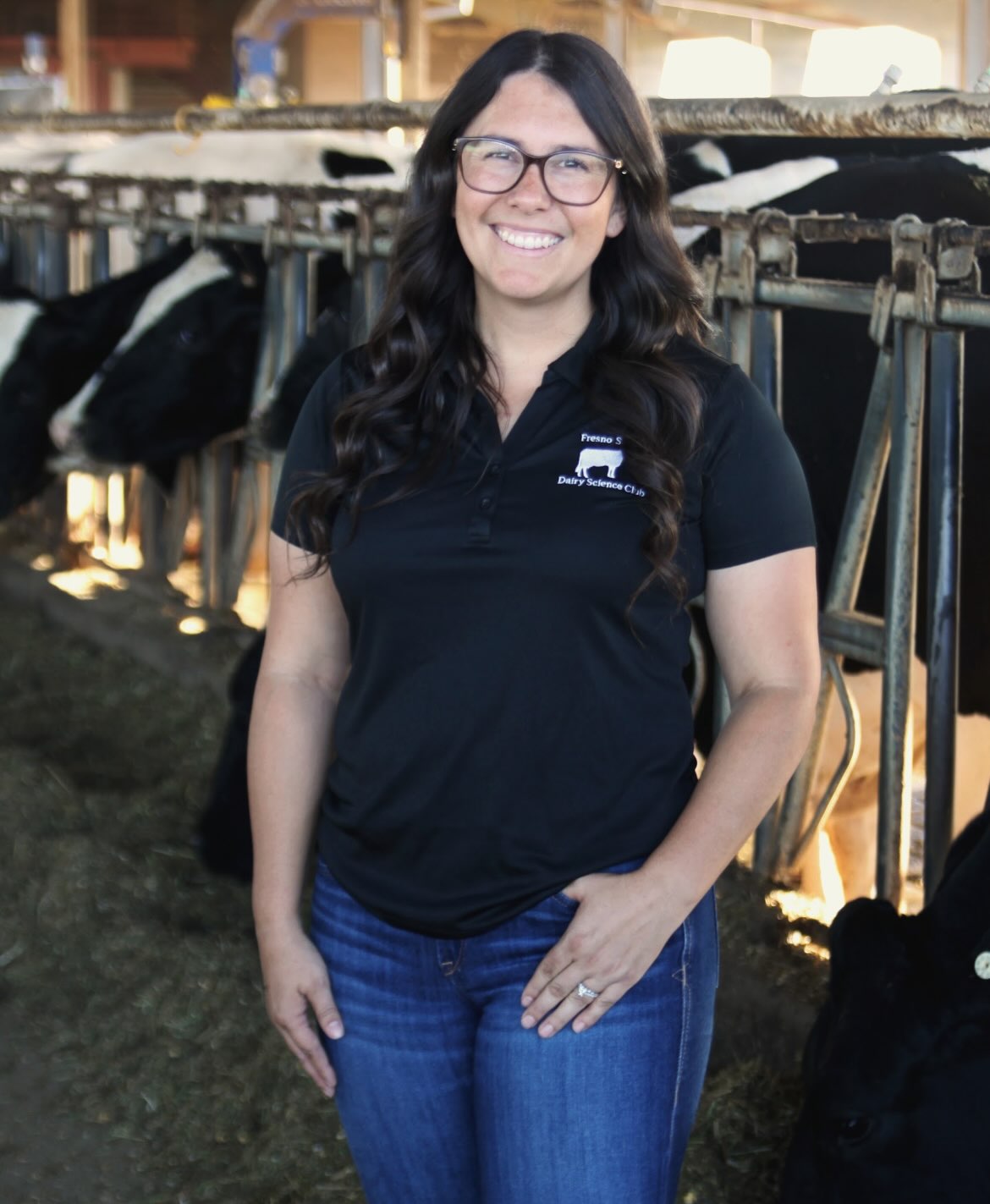
Dr. Jessica Graybeal, assistant professor of animal sciences and agricultural education, monitors cow health at the Manuel Mancebo Jr. and Katye Mancebo Dairy Production Unit using smart boluses, a sensor capsule that sits in each cow’s reticulum and continuously collects and uploads information to the cloud. From a digital dashboard, herd managers can determine whether a cow is healthy or in estrus.
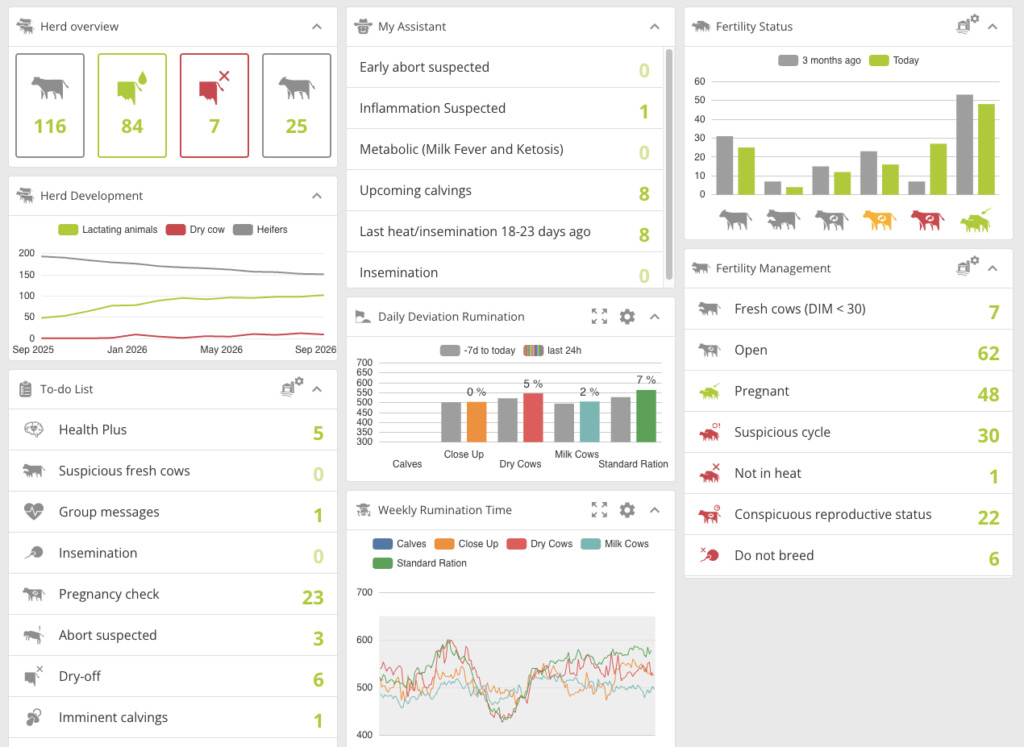
“There’s no way that one person can go through all that data and make anything meaningful of it in a short period of time,” Graybeal said. “All it does at the end of the day is give us a health alert, but it’s still up to us to have the knowledge to be able to treat that.”
Dr. Jake Wenger, chair of the Department of Plant Science, teaches economic entomology, a course usually taken by aspiring pest control advisers that focuses on learning to identify insects, particularly pests. A few years ago, Wenger noticed his students were using machine-learning-based phone apps to identify insects they had collected.
“I can’t stop students from using this tool, which is helpful in many ways,” Wenger said. “You just have to figure out how to teach students to use it responsibly. It’s great for first-off identification, but you need to verify the information. And it’s not a critical thinking tool. What I’m looking for from students is that they actually know the insect and are not just parroting back to me something they were told by a machine.”
New ways to enhance learning
AI tools offer educators new opportunities to improve their course materials.
“We’ve seen faculty use AI to develop presentations that are more engaging, simulations and interactive activities, and alternative assignments for students with disabilities,” said Jason McGensy, an instructional designer with the Office of IDEAS.
Dr. Scott Sailor, a professor of kinesiology, uses AI tools to extend his capabilities and design learning materials that would otherwise require additional labor.
“I use AI as an assistant to create resources for my students that I’ve wanted to do for years,” Sailor said. “I’m able to create materials a lot more quickly — study guides, practice quizzes, even podcasts and videos that do a deeper dive in one particular topic. I can do so much more, utilizing AI. I’d have to bring in a team of people to accomplish some of these things.”