

Faculty throughout Fresno State are incorporating artificial intelligence and machine learning into their courses, but they’re realistic about AI’s limitations and concerned about AI’s effects on education.

“As long as we prepare our students to have critical thinking and problem-solving skills, I believe students will be able to work with AI and be even more productive,” said Dr. Alex Liu, chair of the Department of Computer Science. “AI can do a lot of things, but it’s not powerful enough to analyze complex problems, and it still requires humans in the loop for verification and judgment.”
AI and machine learning are central in the curricula of the departments of Computer Science, Information Systems and Decision Sciences and Electrical and Computer Engineering, and faculty in education, business, agriculture and health are including the use of AI technologies in their courses as well. The Division of Continuing and Global Education offers community members nine professional training courses in AI.
The Department of Computer Science has seven faculty teaching and researching in AI-related fields, seven AI courses and 14 courses that apply AI tools to the curriculum. The department also offers an AI minor and two AI certificates.
“We’re working to not just prepare computer science students to meet workforce demands in AI, but also to prepare the entire university,” Liu said. “We are going to cover AI literacy and AI tools in our general education courses to prepare all majors to be AI competent.”
Don’t believe the AI hype, faculty say
Faculty say students need to clearly understand AI’s limitations in order to work with AI effectively.

“AI does not think. It cannot think,” said Dr. Zareef Mohammed, an assistant professor in the Department of Information Systems and Decision Sciences at the Craig School of Business. “AI takes pre-existing data and predicts the next plausible word or outcome. If you ask ChatGPT, ‘give me a plan to be productive at work today,’ it draws data from information you have provided and planning techniques it finds on the internet. With all of that data, it is going to use predictive modeling, not thinking, to see the likeliest probability of plans. But it is all simply numbers being crunched to give you probability-based values.”
Despite popular fears of runaway AI and robot takeovers, faculty say that AI should be evaluated as an ordinary technology.

“The first myth I would debunk is the idea that AI is going to learn to code itself, that it’s going to have a rapid recursive process that generates a superintelligence that we’re unable to handle,” said Dr. David Ruby, a computer science lecturer. “We can optimize with a recursive process, but we tend to get diminishing returns, not explosive returns. There are issues we need to be concerned about, but I put them more in the industrial safety category. Whenever you use a new technology, there are inherent risks that the technology doesn’t work the way you expect it.”
Faculty were also skeptical of predictions that AI will cause widespread job losses.
“I don’t feel too much worry about job elimination,” Liu said. “Job positions will be oriented toward working with AI to save time on routine work, and human effort will be dedicated to things that AI cannot do, like complex judgment, human verification, mentoring and communication.”
Redesigning curriculum for the AI age
The immediate challenge that AI poses for educators is evaluating student learning when AI tools can easily produce written text. In response, faculty are developing different assessments and cultivating student skills that AI can’t replicate.

“There are tools that can produce work at the quality, or even better sometimes, of what students have traditionally produced,” said Jason McGensy, an instructional designer with the Office of IDEAS. “We’ve seen oral exams come back; we’re seeing blue books come back and more in-class writing. We see some faculty who want to AI-proof their assignments and others who are looking at how to integrate AI so that students learn how to use AI and interpret the outputs they get from AI, while still having the knowledge and critical thinking skills we want students to have.”
Dr. Christian Wandeler, who teaches statistics and educational research in the Kremen School of Education and Human Development, recommends faculty embrace an approach he calls “integrity by design.”

“Integrity by design is when you set up the assignment so that it’s hard to not have integrity,” Wandeler said. “For example, asking students to give their personal feedback or incorporate their own lived experiences. Think about your tests and assignments. If the assignment can be done by AI, think about how you can develop it where AI can’t simply do it for the student.”
Wandeler added that teaching students how to use AI is more critical than policing AI use.
“Don’t assume that students know how to use AI,” Wandeler said. “Some are very good at it, and some don’t know how to do it. I teach students ‘here’s how we can use AI, here is where you’ve got to be careful, here is where AI can go wrong.’”
McGensy said the Office of IDEAS provides resources for faculty to make deliberate choices about how AI should be used in their courses.
“We’ve had over 300 faculty participate in Office of IDEAS AI workshops,” McGensy said. “We provide a space for the conversations faculty want to have on integrating AI and maintaining academic integrity. We don’t try to push anything on anybody. We provide faculty with the options that are available and ways to think about what would work best for them.”
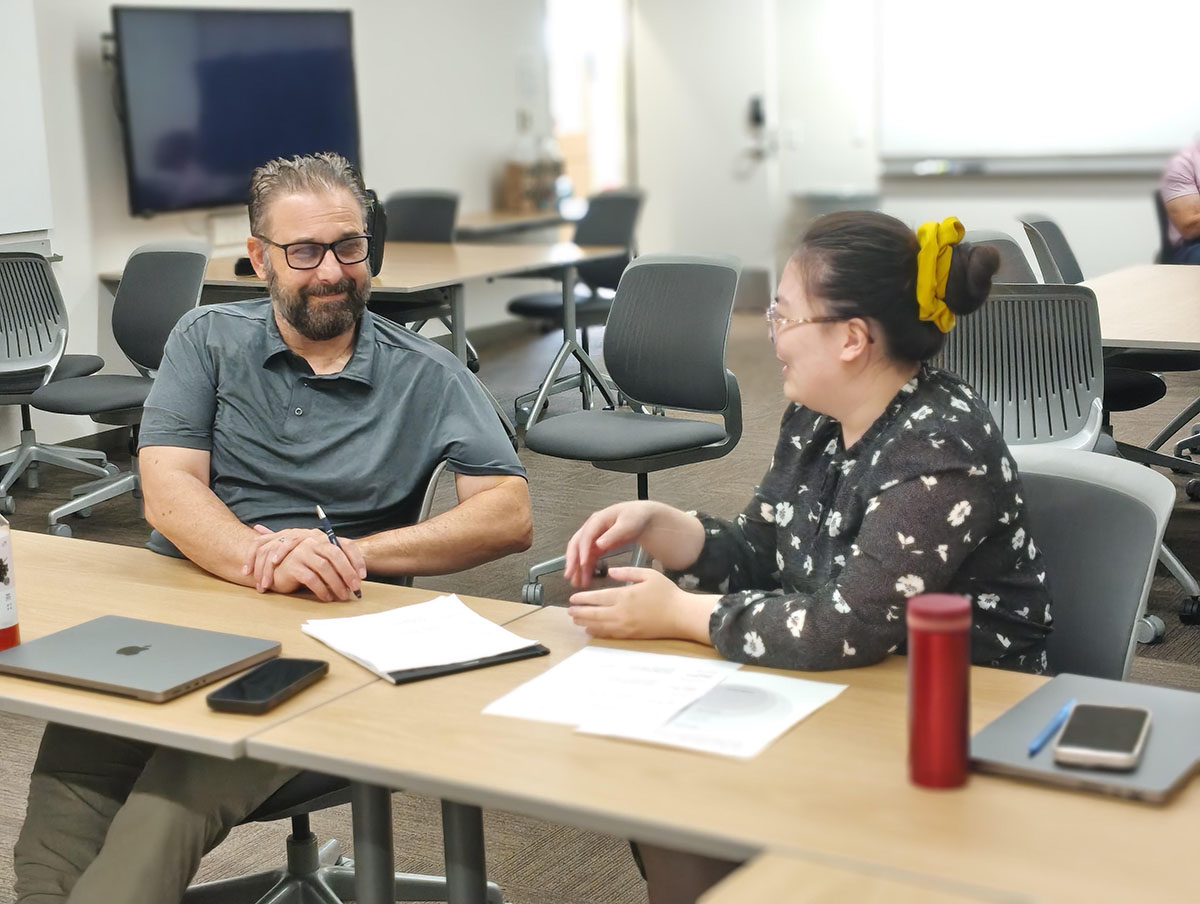
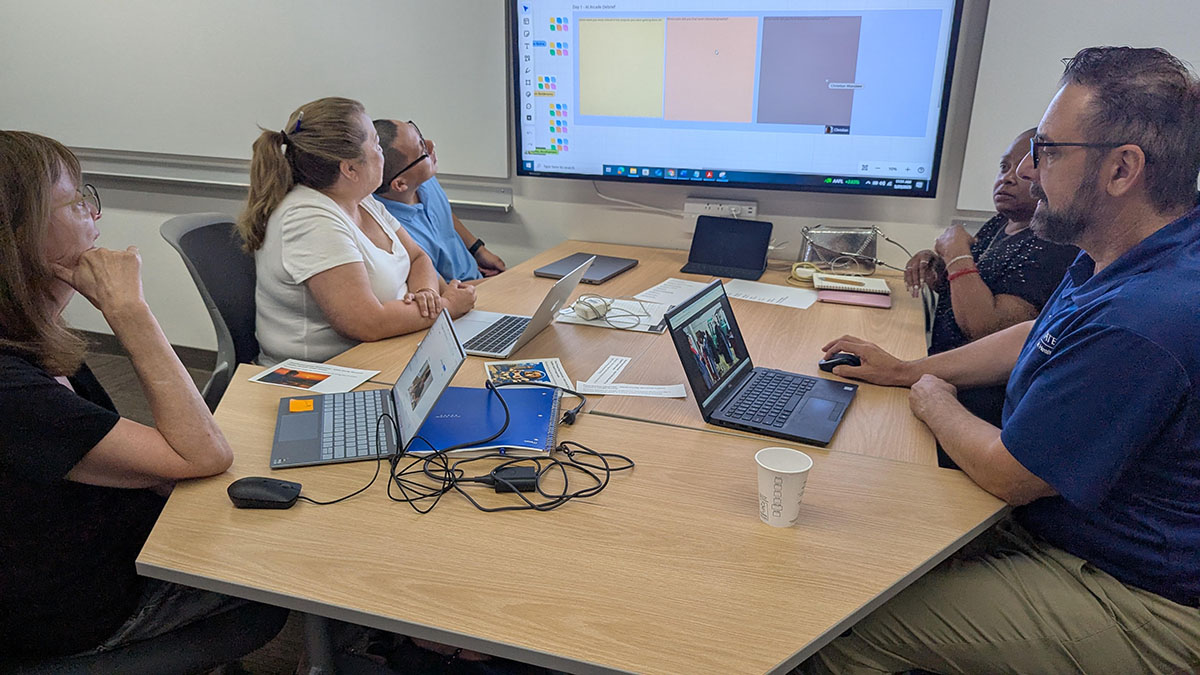
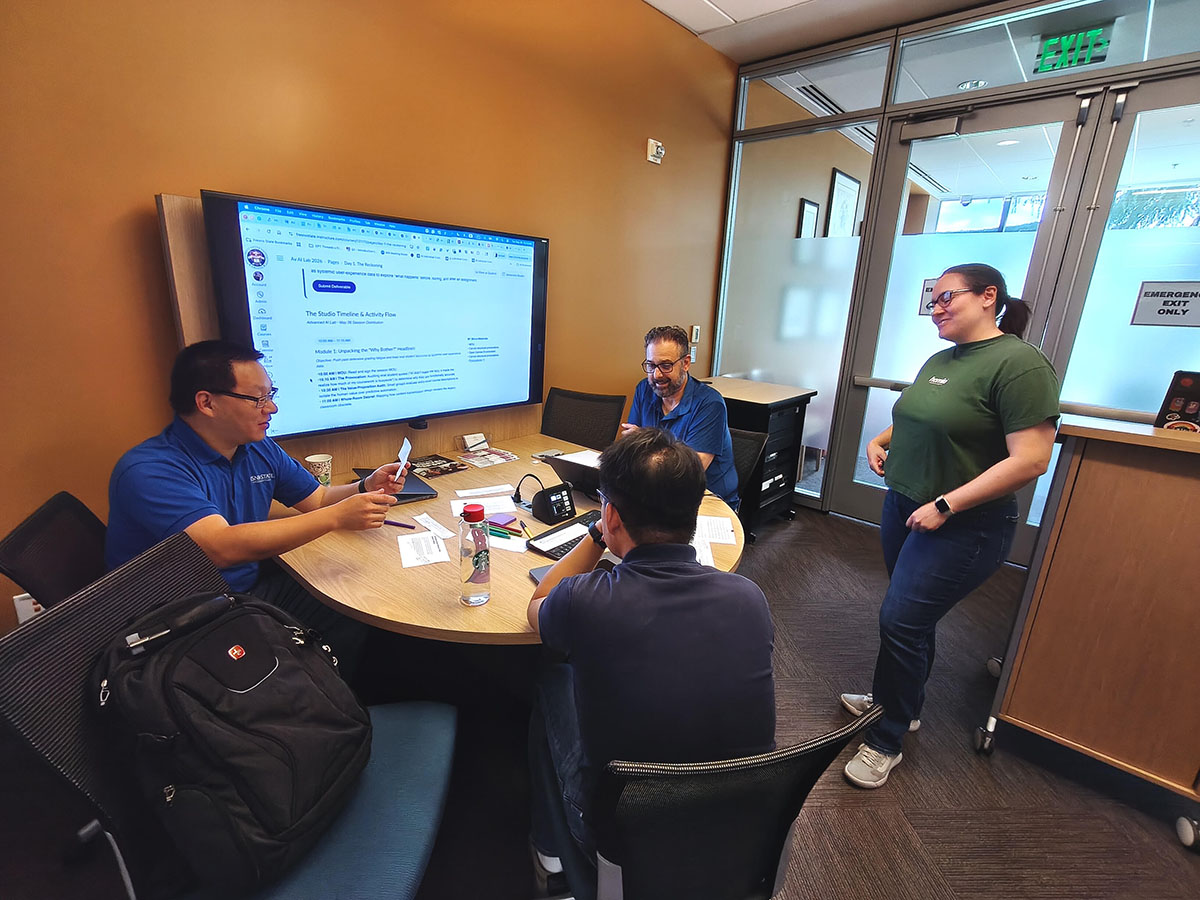
Computer science professor Dr. Thanos Panagopoulos said the challenge for students in the AI age is developing the intrinsic motivation to master course material and finding ways to use AI to augment, not replace, academic skills.
“Motivating students is the most important thing in education. Eighty percent of the work is getting students ready to learn,” Panagopoulos said. “There is the argument of brain rot, that you’re losing skills by substituting AI. But this is missing that you unlock higher-order skills and liberate time by automating the most redundant tasks. Motivation is more important than structuring the pedagogical process perfectly.”
Computer science: teaching broad principles to future-proof education
Ruby, who teaches artificial intelligence programming and deep learning for undergraduate and graduate courses, said the computer science department teaches AI fundamentals to better equip students for a rapidly changing industry.

“We’re trying to rapidly accommodate the demands of industry, academia and students,” Ruby said. “We’re trying to provide students with a deeper understanding of the space AI occupies. We want them to be familiar with tools, but to recognize that those tools are changing.”
Ruby said both faculty and students need to discern how to use AI creatively and appropriately.
“I don’t think there’s a uniform decision in the department on the best integrated approach,” Ruby said. “We haven’t forced students into a particular configuration, but we do support a variety of tools. We teach how to use AI to facilitate coding. AI can do a lot of things, and there are a variety of choices for how you want to integrate AI into your coding process.”
Panagopoulos, who has written a book on AI, “Rage Against the Autonomous Machine,” said computer science students should also consider the social effects of AI. He is designing a general education course on the social aspects of AI that he hopes to launch in spring 2027.
“Even if students want to follow a very technical career, students need to understand the societal aspects of the technology,” Panagopoulos said. “When AI is in the right hands, it can be used to liberate humans from repetitive and boring jobs. AI is the basis of a new form of production, and this means that the way society functions is evolving based on AI. Who controls AI and whose interest AI is serving becomes crucial, because that dictates how society evolves.”