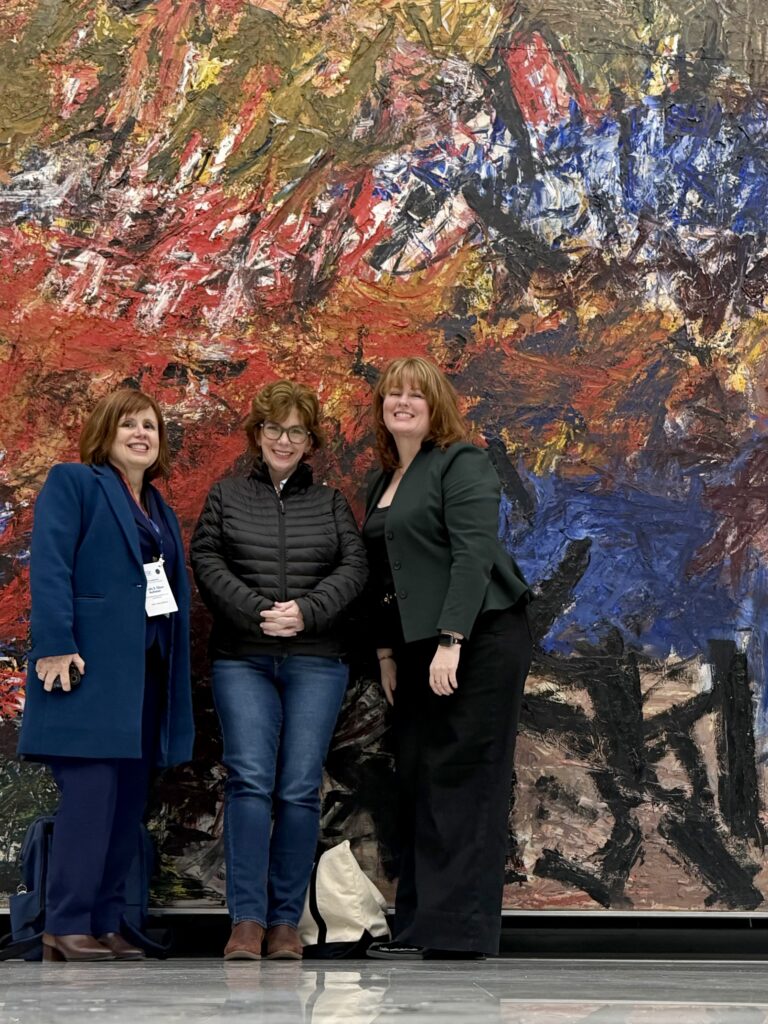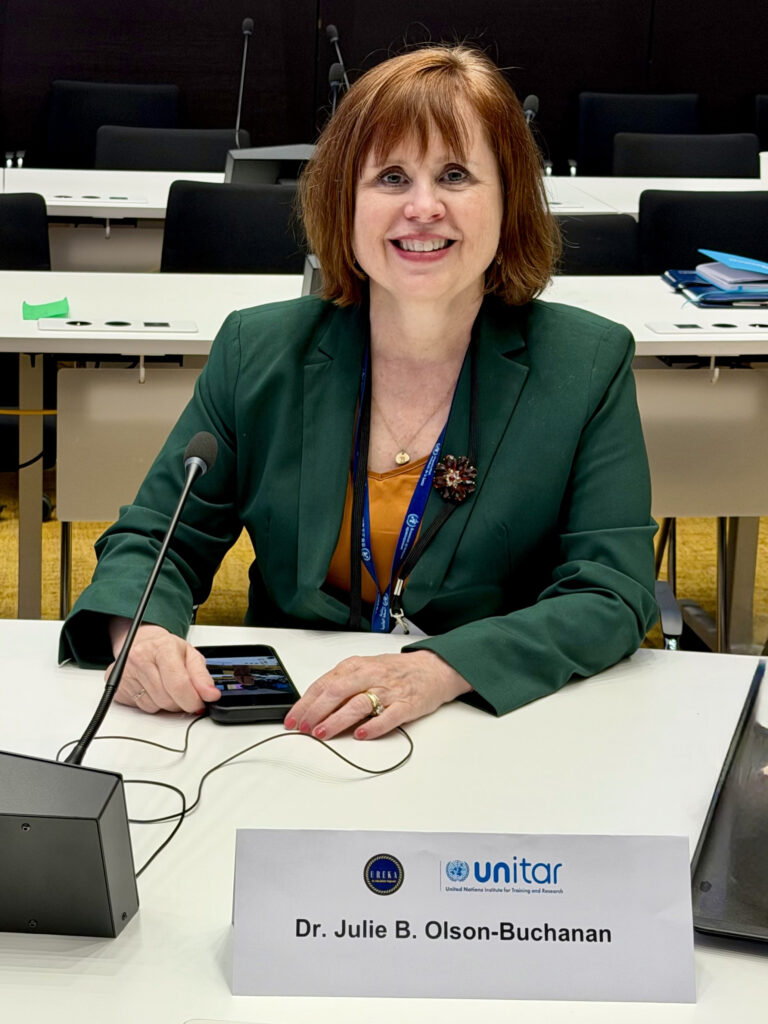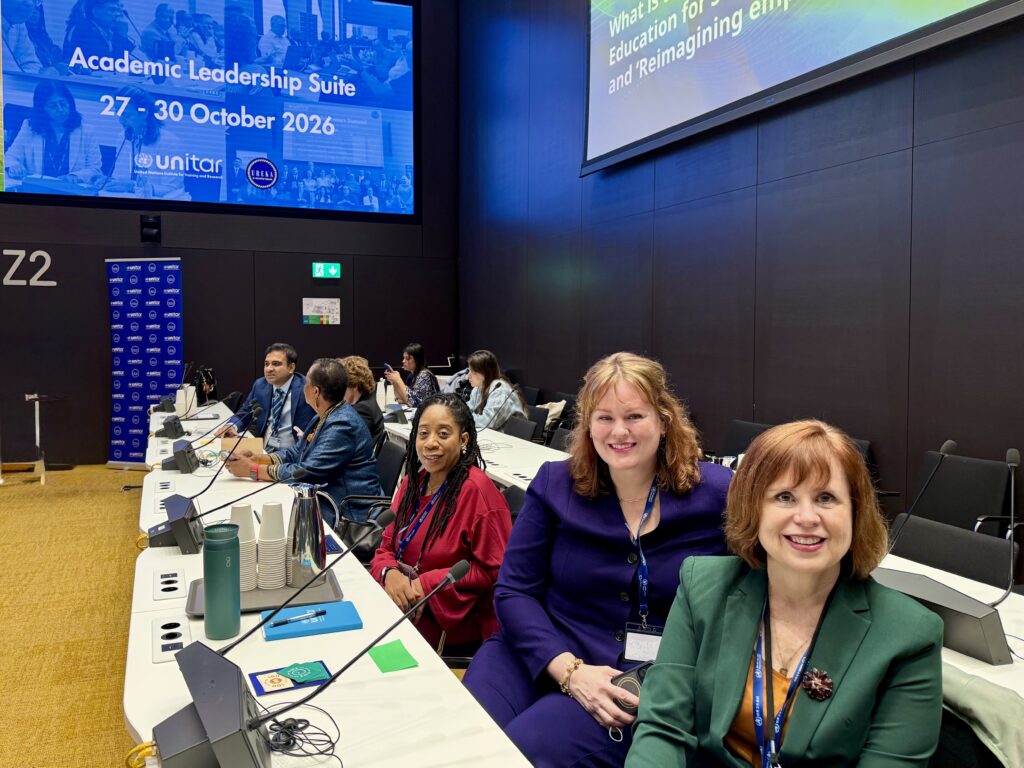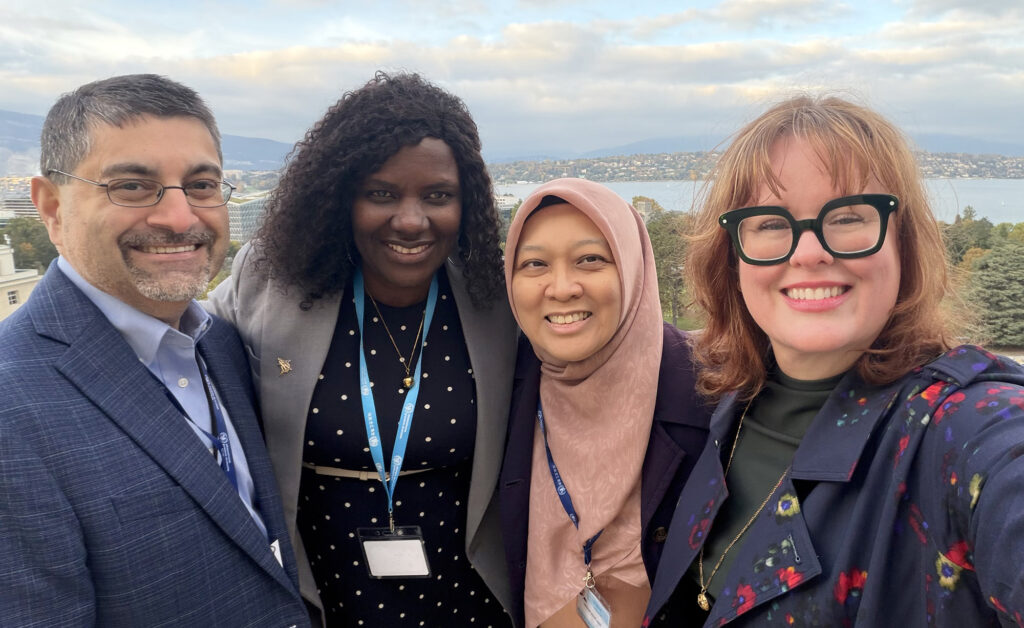

As they walked through the historic gates of the Palais des Nations in Geneva, Switzerland, Fresno State deans Dr. Julie Olson-Buchanan and Dr. Elizabeth A. Lowham glimpsed the grandeur of nearby Lake Geneva and the French Alps towering in the distance.
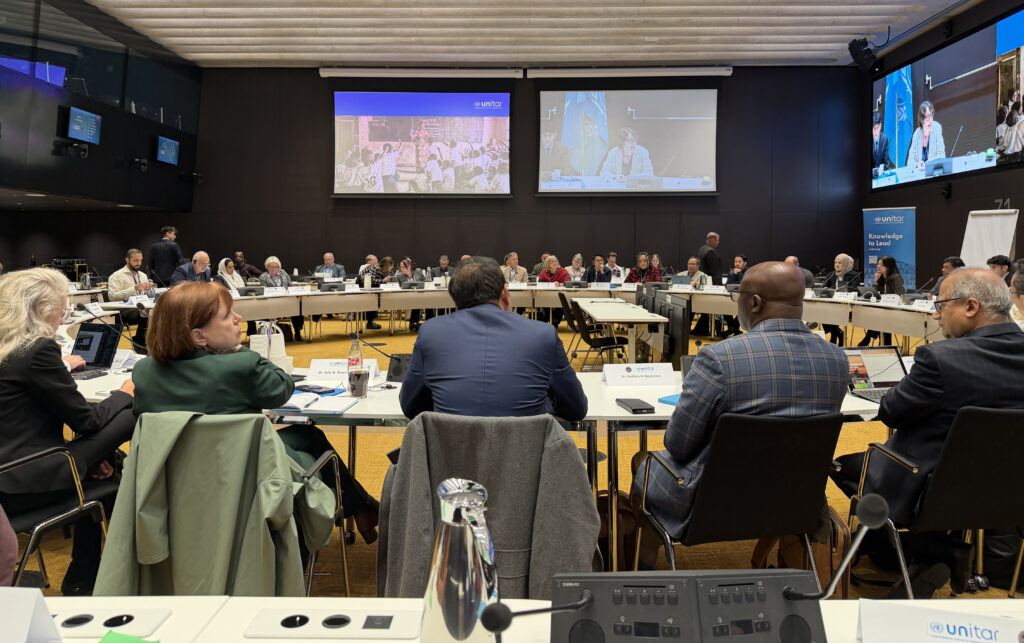
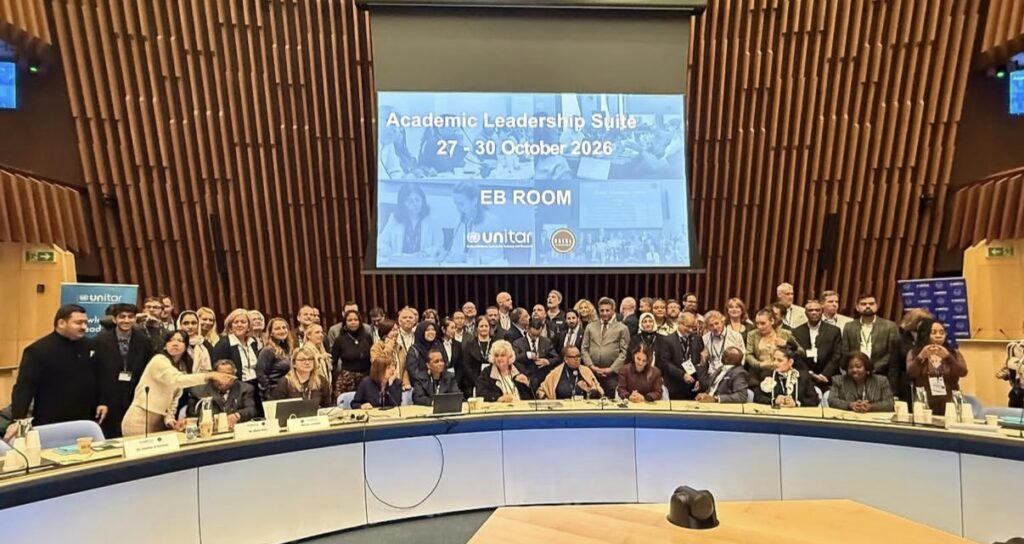
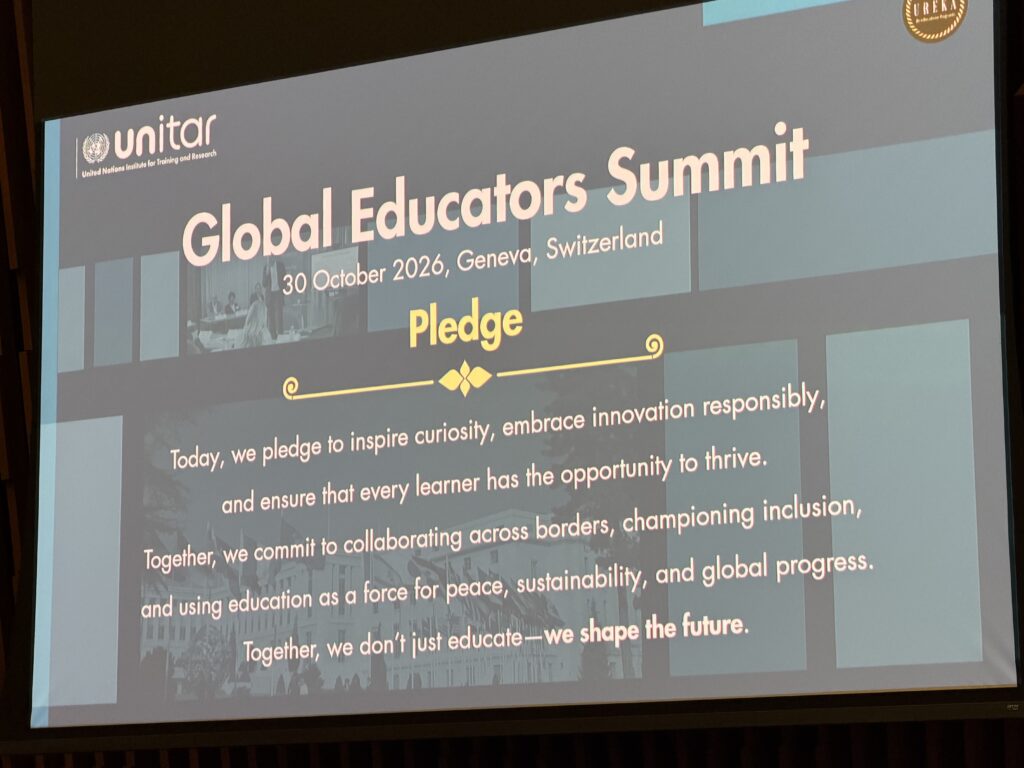
The United Nations and World Health Organization headquarters hosted 70 global education leaders to serve as delegates for an Academic Leadership Suite in late October to discuss the forces shaping the future of higher education and employability.
Lowham, dean of the College of Social Sciences, and Olson-Buchanan, dean of the Craig School of Business, took part in workshops, master classes, closed-door industry panels and meetings with diplomatic leaders. The event, co-organized by the United Nations Institute for Training and Research (UNITAR) and Ureka Education Group, also focused on digital technology, policy innovation, sustainability, student engagement and recruitment.
“Rethinking higher education for a rapidly changing world requires urgency and agility,” said Dr. Julie Olson-Buchanan, dean of the Craig School of Business. “My experience alongside international leaders in Geneva reinforced that educators worldwide have the wisdom, drive and commitment to rise and meet this moment. Here at Fresno State, we are channeling that global momentum into forward-looking learning that ensures our students thrive in tomorrow’s workforce and are prepared to be a force for good in our community.”
“Rethinking higher education for a rapidly changing world requires urgency and agility,” Olson-Buchanan said. “My experience alongside international leaders in Geneva reinforced that educators worldwide have the wisdom, drive and commitment to rise and meet this moment. Here at Fresno State, we are channeling that global momentum into forward-looking learning that ensures our students thrive in tomorrow’s workforce and are prepared to be a force for good in our community.”
Artificial intelligence was a central theme, including master classes covering AI policy governance, multisector partnerships and institutional design in the AI era. Delegates also held closed-door industry exchanges with leaders from global tech, data and education organizations, including HP, Oracle, QS Quacquarelli Symonds, Base44 and Hudl, to examine how emerging industry skills impact academic planning. Delegates debated future strategies and implications for students, faculty and staff as they plan for the university of the future.
Toward the end of the event, attendees split into three groups to discuss specific topics and create preliminary white papers on empowering learning to shape the future; institutional transformation of curriculum and pedagogy; and ecosystem partnerships, equity and outcomes.
About half the attendees were from the United States and others hailed from organizations in 11 other countries.
Olson-Buchanan and Lowham served as delegates because of their campus organizing efforts related to the United Nations Global Compact.
Fresno State is the only public institution in California that is part of the world’s largest voluntary corporate citizenship initiative. Participation in the Academic Leadership Suite connects Fresno State with a global network of education leaders collaborating to support student success, faculty and staff excellence and institutional innovation. The Craig School is also a member of the UN initiative Principles for Responsible Management Education.
Earlier this year, Fresno State’s UN Global Compact steering committee published its third engagement report detailing its ties to the United Nations’ 17 Sustainable Development Goals and the United Nations Global Compact’s 10 Principles in the areas of human rights, labor, environment and anti-corruption. Previous Fresno State reports, published in 2021 and 2024, also covered its academic curriculum, community outreach, research and scholarship activities.
The committee of campus faculty and staff from all eight colleges, the Fresno State Library and Facilities Management compiled the report, which highlights the university’s broad integration of global sustainability and ethics across research, curriculum and community outreach. Since Fresno State became a signatory, its UN Global Compact steering committee has offered mini-grants for incorporating sustainability into the curriculum, and last year it introduced a sustainability research award at the Central California Research Symposium.
“Our work in the Academic Leadership Suite and with the United Nations Global Compact highlights the importance of our commitment to student success and community engagement as we collaborate to support students to develop the critical thinking, communication and problem-solving skills required to create communities where everyone can thrive,” Lowham said. “It was an honor to be in discussion with global academic leaders reflecting on the shared responsibilities of higher education to prepare students for leadership and civic engagement, while strengthening the communities we serve through global and local engagement and research.”