

Twelve Fresno State students pursuing the reading and literacy leadership specialist credential presented at the Central Valley Literacy Conference in Madera in February. More than 100 transitional kindergarten through 12th-grade teachers from across six Central Valley counties attended the event.
The students led five breakout sessions, sharing advanced instructional strategies designed to support struggling learners and improve districtwide reading programs. Topics included engaging families to support reading and academic success, effective strategies for teaching read-alouds and tactics for improving reading fluency.
“Something magical happened at the Central Valley Literacy Conference in Madera. Prior to presenting, the students were very nervous about taking this step out of their comfort zones,” said Dr. Lisa H. Bennett, associate professor of literacy education. “Being able to watch the reading and literacy leadership specialist credential students transition from apprehension to confidence as they shared promising practices and the ways in which their students benefited from them was a career highlight for me.”
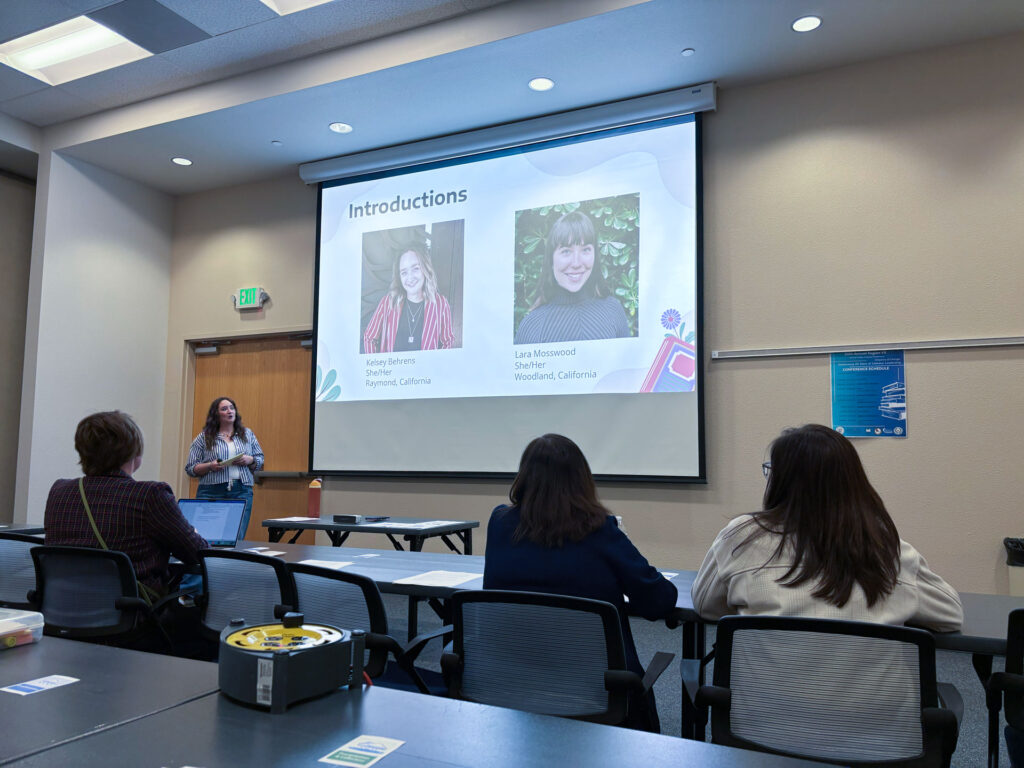
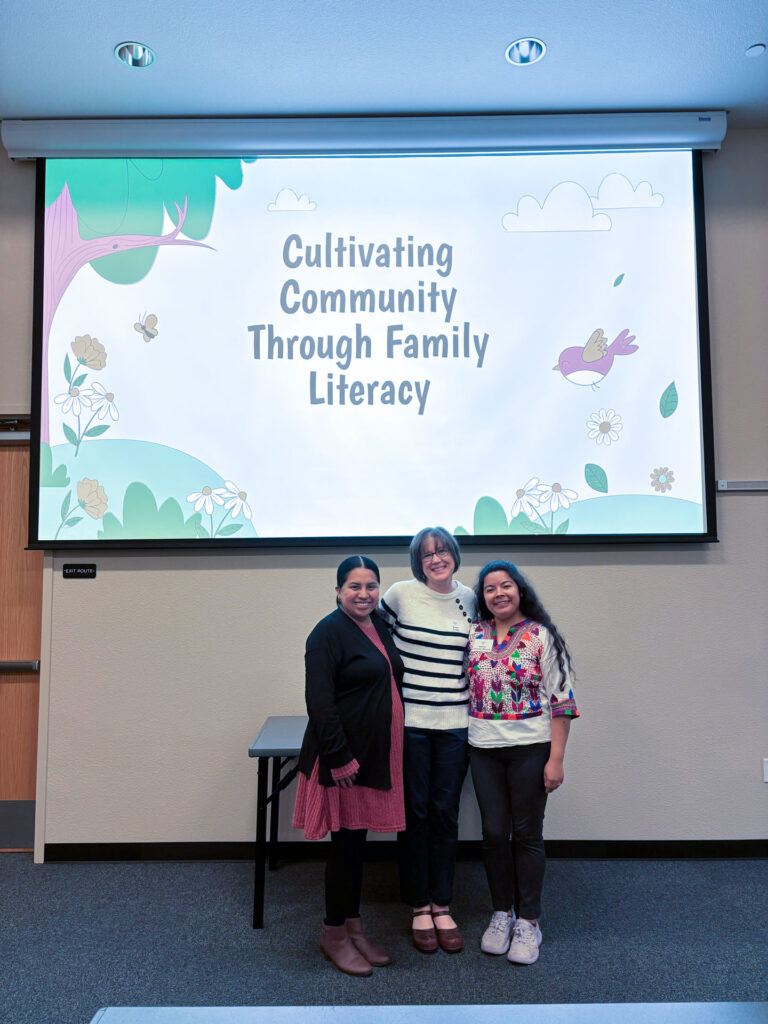
Virginia Castillo de Alba, along with her classmate Chandra Vander Klay, presented their topic, “I Have the Data; Now What?” In the hands-on session, set up as a mock classroom, participants learned to analyze data and use diagnostic tools, enabling them to develop strategies for grouping students for intentional classroom instruction and intervention.
“Once you have your data, your teaching becomes targeted and intentional, focusing specifically on your students’ skill gaps, giving them the support exactly where they need it,” Castillo de Alba said. “For example, if my data shows me that three students are missing or struggling with the ‘silent e’ skill, I can use that data to pull a targeted, small group the very next day.”
The presentation was grounded in the “science of reading,” an evidence-based approach to elementary school reading instruction supported by California’s new early literacy law, AB 1454.
“Attendees appreciated leaving with science of reading strategies that they could take back and use immediately,” Castillo de Alba said. “Getting a chance to work with a mock classroom to practice interpreting raw data and forming instructional groups was well received.”
Bennett agreed, pointing out Castillo de Alba and Vander Klay’s session was well attended, as teachers across the state are seeking guidance with implementing research-based practices to support their literacy teaching.
Castillo de Alba’s experience as a reading intervention teacher illustrates the program’s impact. Working in education for the past 26 years, Castillo de Alba has spent the past six years as a reading intervention teacher for Fresno Unified School District. She is now pursuing her master’s degree in reading while pursuing the reading and literacy leadership specialist credential.
“I chose to pursue this program after seeing several students in our upper grades entering our intervention program reading at a kindergarten level. It is heartbreaking, as a teacher, knowing the statistics for our students who can’t read by middle school. I found myself unsettled and questioning how they had gotten that far behind and, more importantly, how I was going to help them and catch them up?”
Through the reading and literacy leadership specialist credential program, Castillo de Alba said she now has the tools to help students close the literacy gap. The program enabled Castillo de Alba to begin building a better intervention system at her school.
“What I am learning in this program has equipped me to be a reading teacher more effectively than any previous professional development, workshop or seminar I have attended,” Castillo de Alba said. “It is exactly the kind of evidence-based approach that a school needs to see real results in literacy.”
Castillo de Alba said the presentation at the Central Valley Literacy Conference was a career-altering experience. It helped kickstart her long-term goal of becoming a mentor and sharing knowledge with other teachers, especially new teachers.
“I now find myself assisting my colleagues and sharing strategies that I have learned in this program. It has established me as a subject-matter expert, giving me the confidence to advocate for better instructional practices. It has also helped me work on my public speaking voice; being able to present in a room full of professionals is something I would not normally do.”
Coursework from the one-year online program can also be applied to a master’s degree in reading.
“The reading and literacy leadership specialist credential program is designed to prepare full-time teachers with a minimum of two years of teaching experience to become literacy leaders within their school sites, districts and communities and across the state,” said Bennett, who coordinates the credential and the M.A. in reading program. “While the nation grapples with pervasive literacy challenges and the state of California makes changes to its instructional approaches, it is essential that we develop strong leaders who know how to translate research into impactful practice.”
Graduates of the credential program can serve as literacy leaders in their districts by providing reading interventions for struggling learners. They also engage in literacy coaching and professional development for teachers, as well as literacy program evaluation.
Since the reading and literacy leadership specialist credential program is online, many of the students travel from across the state to attend the conference. Students were able to use the Graduate Studies Travel Grant to support their travel and conference attendance fees.
The conference experience highlighted the growing need for literacy leaders across California, a need the program equips students to meet.