
By Geoff Thurner
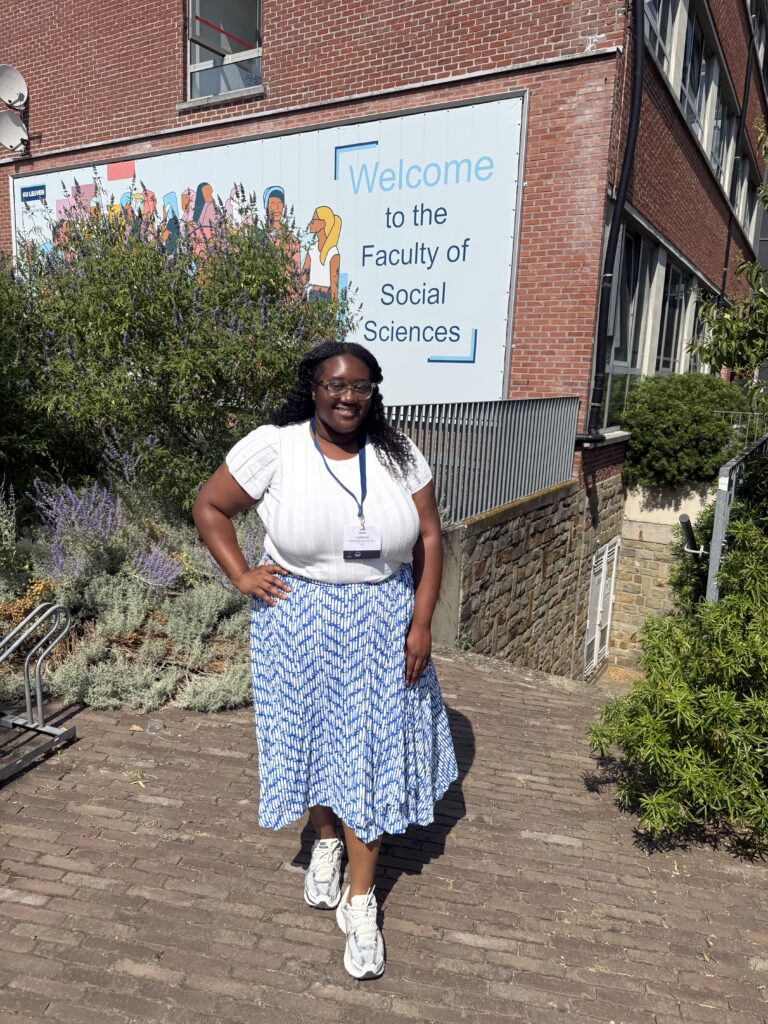
Senior Brieanna Servin knew her first trip abroad last summer would be memorable since her visit to Belgium and nearby countries combined academic growth, professional development and cultural discovery.
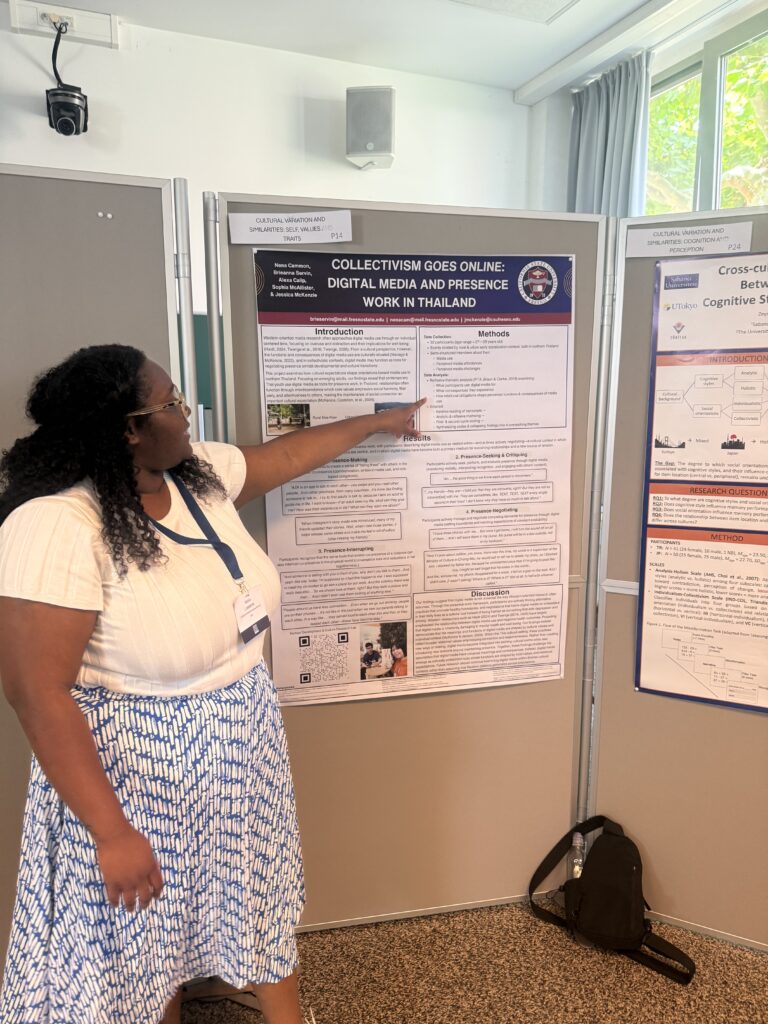
Through Instagram stories, she invited her family and friends to follow along as she attended the International Association for Cross-Cultural Psychology conference in Leuven, Belgium. The concepts of social media and connectedness echoed the research that she and recent child and family science graduate Nena Cammon presented at the conference after analyzing detailed interviews with counterparts their age in Thailand.
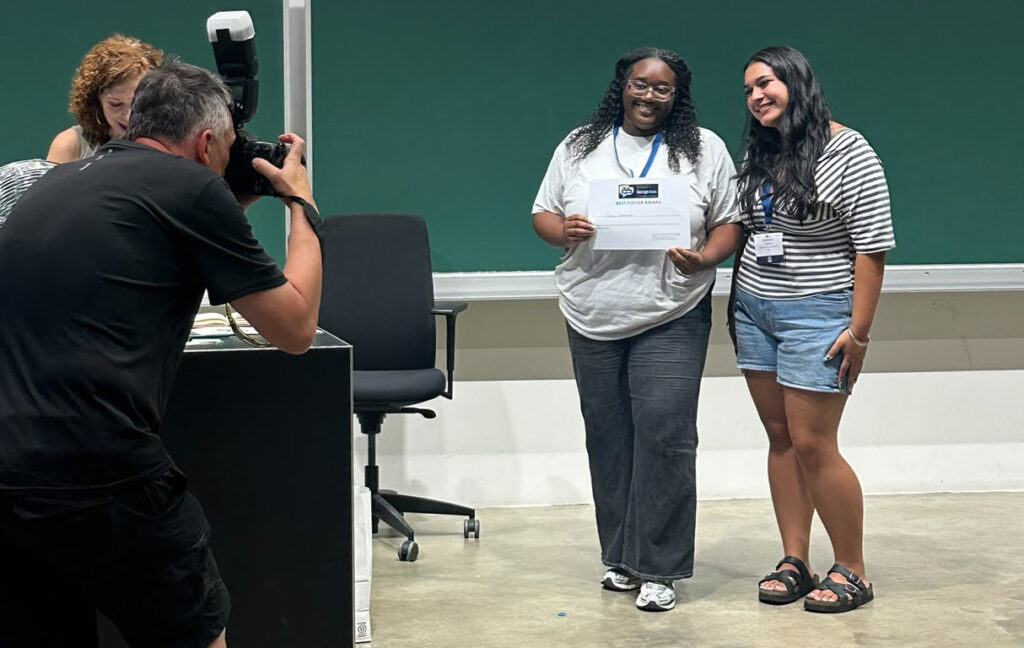
Under the guidance of Dr. Jessica McKenzie, a researcher and professor in the Department of Child and Family Science at Fresno State, their research won the Best Poster Award along with two other submissions among 100-plus entries. More impressively, they created the only winning poster authored by undergraduate students.
“People at the conference were impressed with our work,” said Servin, a liberal studies major who is minoring in child and family science, “and having this opportunity as an undergraduate is something that’s not offered everywhere. Research was not something I was expecting to do in college, but Dr. McKenzie was a great mentor who was very encouraging, thorough and patient, and guided us if we needed help.”
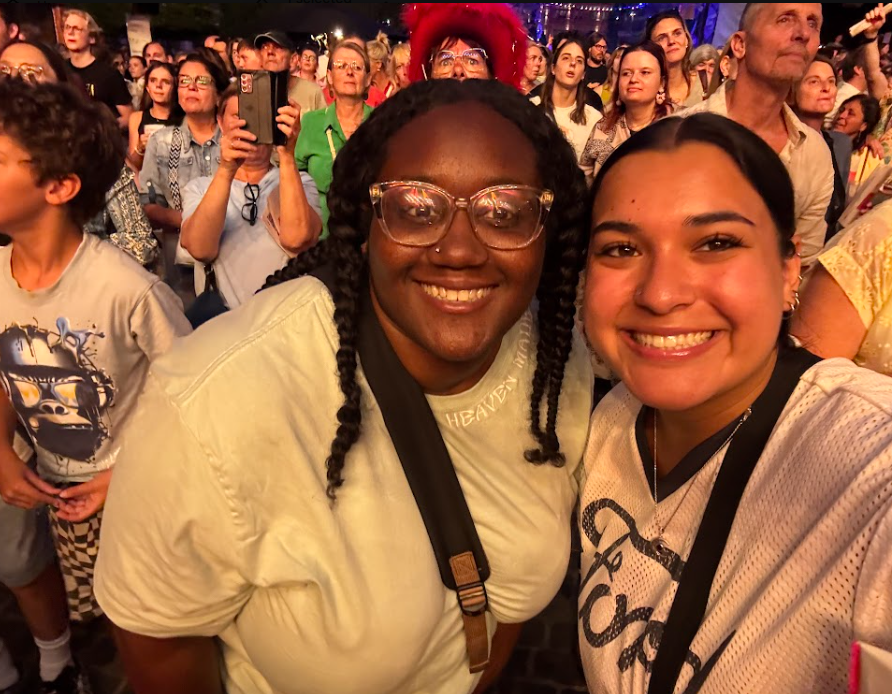
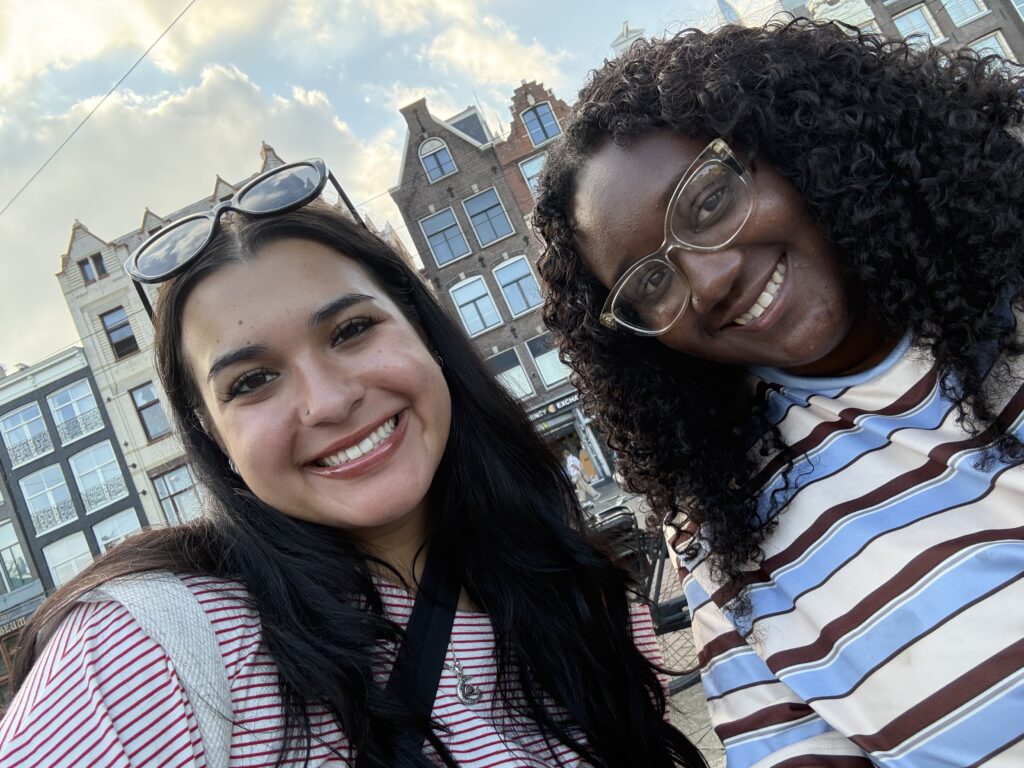
Servin (of Clovis) and Cammon broadened their perspectives by networking with researchers, professionals and students from around the world and learned about their professional and personal interests. Outside the conference, they explored the culture in one of Europe’s most vibrant university cities and even sang karaoke for the first time with locals.
They started the project in fall 2025 with five other students from Fresno State’s Human Development and Culture Research Lab. After studying principles of Thai culture, youth and the interconnectedness of families and friends, they analyzed 236 pages of transcripts that McKenzie had compiled from interviews with 32 participants in Thailand as adolescents in 2012 and again as emerging adults in 2022.
As the team analyzed responses tied to social media usage and personal relationships, they began to outline common themes about how social media affected feelings of presence in the respondents’ lives. They additionally examined the respondents’ potential for social media overuse, distraction and effects on well-being.
“Although we noted that some of them may use social media several more hours per day (than ourselves),” Servin said, “they’re not passive users. They’re actively managing and integrating digital technology and navigating the boundaries of what it means to be truly present. It was equally interesting to see how their usage, views and relationships had changed over a decade, especially the differences between the half of the respondents who were from urban backgrounds, and the other half who grew up in rural areas.”
Some respondents even imposed specific restrictions on social media use or phone access at home. One respondent accidentally dropped her phone behind the bed and then intentionally left it there for a week to counteract expectations of constant digital presence. Another participant put three work and personal cellphones in a box upon returning home to protect in-person presence with their family.
Servin hopes to encourage others to expand their worldview when she becomes an elementary school teacher and follows in the footsteps of her mother, Christina Servin.
Cammon took classes with McKenzie before, but her path to joining the student research team happened partly by chance at the Central California Research Symposium in 2025. As she walked among rows of research posters, she stopped to ask students about their projects. Among them were two posters from McKenzie’s lab on other topics tied to young adults in Thailand.
As Cammon questioned the students about their research, McKenzie noticed Cammon’s curiosity and invited her to join her lab.
“I hadn’t posted much on social media before, but this experience has given me more confidence to create better relationships online and better understand ideals of presence,” Cammon said. “I am a curious person and enjoy asking thought-provoking questions, so this project has planted the idea of possibly becoming a researcher, especially in the qualitative side of what makes humans interesting and goes beyond numbers. I’m lucky that I went to [the symposium] that day, or I probably would not have had this experience.”
Cammon, Servin and fellow students Alexa Calip and Sophia McAllister spent the spring creating an initial version of their research poster with other lab members, which they presented at the Central California Research Symposium. Cammon also spent spring break writing a research paper on the project for the Social Science Student Symposium, known as S4, and presented it orally to students from across the California State University system.
That experience prepared her for the conference in Belgium by deepening her understanding of the data and building confidence in presenting her findings.
She is now a first-year graduate student on the path to becoming a behavior analyst. She is also considering a doctorate in psychology, possibly at a European university, after these transformative research and travel experiences.
“I was not that nervous taking my first flight or being outside the country, and I was more worried about how I would fit in at the conference around experts and Ph.D. holders,” Cammon said. “It turned out so well, and they were so fantastic, humble and inviting. I also learned that I’m fairly adventurous and a people person, which I didn’t know. Traveling with Brieanna really bonded us with memories that we will never forget.”
Their work continued a series of projects overseen by McKenzie and funded by the Cultural Evolution Society, the John Templeton Foundation, the Society for Research in Child Development and the Society for Research on Adolescence. Since the lab was founded in 2015, nearly 50 Fresno State undergraduate students have been involved in similar research projects, including cultural identity development studies among Hmong American and Mexican American emerging adults.
“The parts of this job I love most are the research, the teaching and the travel that fuels this kind of work – getting out into the field and out to scholars around the world. A project like this folds all three into one experience,” McKenzie said. “Watching Nena and Brieanna discover that digging into data is fun, come into their own as researchers and then share their insights with seasoned scholars on their first trip abroad – with students this conscientious, analytical, open-minded and fun – it honestly doesn’t get any better.”