
As she looks forward to a prospective career as a pediatric nurse, Fresno State senior Crystal Higuera also likes to spend time with her family, especially her 5-year-old niece, Nevaeh.
Like many kids, Nevaeh has a short attention span, so Crystal likes to create fun and simple activities for her, like picking up toys, writing with chalk, blowing bubbles or having her dance to YouTube videos.
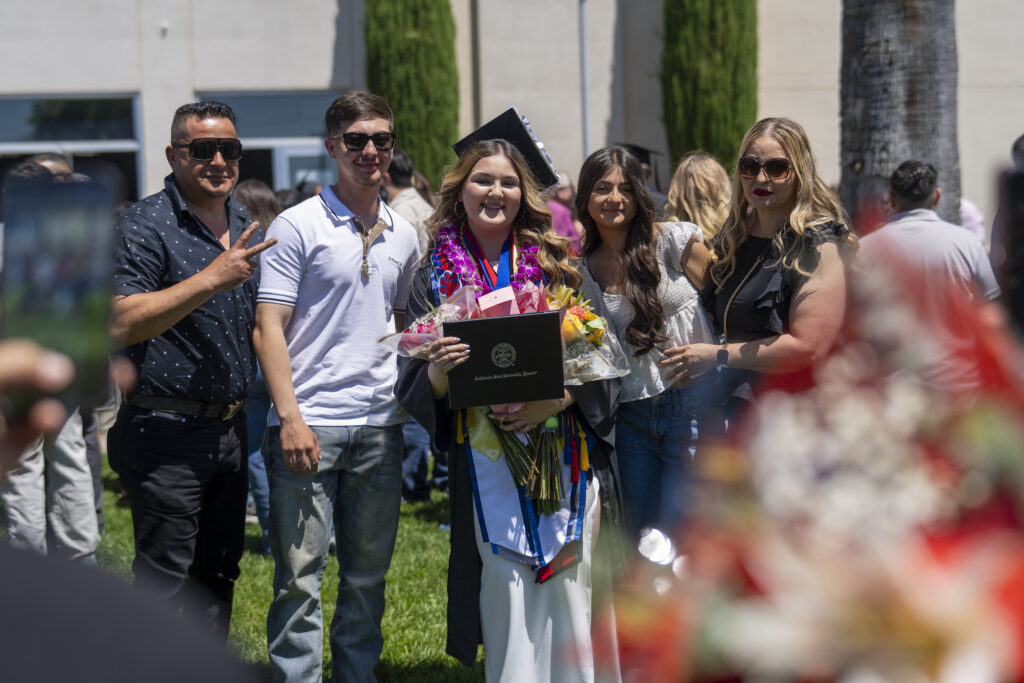
Watching a child learn new things is heartwarming, and for Higuera, who received a bachelor’s degree in child and family science (child development option) at the College of Social Sciences commencement ceremony on May 15 at the Save Mart Center, it serves another purpose as Nevaeh learns to overcome potential challenges posed by Down syndrome.
As Nevaeh has matured, Higuera has tracked her niece’s early milestones to help her family monitor her gross and fine motor skill development and progress. These are methods Higuera learned in her classes that pediatric nurses commonly use, to better understand areas that need extra support and tailor activities to boost continued development.
“Being able to play and interact with Nevaeh has been special,” Higuera said. “As she grows up, I can learn something new every day that is relevant to my career. Likewise, I can share my knowledge of child development and strategies with my brother and his wife since they are first-time parents, as well as how Down syndrome may affect her development and health.”
Higuera’s training through classes and the Joyce M. Huggins Early Education Center on campus has helped her directly apply classroom concepts.
As a student teaching assistant, she works with infants, toddlers and preschoolers of Fresno State students, faculty and staff. She guides structured play, small group learning activities and other class routines, as well as working with and evaluating children with developmental delays.
She was hired in February 2026 after observing and charting the progress of youth in many of the same classrooms through a research practicum class taught in the spring and fall semesters in 2025 by Dr. Megan Pronovost, a child and family science associate professor.
In the practicum, Higuera helped monitor activities, observe and document the children’s cognitive, social-emotional, language and physical skills for individual development reports, as well as create a portfolio of research results. This type of information helps childcare practitioners evaluate progress and create new and adaptive activities.
When Higuera started taking classes at Fresno State, the first-generation college student originally intended to major only in nursing, but a lifespan development class led her to take more child and family science classes. After she continued to learn from other department faculty, she was soon on course for a minor, and an eventual 4.0 GPA in her child and family science classes.
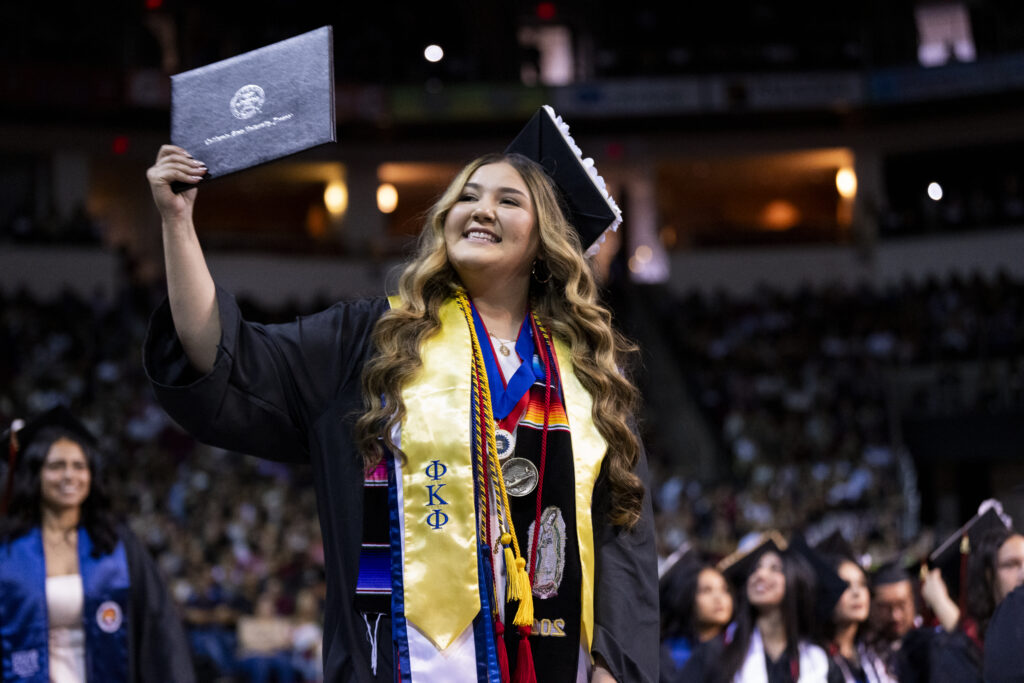
Together with nursing-related classes, she maintained a 3.91 cumulative GPA while balancing a busy schedule with difficult medical field preparation classes. She was inducted to Phi Kappa Phi, the nation’s oldest and most select academic honor society.
“Growing up, I had always aspired to be a doctor or nurse,” Higuera said, ”and learning about the pediatric side gave the field extra meaning. Health and development go hand in hand, especially for youth, to combine care that is both compassionate and informed. Understanding concepts of behavior and development tied to family science and medical treatment and intervention are all important.”
Away from campus, she has used these skills as a volunteer to help Spanish-speaking and low-income families navigate healthcare clinics offered by the Christian Medical and Dental Association at the Kings River Packing Company, where her mother, Claudia, works. Besides working on the clinic intake and triage support teams, Higuera has helped coordinate patient flow. She said her bilingual skills have helped patients feel more comfortable and helped them better communicate their needs and wishes.
She has also worked as a nursing assistant for the Acclaim Education program where she learned about medical support protocols and received certified nurse assistant certification. Higuera mentioned that being bilingual has helped her assist and build relationships with many of the Spanish-speaking residents she worked with.
A campus nursing class has also helped her examine how limited access to healthcare has affected some Hispanic community members. She has analyzed how language barriers, immigration status and financial burdens often serve as barriers to low-income care access.
“I’ve seen how my parents immigrated from Mexico and sacrificed for us and put aside their own dreams of education, just like many others in our community,” Higuera said. “I learned at an early age how important language and healthy literacy and advocacy are as I translated for them and my grandparents. It emphasized to me the importance of education and giving back to the community.”
Another class-based research opportunity led her to review peer-reviewed studies regarding children exposed to domestic violence, and identifying patterns across cognitive, relational and ecological systems. From this data, she discovered ways children can adapt, despite exposure to trauma, to help inform interventions and support systems.
This experience validated the next career step for Higuera, who grew up in the nearby town of San Joaquin, and will start pursuing a nursing degree at Fresno Pacific University this fall. That means she can also continue to be part of Nevaeh’s life and participate in her favorite events, like the Step Up for Down Syndrome Walk and 5K every fall in Clovis.
She can also spend more time with family, as she did on the family’s recent spring break trip to Mexico.
Many nights after Higuera fell asleep at their grandparents’ house, she would wake up and find that Nevaeh, and sometimes her brother, Eric, had snuck out of their parents’ room, and were cuddled next to her in bed.
“Being able to focus my education on child development and nursing has allowed me to grow a lot closer to my niece emotionally, while supporting her development,” Higuera said. ”I believe she should be able to live her life to the fullest potential in which I am able to support. Our bond reminds me of the importance of supporting all children and families, especially ones that are underserved.”