
A study on the effectiveness of garlic in fighting infection. A demonstration of how compounds derived from common weeds can suppress prostate cancer cells. A test of chemical bonds in antibodies that might result in better medications.
These were among the 100-plus student research projects featured at the Showcase of Excellence, hosted by the College of Science and Mathematics at Fresno State on May 8.
The annual showcase provides an opportunity for students to give research presentations in the spring to complement the High Impact Practices (HIPs) Student Symposium in the fall. The College of Science and Mathematics integrates student research opportunities throughout the curriculum, both in course-based research experiences and working with faculty researchers on independent projects.
Communication skills are essential to science
While students work on research throughout the academic year, the symposium gives them more opportunities to formally present their research projects. According to the showcase organizer, presentation hones students’ communication skills, which are crucial for scientific careers.
“The purpose of the showcase is to give students more confidence and experience in their presentation skills and prepare them for more independent research and graduate school,” said Alejandro Mendez, the organizer of the showcase and high-impact practices coordinator for the College of Science and Mathematics.
“It’s a professional development skill to be able to talk about your project,” said Dr. Francine Arroyo, an assistant professor of biology whose students presented at the showcase. “In a class you turn in a project, I grade it, and that’s it. Here they are challenged to discuss the project further. At that point, they really own the project, because they are there alone defending it.”
The showcase featured 113 undergraduate and graduate student research projects from course-assigned research and independent research projects. The variety of projects from multiple departments and disciplines highlighted the wide scope of research activity at Fresno State.
“One of the things we really want students to get out of this is that they’re not alone in this endeavor,” Mendez said. “If they can see the struggles and achievements of other students, they can support each other, which creates a better sense of community throughout the college.”
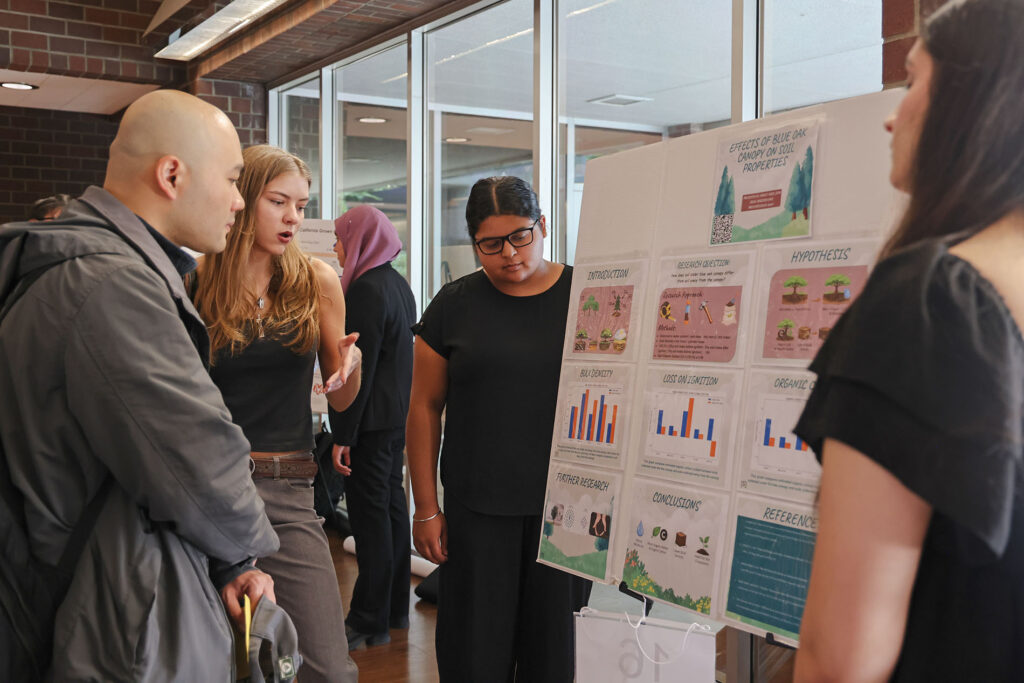
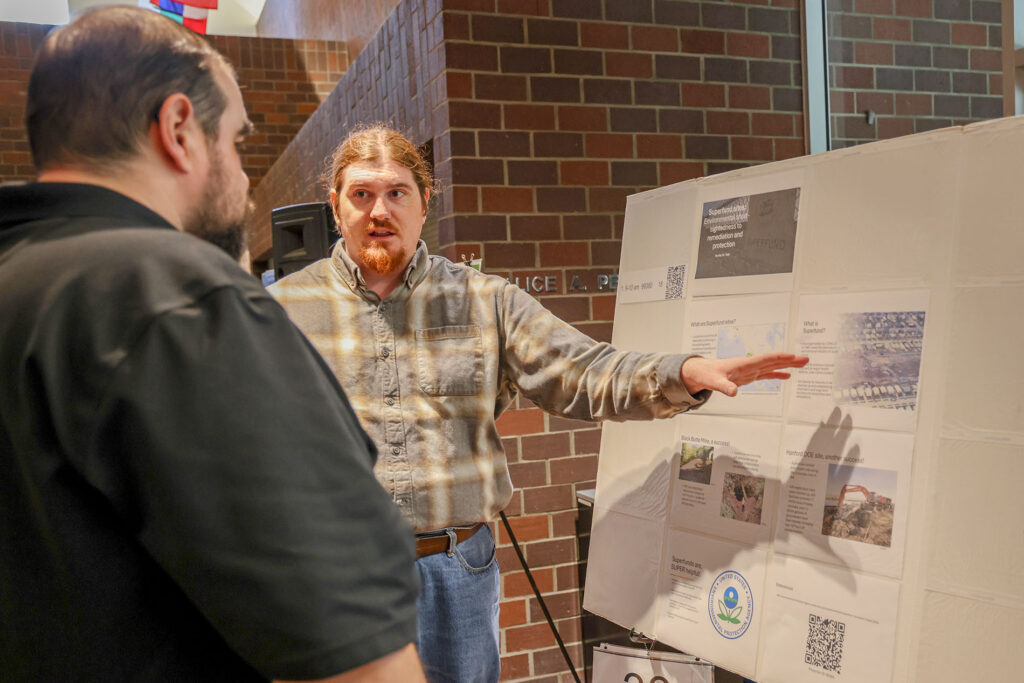
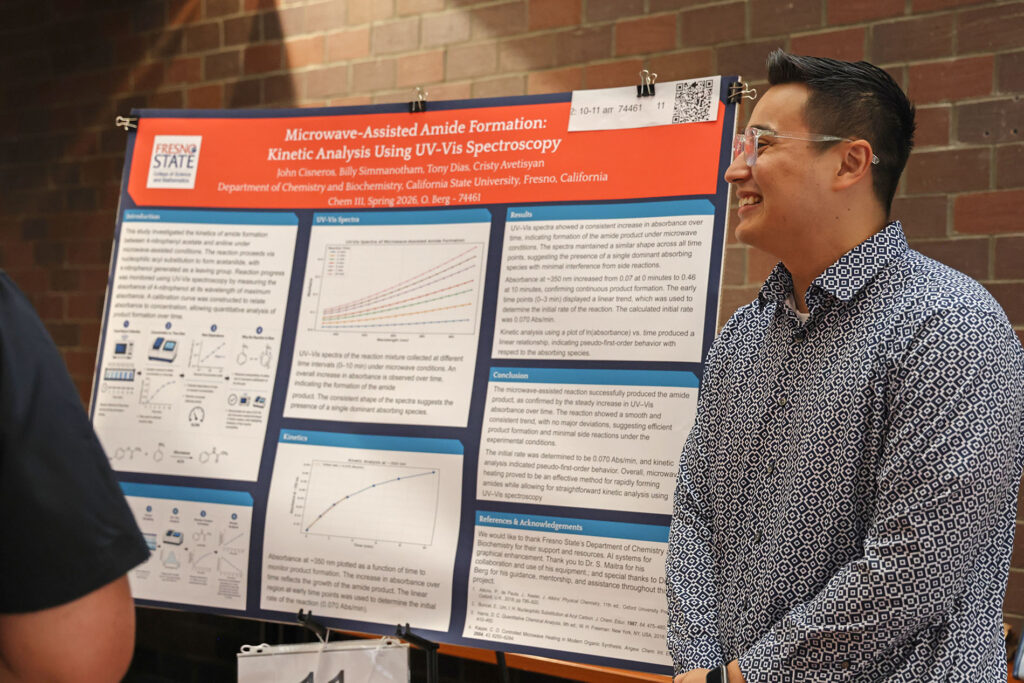
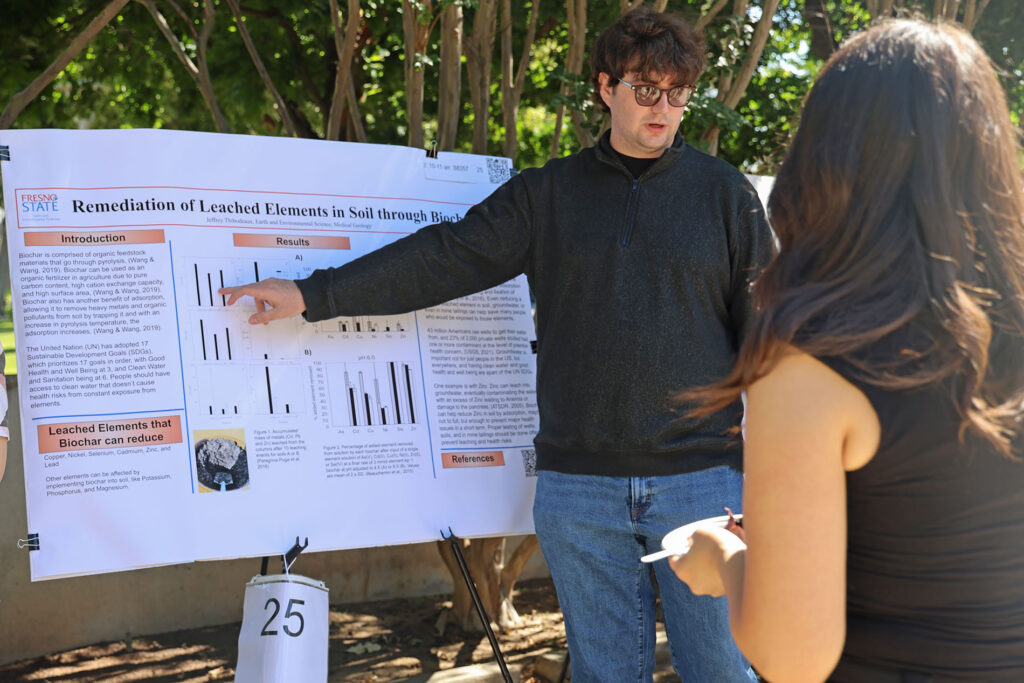
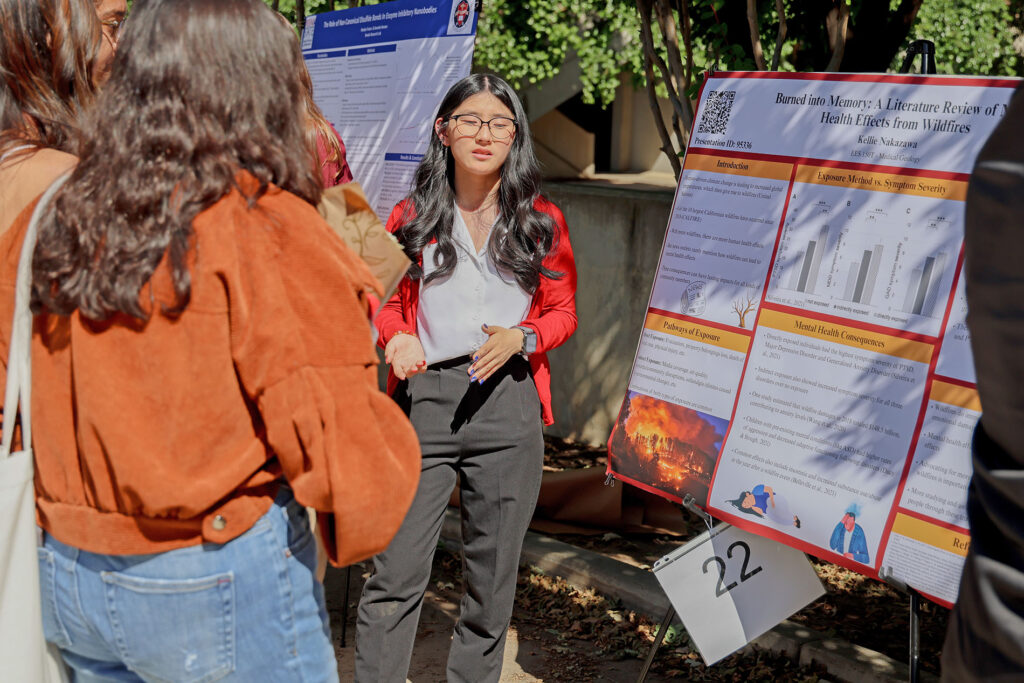
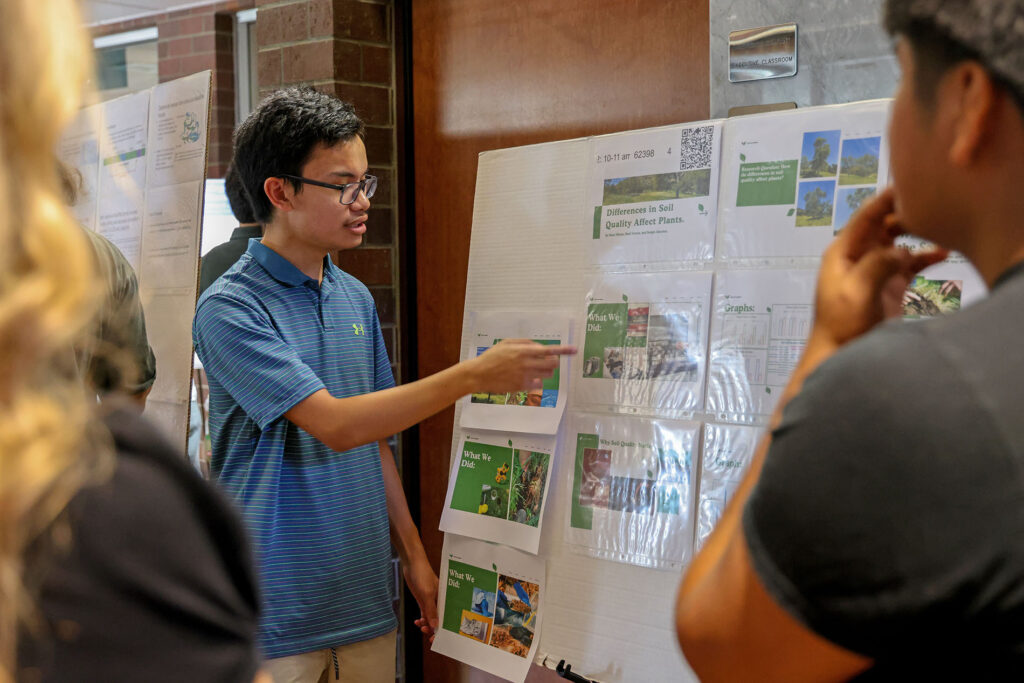
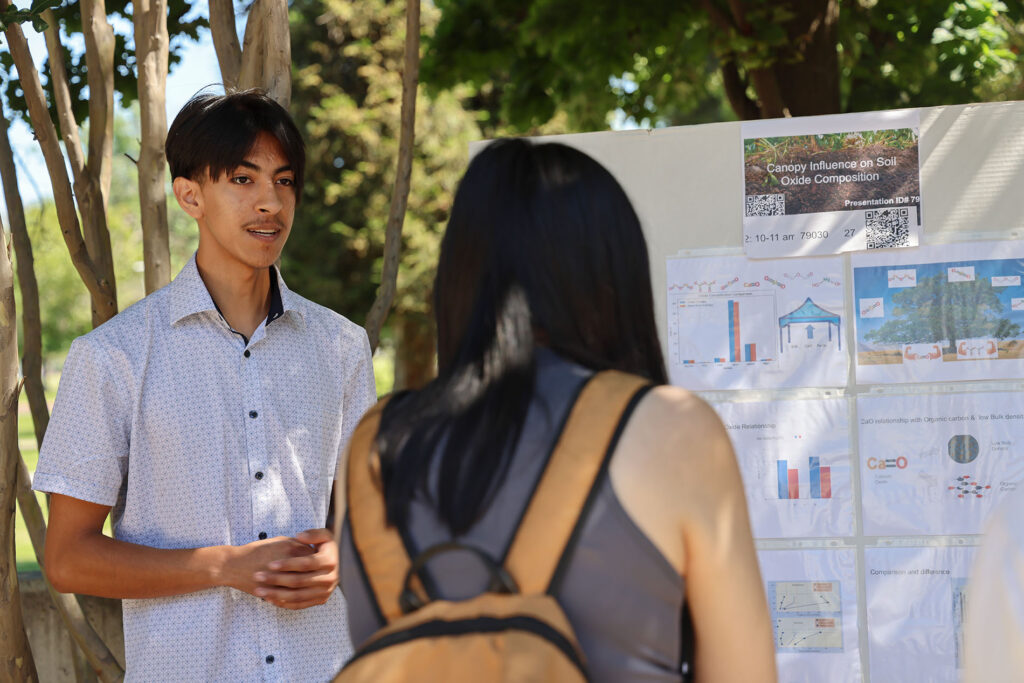
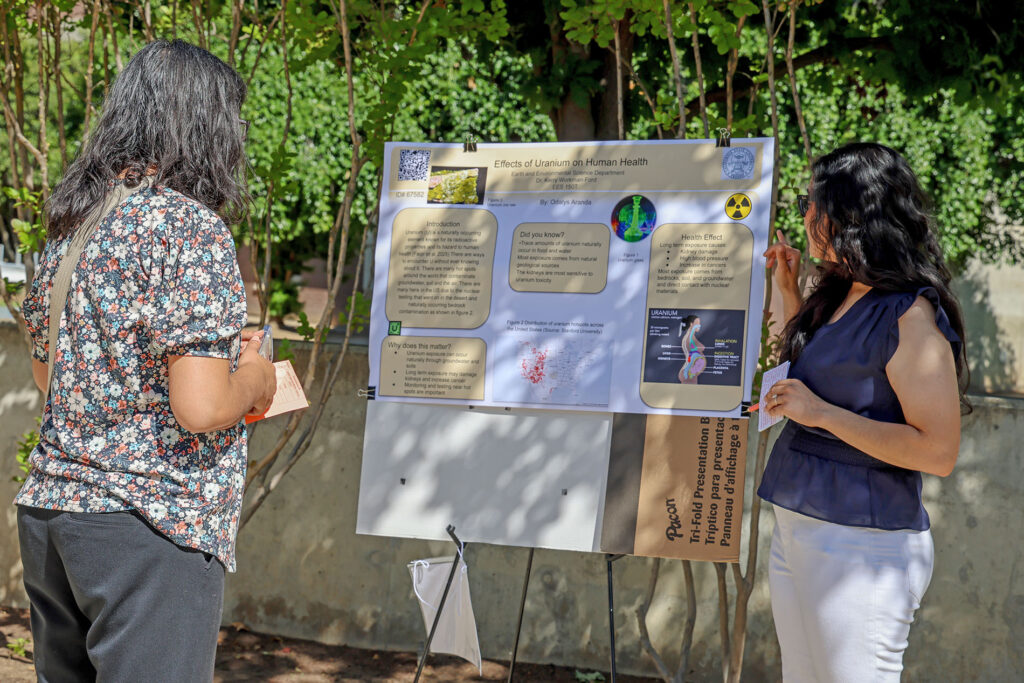
Each student team at the showcase was given one hour to give a poster presentation of their research and answer questions from faculty and students. The presentations were evaluated by a faculty panel for clarity of communication, presentation skills, visual design of posters, response to questions and interpretation and analysis of results.
Using garlic to fight infection
One of the award-winning projects at the showcase was “Addressing the Antibiotic Crisis: The Efficiency of Garlic at Inhibiting the Growth of Acinetobacter baylyi,” created by the student team of Danya Sumrein, Samantha Ruiz, Melissa Ramirez Flores and Owen Noriega in Arroyo’s experimental molecular genetics class.
“We were looking at a disease which is a big problem for healthcare, because it’s caused by a bacterium that can’t be cured by any antibiotic,” Noriega said. “Our goal was to find something that wasn’t a drug that could be used to cure infections. We ended up landing on garlic, which proved to be effective. I think there’s a lot of merit in looking for natural cures for diseases. It can be a realistic solution and a cheaper one.”
Arroyo said the garlic project illustrates how hands-on research teaches students to be self-sufficient and to think like scientists.
“Using garlic was something the students were really interested in, and they wanted to try it out,” Arroyo said. “How are you going to collect garlic? How are you going to implement the study and figure out what’s going on? I let the students figure that out. They really enjoyed it. They were all curious and more than capable students. It’s a good project when it doesn’t just end with ‘did it work?’. Asking ‘What if I did it this way?’ opens a million different avenues. That’s research. That’s the curiosity I love to see, and they did a really good job with that.”
Noriega, who graduated in the spring and is now working as a lab technician, said that the challenge of the showcase was explaining the project to faculty and students who were not biology specialists.
“It was very fast-paced. We were only there for an hour, and we had to summarize things very concisely,” Noriega said. “You have to learn how to meet the audience where they are. It can be tempting to use jargon as a defense against your nervousness. It makes you sound more knowledgeable, but if you really care about connecting with the person, you need to keep it simple. [The showcase] was one of the more practical things I’ve done at Fresno State. I think it was a good experience for my career.”
Searching for cancer treatments in Valley weeds
Another award-winning project was “Structure Determination and Anti-Proliferative Effect of Central California Grown Hairy Fleabane on Prostate Cancer Cells,” presented by graduate student Daniel Hidalgo and junior Danya Sumrein. Hidalgo and Sumrein isolated compounds in Central Valley vegetation that can suppress prostate cancer cells.
“We did natural product isolation on fleabane, which is a very common weed here that has been shown to have anti-cancer properties,” Hidalgo said. “Our main hypothesis is that the unique environmental conditions here in California, like drought, heat and high salinity in the soil lead to unique chemical properties in drought- and stress-tolerant plants. Nature is able to make these chemical complexes that are extremely difficult to make in the lab.”
Hidalgo said the project had given him greater confidence in his abilities.
“Leading this project showed me I had leadership skills I didn’t think I was capable of,” Hidalgo said. “It really is motivating to see that I can actually do this. It shaves a sliver off the imposter syndrome that a lot of students feel. It’s inspiring to see that professors who are well-established researchers see potential in you.”
Sumrein said that the communication skills she developed through research presentations are an essential part of science education.
“If you’re a scientist and you can’t say what you do in a lab, you can’t get across how your work is benefiting people,” Sumrein said. “The ultimate goal with these soft skills to allow people to replicate what you’ve done. Presenting gives you an idea that criticism is OK. You don’t have to get offended by it. When people ask you questions, it’s for your benefit. It helps you become more confident in yourself and how you communicate.”
Refining immunotherapy drugs
Seniors Sulayman Umari and Daniel Misraeian won an award for their project “The Role of Non-Canonical Disulfide Bonds in Nanobodies,” which explored how chemical bonds in antibodies break down, a subject which may help provide new approaches to immunotherapy drugs.
“We investigated non-canonical disulfide bonds of nanobodies, which are very small proteins that can bind to antigens or any foreign substance in the body,” Umari said. “They’re beneficial as a tool in immunotherapy or targeted therapy. We tested the stability of nanobodies, what temperature they started breaking down and how well they bind to their antigen target. This could help us understand how to manufacture nanobodies, prevent adverse reactions or keep medications more stable for storage and shipping.”
Umari said that the difficulty of research work has its own educational value, building students’ confidence and giving them a better understanding of how scientific practice works.
“The time I spent to come up with this one finding gave me a much greater appreciation of how much research goes into developing a drug,” Umari said. “Failing in research is definitely not the end. I got as many failures as successes. It builds resilience to continue to strive and fix things on the way. I’ve learned to be confident in my ability to do hard things.”