

As the plane began its descent into Anchorage, Alaska, 2017 Fresno State undergraduate alumna Alexandra Gallo marveled at the views of the mountains, ocean and untamed scenery that stretched for hundreds of miles.
Gallo soon landed in the country’s biggest state, which is twice the size of Texas, yet has the third-smallest population with about 740,000 residents. The effects of increasing climate variability have led to rising ocean levels and taken their toll on Alaska’s rivers, glaciers, snowpack and the permafrost ground layer found beneath much of its soil.
As the lead of the Environmental Protection Agency’s Community Change Grants Program, Gallo was looking forward to meeting leaders from Tribal Nations, local groups and government agencies to discuss potential projects to support underserved communities related to environmental and climate issues.
“Alaska has many needs that have not been fully met at the federal level historically,” Gallo said, “so this was a chance to enhance relationships with local communities and align policy priorities to ensure projects could meet their unique needs like addressing longstanding pollution or flood protection.”
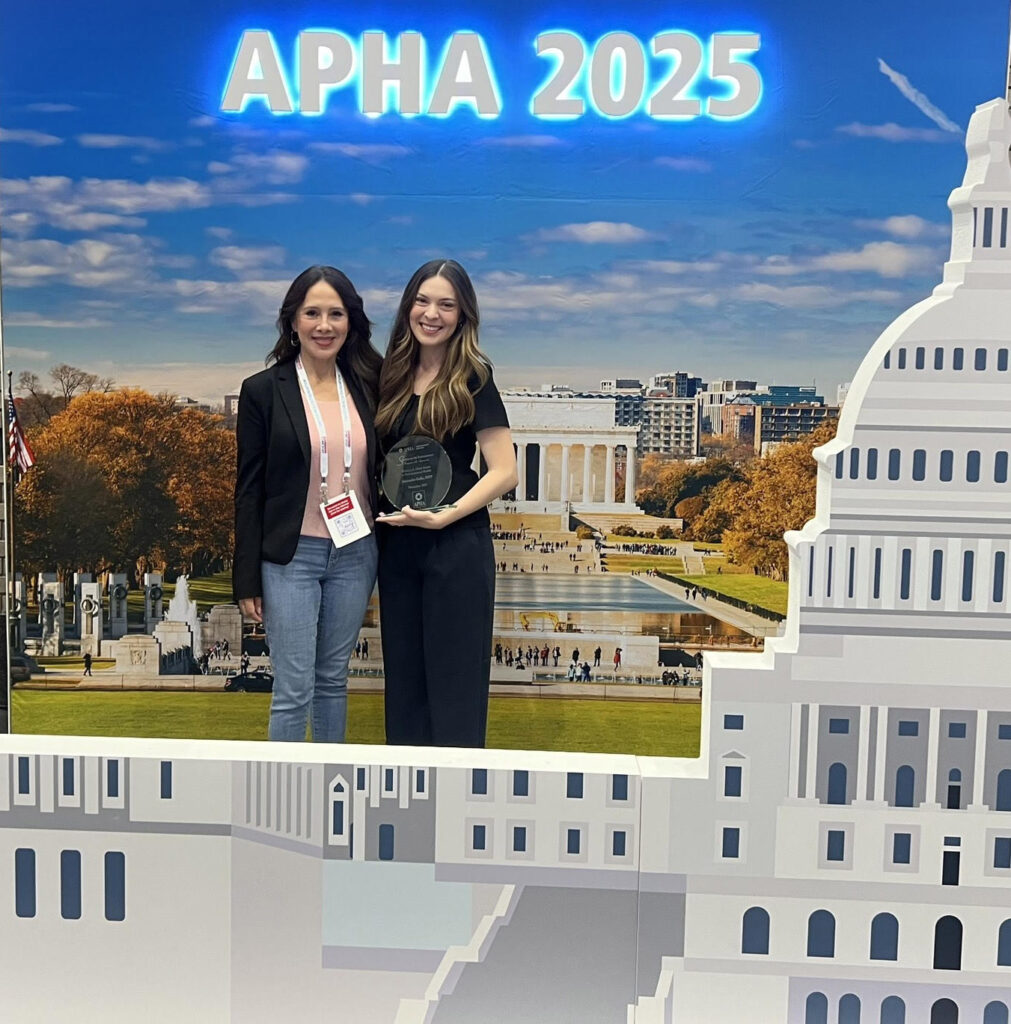
This was just one of the efforts that led Gallo to receive the Rebecca A. Head Award for Environmental Health in fall 2025 from the American Public Health Association. The award recognizes an emerging leader for contributions at the intersection of science, policy and environmental justice.
Gallo’s previous work with the Federal Emergency Management Agency through the inaugural Emergency Management Exchange program and the California Strategic Growth Council developed her ability to navigate the complex links between city, state and federal systems, as well the legislative and executive branches.
Her work and approach were rooted in formative experiences in the College of Social Sciences at Fresno State. One of Gallo’s first chances to see the impact of community outreach programs came as a freshman. With no spring break plans, she took part in the Alternative Spring Break program coordinated by the Jan and Bud Richter Center for Community Engagement and Service-Learning.
That week, she and other students volunteered at the Ronald McDonald House near Valley Children’s Hospital by cooking and organizing activities for young patients and their families. In each subsequent year as a student, she continued to participate in the program and other Richter Center outreach activities, which included work with Habitat for Humanity, planting trees in Southwest Fresno communities, and planning after-school events for elementary school children in partnership with community organizations such as Every Neighborhood Partnership.
The impact of helping others also led her to run for election and win an Associated Students Inc. at-large government seat as a senior. Besides working with then-provost Dr. Lynnette Zelezny and other campus leaders, faculty and students, she spearheaded the creation of a new at-large senate position. Although her initial proposal to create the position tied to justice, equity, diversity and inclusion did not pass, she gained valuable insight into the importance of coalition-building in the political process. By going back and gaining additional perspectives, the measure ultimately prevailed on a second attempt.
Mentorship from and classes taught by political science faculty Dr. Jeffrey Cummins and Dr. Lisa Bryant exposed her to state political leaders through field trips to Sacramento; research about voter ID laws that she later presented at a regional conference in Austin, Texas; and events to educate and encourage voter literacy hosted by the campus chapter of the League of Women Voters.
These efforts led the political science and communications double-major to receive the President’s Medal when she graduated in 2017. The university’s highest undergraduate commencement award recognized not only her accomplishments, but also her self-determination to succeed and help others as a first-generation college graduate from the small city of Hollister.
After graduating from Fresno State, she worked for former state Senator Bob Wieckowksi, the chair of the then-Senate Committee on Environmental Quality. She also saw the needs of the Central Valley up close as an intern with U.S. Congressman Jim Costa through The Maddy Institute and as an executive fellow through the prestigious California Capital Fellows Program.
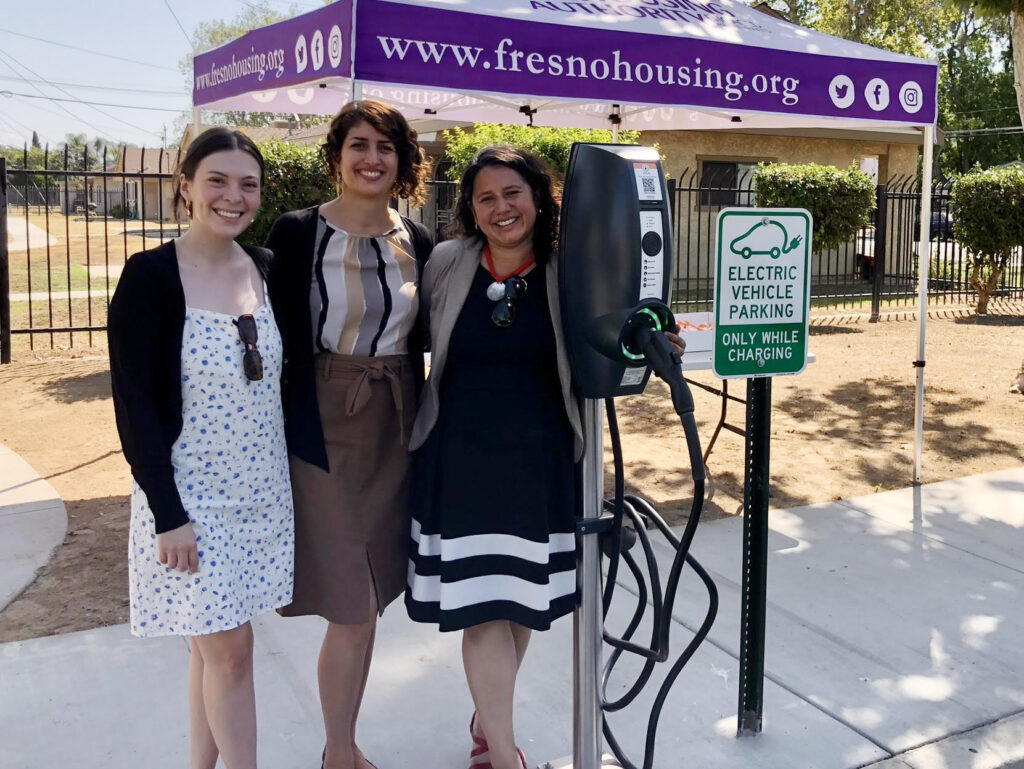
Since graduating, she has returned to Fresno occasionally to visit friends and campus, as well see the drastic improvements in nearby Southwest Fresno, one of several underserved locations around the state where she helped manage projects in the Transformative Climate Communities Program as a California Strategic Growth Council staff member from 2021-22.
“It’s important that this work is being upheld by formidable institutions such as the [American Public Health Association]. I was grateful to receive the award, which also recognized the efforts of hundreds of colleagues who came to the EPA to advance climate and environmental justice,” Gallo said. “We built the Community Change Grants program from the ground up, and it has since set new baselines for how governments across the nation engage with communities and advance shared goals toward change.”
This same passion led her to the University of Oxford this past year, where she will receive a public policy master’s degree from its internationally recognized St Antony’s College in May. She was one of 156 students in her cohort from over 60 nations in the Blavatnik School of Government who are working to create solutions for issues such as climate change and inequity by studying and sharing economic and philosophical approaches from across the world.
Her master’s research project has focused on creating more durable community infrastructure programs and policies tied to climate equity needs. By interviewing leaders from governments, academic institutions and community-based organizations tied to her past state and federal work, she is learning about their potential challenges and solutions to sustain these efforts through political transitions.
“I chose the Oxford program partly because I wanted to get out of my comfort zone. After working at both the state and federal levels of government, I was drawn to the international component,” Gallo said.
“Californians deal with a range of issues, so working at these different levels gave me deep insight into the region and the needs of constituents from both the micro and macro levels. To push any of these projects forward, whether it’s in Fresno or other parts of the country, takes so much coordination, organization and political will. Seeing the impact these programs have had is so rewarding.”
The Head Award recognizes that, by building on what she learned as a student at Fresno State, Gallo is playing an important role in improving those frameworks and restoring that systemic trust.
“We need to build on what we’ve learned and improve frameworks across the local, state and national governments to better deliver for people and help restore trust in our systems. It involves building trust, and a lot of communication and a commitment to finding new solutions. ”
Alexandra Gallo