

In the midst of Fresno summer, many dash from indoor air conditioning to air-conditioned vehicles while the heat from the softened black asphalt radiates through their shoes. As people drive in their air-conditioned cars, many peer-reviewed studies show the heat and emissions from cars can further raise temperatures in cities, making the problem worse.
Still, according to the Fresno Area Express (FAX), about 40,300 people ride the bus every day. They wait up to 30 minutes for a bus at a stop that might only be shaded for a couple of hours a day, and sometimes not at all.
For Fresno State interior design students, the problem is clear. If public transportation is to be safe and move beyond a need and become a choice, shade is necessary.
Under a new agreement with Fresno State’s Intelligent Design Visualization Lab, students and faculty created a digital twin of the entire city of Fresno in fall 2025. The interactive 3D map includes environmental data, such as solar exposure and urban heat island effects, to create a “heat risk index.”
Using the map, students and faculty recommended 50 sites for new, small-scale bus stops, with a particular focus on underserved communities. A scholarly report supports the map and heat index for future transit development.
Four student-designed bus stop concepts were created for the FAX bus system, which were finalized and copyrighted. Prototypes will be manufactured locally and field-tested in summer 2026. The project is supported by the mayor’s office and designs were approved by the Fresno City Council.
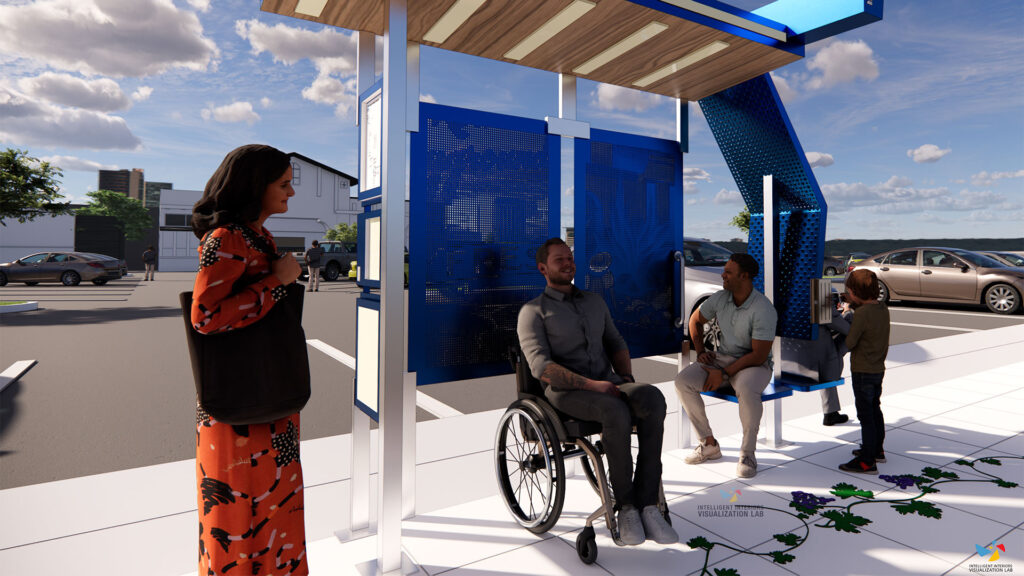
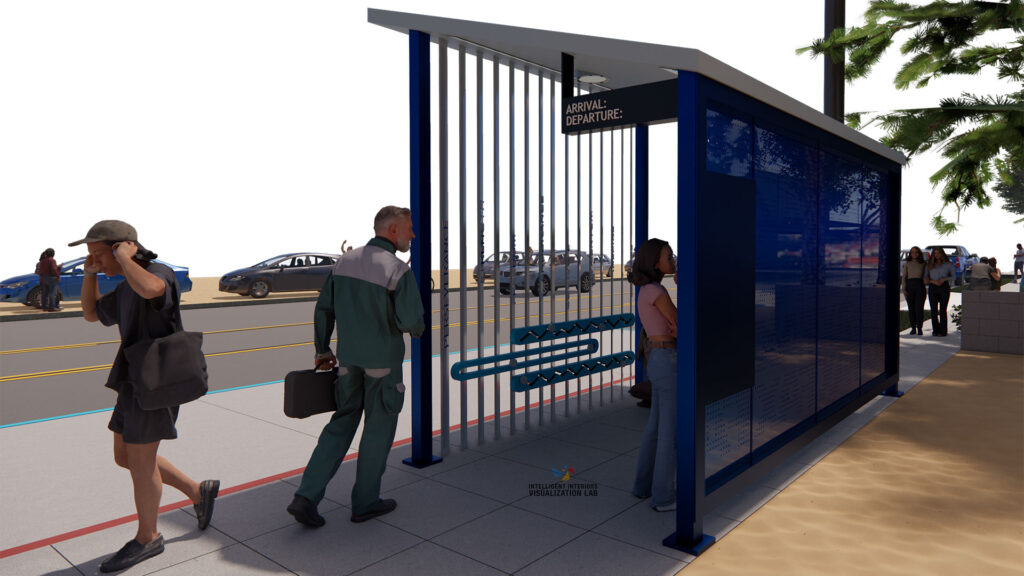
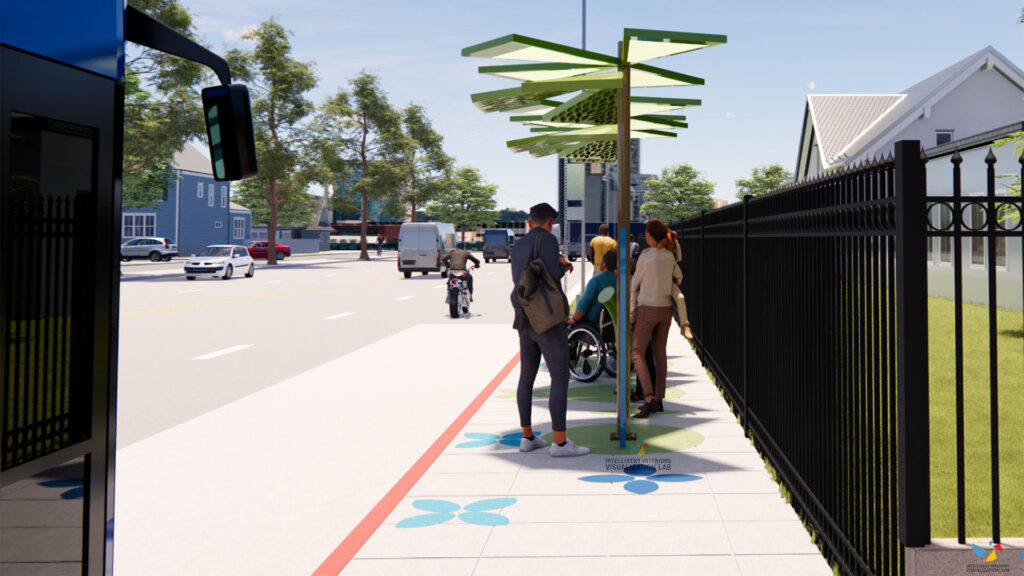
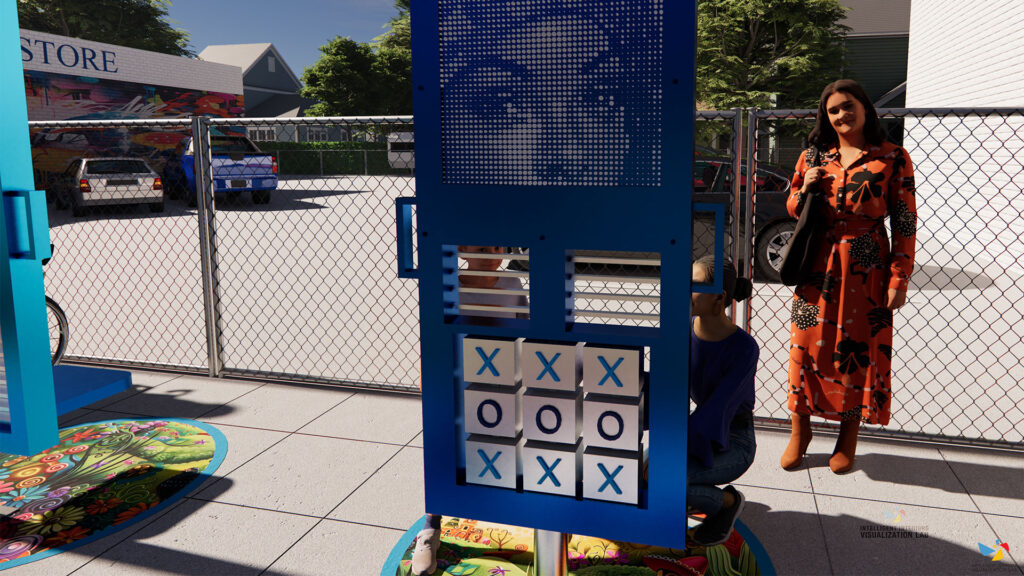
The project was started in summer 2024, and was initially funded through the Fresno State Transportation Institute. Associate professor Holly Sowles, assistant professor Uris Giron, five interior design students in the College of Arts and Humanities and four architectural students in the Lyles College of Engineering began working with the City of Fresno on designs.
“We did research, case studies of different bus shelters that have been done before, just to get some ideas,” said Jachelle Jimenez, an interior design student. “Then we talked about what’s good, what works and what doesn’t work.”
The students started with sketches on paper. With regular feedback from FAX officials, the sketches evolved into functional and beautiful designs as the students benefitted from hands-on experience in a real-world application.
“We designed these shelters for all four cardinal points, and then we analyzed the design. Every day of the year, we ran a solar analysis to see how large our shade spread could be,” Sowles said.
There were many design challenges to overcome. First, of course, was the lack of shade, especially for stops where the sidewalk was too narrow for traditional shade structures. Students were constrained by codes and regulations, such as accessibility requirements and pedestrian clearance.
“You have to have a minimum of four feet back from the edge of the curb. That had to be unobstructed just for people to be able to pass through, and it couldn’t be all the way to the back of the sidewalk,” said Lee Miyamoto, an interior design student. “It had to be below a certain height, but high enough that people couldn’t jump up and hang off of it. So, almost contradicting codes, and especially for the small site.”
They also designed the structures with ease of maintenance and installation in mind. While traditional bus shelters are often brought in one piece and installed with a crane, these designs allow for smaller crews and equipment.
“Every portion or piece of the bus stops can basically be screwed off. They come in multiple pieces, and the maintenance crews can just bring them in on their pickup trucks, and they can just simply replace the components,” Sowles said.
The modular designs also allow for easy expansion as more people use the bus.
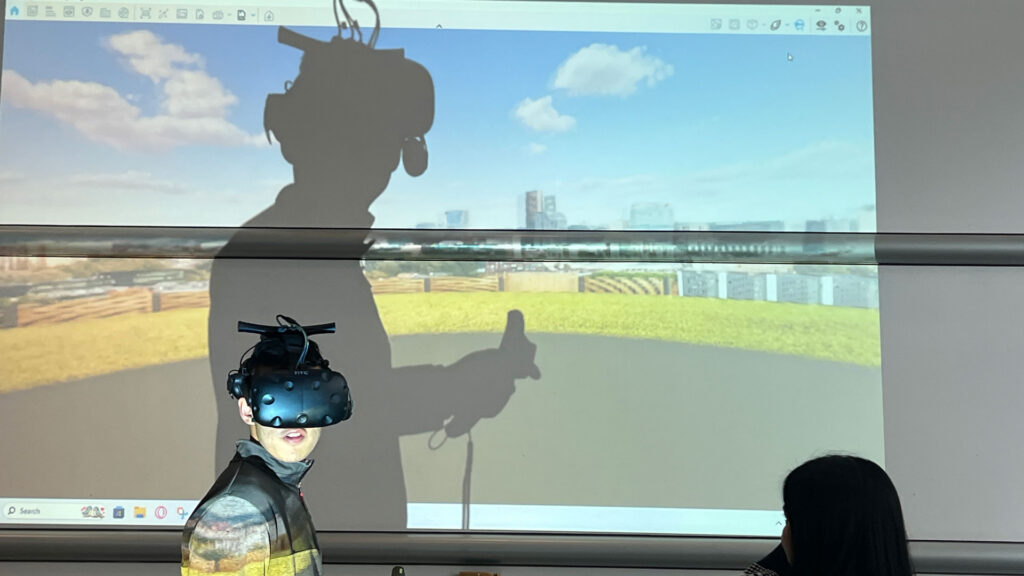
As their designs solidified, they moved from paper sketches to computer drawings using advanced software such as Autodesk Revit for design, solar analysis and rendering, as well as Enscape to create flythroughs and virtual environments.
Public presentation
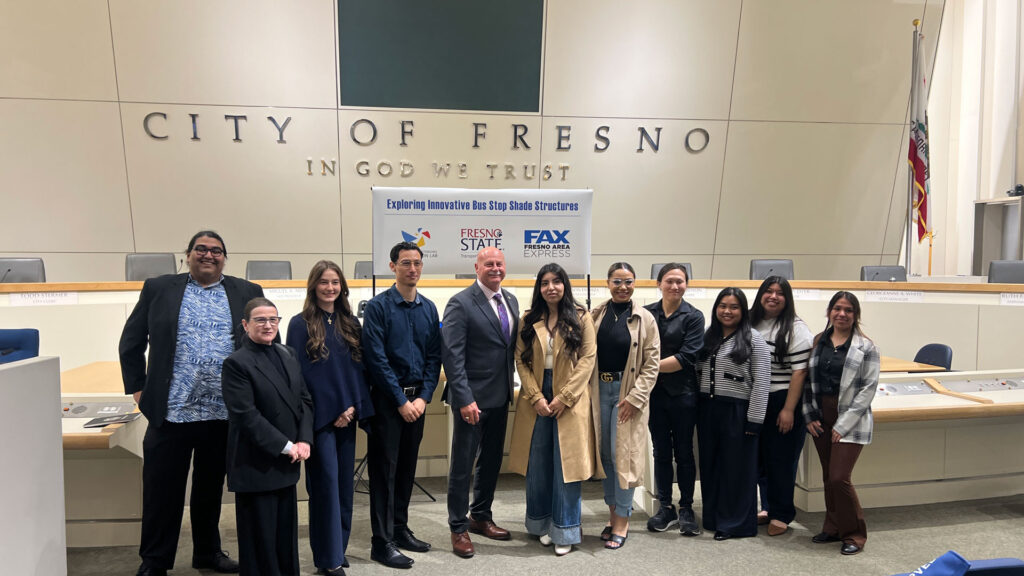
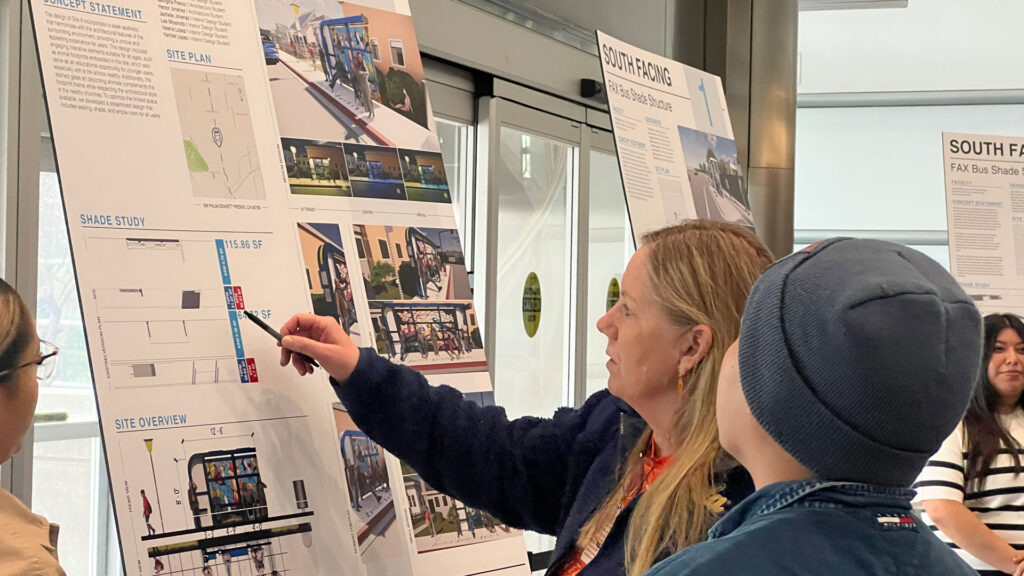
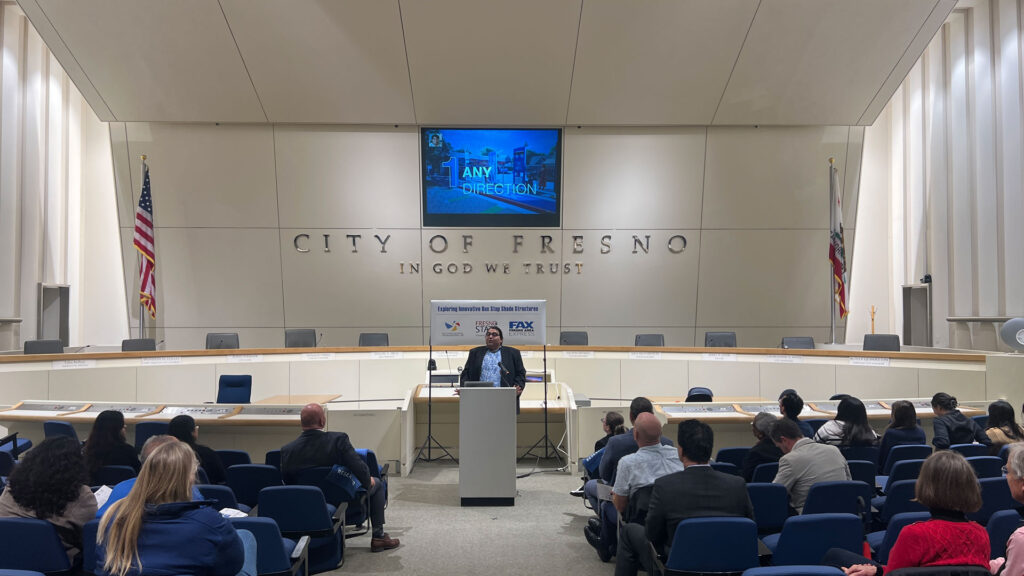
In February 2025, students brought their poster presentations featuring three-dimensional renderings, 3D-printed scale models and virtual reality environments to Fresno City Hall for a special public presentation.
The afternoon began with students presenting on a large screen in the Fresno City Council chambers. In front of the mayor, FAX representatives and other dignitaries, each student presented their design, each tailored to a different street orientation.
After the presentations, the students and the small crowd moved to the foyer outside the chambers to examine 3D-printed models of the designs and experience them in a virtual space. The audience then voted for their favorite designs. The city chose four designs to move forward.
The project is in the implementation phase, with prototypes and field testing planned for summer 2026 as the designs are further developed for potential real-world use.
The Intelligent Design Visualization Lab is housed in the Fresno State interior design program and is focused on urban climate resilience research, social infrastructure and placemaking innovation with digital design using emerging visualization technologies.