
Internships are widely regarded as a high-impact educational experience for students. Since the humanities internship program focuses on placing students in non-profit, government and educational organizations, their service also benefits the community.
In April 2024, the Mellon Foundation – the nation’s largest supporter of the arts and humanities– named Fresno State as one of five universities in the country to receive a $5 million grant to establish paid internships for humanities students.
With the funding, the College of Arts and Humanities at Fresno State designed and implemented an internship program that allows students to apply theories learned in coursework. The program embeds career preparation into the curriculum and is transforming student perspectives around the study of the humanities.
The internship classes can be found in the catalog for each school and department within the College of Arts and Humanities. About 150 students have completed paid internships since the program began in fall 2024, and more are enrolled for the upcoming semester.
To better understand the impact these internships have on students in terms of career preparedness and in tying classroom learning to experience, Fresno State Today reached out to three students for their perspectives.
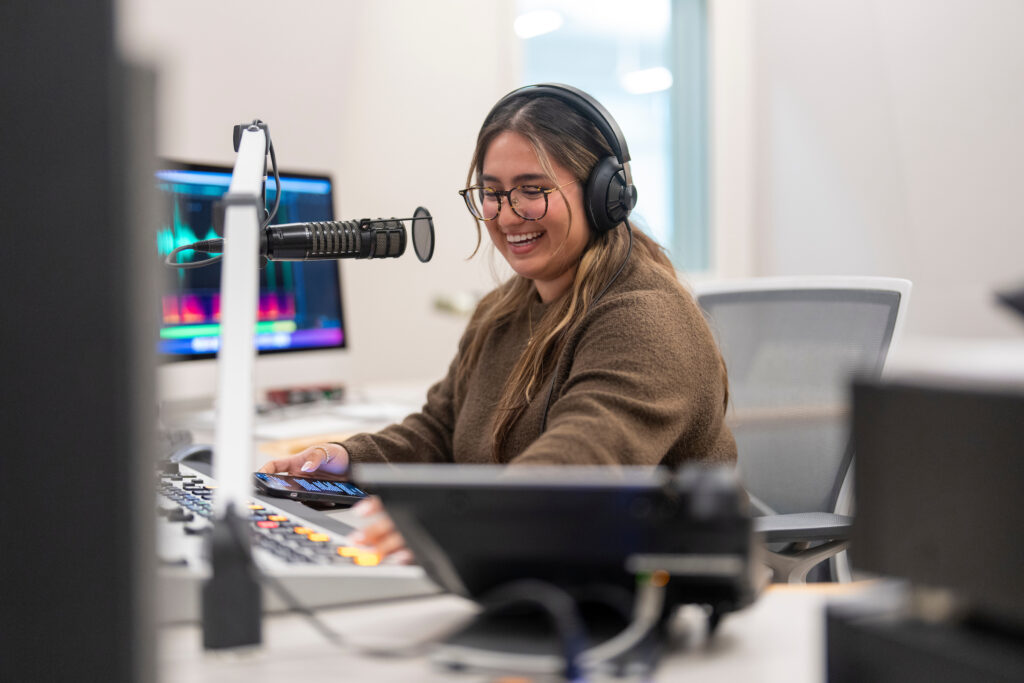
Samantha Rangel
Media, communications and journalism major with an emphasis in broadcast journalism, expected to graduate in spring 2026.
Fresno State Today: What drew you to your major, and what are your career goals after graduation?
Rangel: I enjoy meeting new people and building deep connections. I firmly believe everybody has a story to tell, and I want to be able to help share those with the world. After graduation, I hope to be a radio station reporter and eventually move into teaching to help other aspiring journalists grow.
FST: Where were you interning, and what attracted you to that opportunity? Did the paid aspect factor into your decision?
Rangel: During the spring 2025 semester, I was interning at KVPR-Valley Public Radio in Clovis. I was excited to be a part of the news team because I find audio storytelling to be a much more intimate reporting experience. The paid aspect was certainly a bonus, but I would have been just as happy interning for the experience.
FST: How did your internship impact your education or perspective on your field?
Rangel: The internship helped to give me hands-on experience with topics I was learning about in class lectures. Being able to apply what I was learning in textbooks to the real world, using real stories, gave me a fresh, exciting perspective to then apply back to my class projects.
FST: You now have a part-time position at KVPR, where you interned. Can you tell me a bit about that position?
Rangel: I am a part-time reporter for KVPR, and, in this role, I work on anything and everything needed to keep our newsroom flowing. I work on short news story scripts for air on our daily newscasts, dive deeper into longer, four-minute feature stories that air on our daily news podcast, and help with social media posts. I recently started a new video series that I call “Weekly News Wrap with KVPR,” where I write, record, edit and post a short 2-3 minute social media video that covers some of the news from our newscasts that people may not have heard.
FST: Can you share a specific example of how your internship connected to what you have learned in the classroom?
Rangel: In the classroom, journalism professors always reinforce the importance of writing in an engaged, active tone to draw in the audience. As a radio reporter, I have had lots of practice in active writing. Understanding that our audience is listening while driving or washing dishes, without some image to accompany the story was crucial at the start of my internship. Knowing that, I tried to improve my writing to paint the picture through strong language and detail.
FST: What advice would you give to other students considering internships?
Rangel: Internships are super important to educational growth. Learning never stops. Being in a learning environment where you have more of a one-on-one experience can push you farther than being in a classroom with dozens of other students. It is a completely different experience when you put yourself directly in your desired field. You don’t just read about it, you live it.
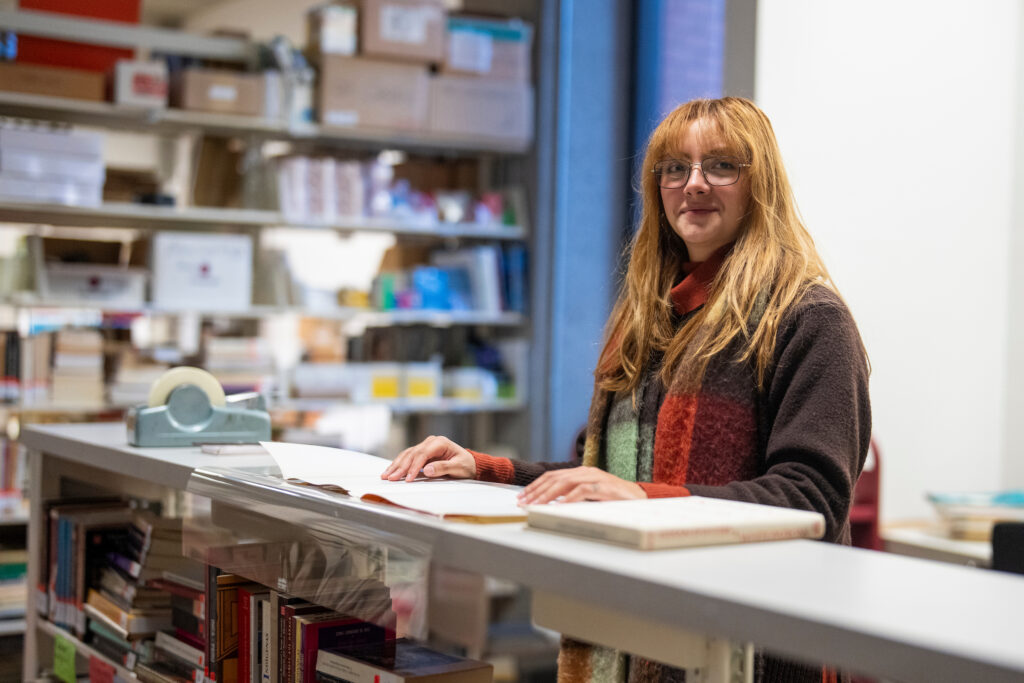
Alondra Muratalla Farías
Spanish major, expected to graduate in fall 2025
FST: What drew you to your major, and what are your career goals after graduation?
Farías: What drew me to my major is my passion for education. The great teachers and professors that I’ve had are the ones who inspire me to pursue a career in education, and especially in language, Spanish, because of the connections that one can make with students. After graduation, I plan to start graduate school here at Fresno State next semester.
FST: Where are you interning, and what attracted you to that opportunity? Did the paid aspect factor into your decision?
Farías: I am interning at the Fresno State Library. I was attracted to this internship because it is related to pre-Columbian and Mexican art books, and working with this new collection that is now part of the library, the Quiñones-Keber Collection. I was excited to see and work with so many books and learn the process of cataloging. I think the paid factor is a plus if you are considering internships, but learning from others and learning new skills is very fulfilling.
FST: How has your internship impacted your education or perspective on your field?
Farías: This internship changed my perspective on my field in a positive way because I was able to confirm that language and culture can open new doors. My internship has allowed me to see how diverse Mexican art is, how one can connect with a culture by simply reading a book and the importance of including culture in the classroom.
FST: Can you share a specific example of how your internship connected to what you’re learning in the classroom?
Farías: One example of how this internship connects to what I’m learning in the classroom would be the importance of mentorship and collaboration in the education field. Also, seeing the rigorous process of cataloging has been helpful because, in the classroom, we are constantly using books from the library, and now I’m more familiar with the shelves and how to find the books that we need for the class.
FST: What advice would you give to other students considering internships?Farías: Some advice I would give to other students considering internships is to take the opportunity, because you never know the connections you can make, the new skills you can learn and the knowledge you can gain from others.
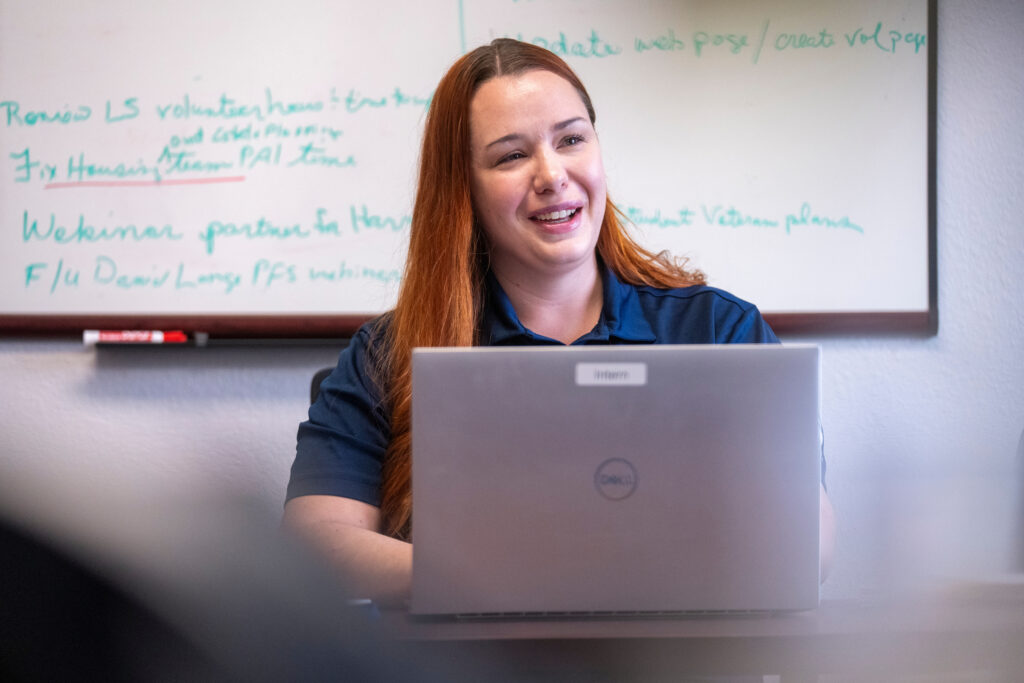
Chandra Marshall
Philosophy/pre-law major, expected to graduate in spring 2027
FST: What drew you to your major, and what are your career goals after graduation?
Marshall: I was drawn to my major because I’m passionate about expanding equitable access to justice and believe the rule of law is the foundation of a fair and stable society. Growing up well below the poverty line, I witnessed firsthand how the legal system can fail those without resources; my father, uncles and siblings were all chronically incarcerated. Those experiences shaped my determination to be on the other side of the system and inspired my dream of becoming a lawyer. The California Law Pathways program has been instrumental in helping me pursue that dream, providing guidance and opportunity as an economically impacted student preparing for law school.
FST: Where are you interning, and what attracted you to that opportunity? Did the paid aspect factor into your decision?
Marshall: I am interning at Central California Legal Services (CCLS), and my work is focused on humanitarian relief for immigration clients who have been victims of domestic violence or other crimes. I was placed at CCLS through a fellowship program when I was completing my paralegal A.S., and then was hired on a temporary contract as a paralegal when that fellowship ended. I love the work I do for the immigrant community and planned to continue volunteering (as time would allow) this semester, so the opportunity to stay on as a paid intern has been invaluable to me. In addition to being a full-time student, I am a mother of three small children, which makes unpaid volunteer work very difficult. I am grateful beyond words to receive pay while completing this internship in work I find so intrinsically rewarding.
FST: How has your internship impacted your education or perspective on your field?
Marshall: Interning at CCLS has influenced me further toward public interest law. I have learned so much about how nonprofit legal services help bridge the justice gap by providing access to justice for people who otherwise could not afford representation. I now understand just how impactful I can be as a legal professional in upholding the principle of equal justice under the law.
FST: Can you share a specific example of how your internship connected to what you’re learning in the classroom?
Marshall: Studying philosophy teaches me to evaluate information critically and understand the structure of arguments. I routinely use these skills in my internship when I assess clients’ cases and draft declarations on their behalf.
FST: What advice would you give to other students considering internships?
Marshall: I hope other students embrace internships as an opportunity for real-world learning beyond the concepts we cover in class. Even if it’s a requirement, go into it with enthusiasm and curiosity. You’ll be surprised by how much you grow, both personally and professionally. Don’t be afraid to ask questions or seek feedback. Good internship sites will encourage you to learn through exploration and mistakes.